Identification of key genes and pathways in calcific aortic valve disease by bioinformatics analysis
- PMID: 32030260
- PMCID: PMC6988017
- DOI: 10.21037/jtd.2019.11.57
Identification of key genes and pathways in calcific aortic valve disease by bioinformatics analysis
Abstract
Background: Calcific aortic valve disease (CAVD) is the most common type of valvular heart disease in the elderly. This study is aimed to explore molecular mechanism of CAVD via bioinformatics analysis.
Methods: The gene expression profiles of GSE51472 (including 5 normal aortic valve and 5 calcified aortic valve) and GSE83453 (including 8 normal aortic valve and 19 calcified aortic valve) were downloaded from the Gene Expression Omnibus (GEO) database. Differentially expressed genes (DEGs) were screened using the MetaDE package in R software. Functional and pathway enrichment analysis were performed based on Gene ontology (GO) and KEGG pathway database. Then, STRING database, Cytoscape and MCODE were applied to construct the protein-protein interaction (PPI) network and screen hub genes. Pathway enrichment analysis was further performed for hub genes and gene clusters identified via module analysis.
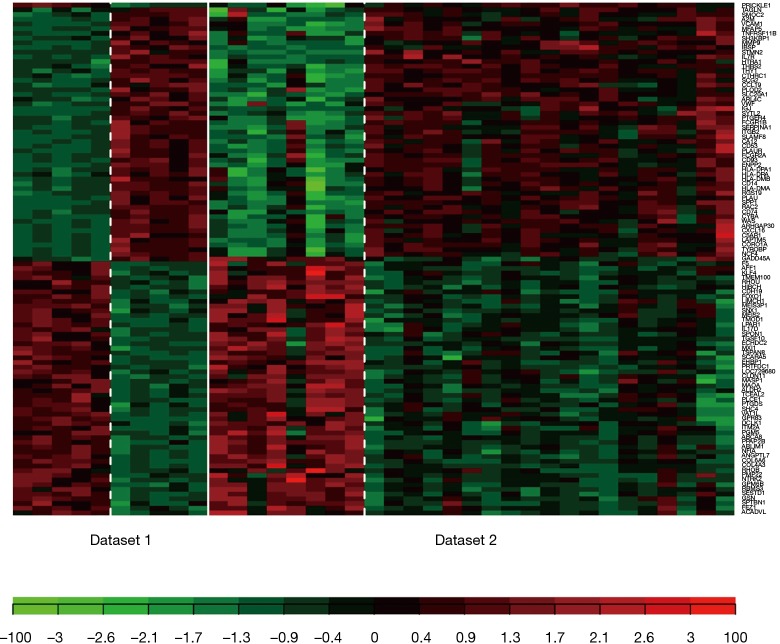
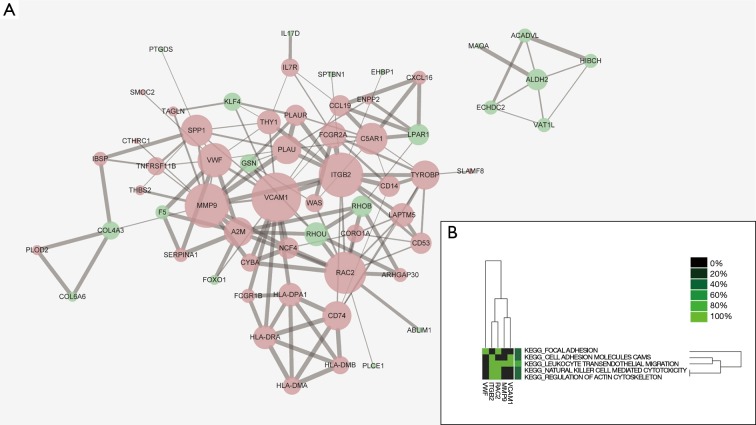
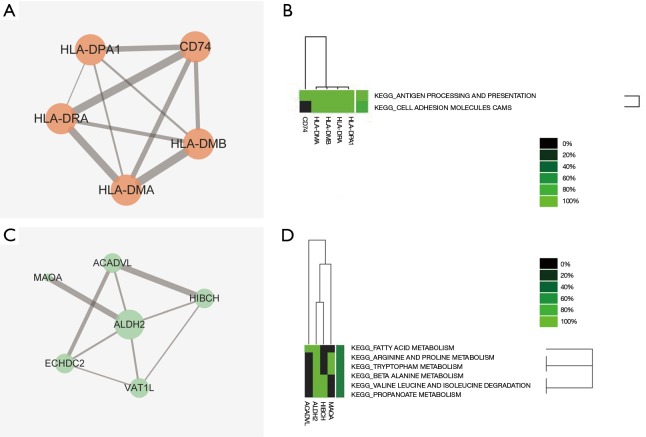
Results: A total of 107 DEGs were identified in CAVD (53 up-regulated genes, and 54 down-regulated genes), and they were mainly enriched in the terms of immune response, extracellular matrix organization, leukocyte transendothelial migration, cell adhesion molecules (CAMs), and fatty acid metabolism. Five hub genes including VCAM1, MMP9, ITGB2, RAC2, and vWF were identified via PPI network, which were mainly enriched in terms of leukocyte transendothelial migration and cell adhesion. An independently down-regulated protein cluster containing ALDH2, HIBCH, ACADVL, ECHDC2, VAT1L, and MAOA was also identified via PPI network.
Conclusions: The present study identified VCAM1, MMP9, ITGB2, RAC2, vWF and ALDH2 as key genes in the progression of CAVD. Immune cells infiltration might play a key role in the progression of CAVD, while ALDH2-mediated detoxification effect might play a protective role in CAVD. Further studies are needed to elucidate the pathogenesis of CAVD.
Keywords: Calcific aortic valve disease (CAVD); Gene Expression Omnibus (GEO) data; differentially expressed genes (DEGs); integrated bioinformatics analysis.
2019 Journal of Thoracic Disease. All rights reserved.
Conflict of interest statement
Conflicts of Interest: The authors have no conflicts of interest to declare.
Figures

Comment in
-
Novel insights into the molecular basis of calcific aortic valve disease.J Thorac Dis. 2020 Nov;12(11):6419-6421. doi: 10.21037/jtd-20-1669. J Thorac Dis. 2020. PMID: 33282343 Free PMC article. No abstract available.
References
LinkOut - more resources
Full Text Sources
Other Literature Sources
Miscellaneous