High-Cost Cancer Treatment Across Borders in Conflict Zones: Experience of Iraqi Patients in Lebanon
- PMID: 32031440
- PMCID: PMC6998032
- DOI: 10.1200/JGO.19.00281
High-Cost Cancer Treatment Across Borders in Conflict Zones: Experience of Iraqi Patients in Lebanon
Abstract
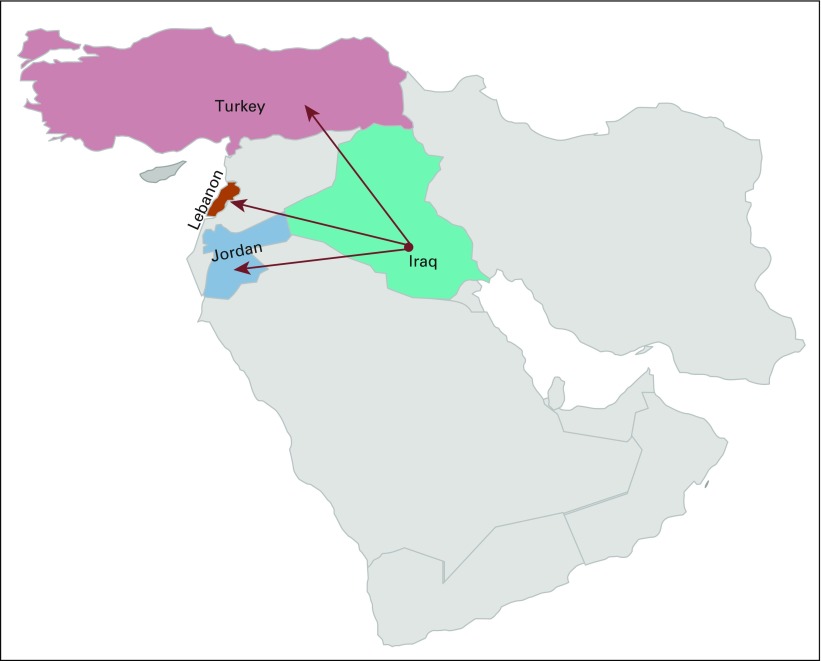
Purpose: Conflict-induced cross-border travel for medical treatment is commonly observed in the Middle East. There has been little research conducted on the financial impact this has on patients with cancer or on how cancer centers can adapt their services to meet the needs of this population. This study examines the experience of Iraqi patients seeking care in Lebanon, aiming to understand the social and financial contexts of conflict-related cross-border travel for cancer diagnosis and treatment.
Patients and methods: After institutional review board approval, 60 Iraqi patients and caregivers seeking cancer care at a major tertiary referral center in Lebanon were interviewed.
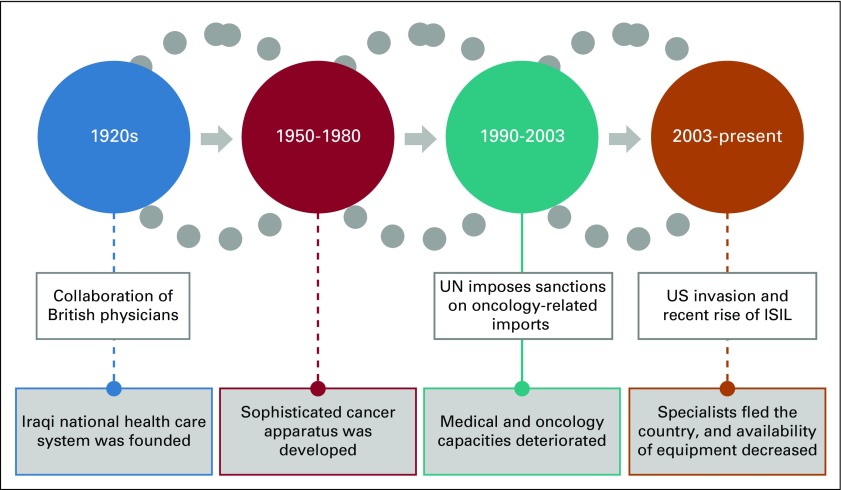
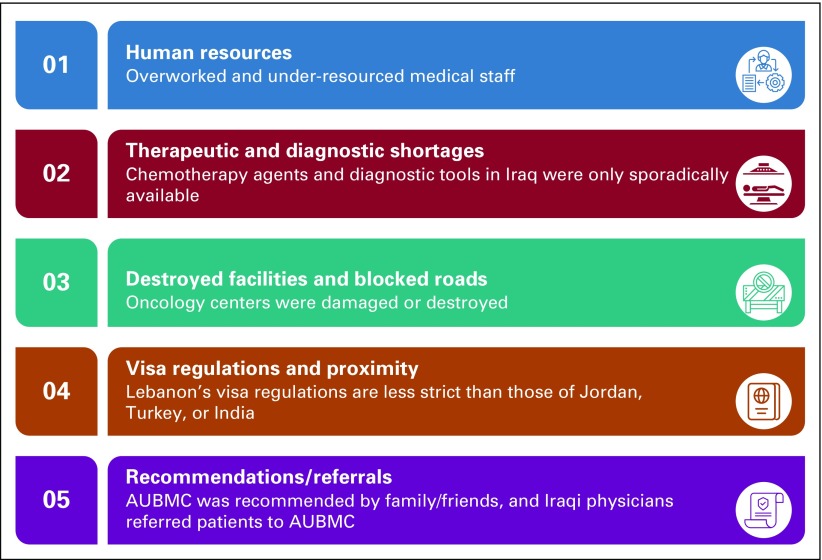
Results: Fifty-four respondents (90%) reported high levels of financial distress. Patients relied on the sale of possessions (48%), the sale of homes (30%), and vast networks to raise funds for treatment. Thematic analysis revealed several key drivers for undergoing cross-border treatment, including the conflict-driven exodus of Iraqi oncology specialists; the destruction of hospitals or road blockages; referrals by Iraqi physicians to Lebanese hospitals; the geographic proximity of Lebanon; and the lack of diagnostic equipment, radiotherapy machines, and reliable provision of chemotherapy in Iraqi hospitals.
Conclusion: As a phenomenon distinct from medical tourism, conflict-related deficiencies in health care at home force patients with limited financial resources to undergo cancer treatment in neighboring countries. We highlight the importance of shared decision making and consider the unique socioeconomic status of this population of patients when planning treatment.
Conflict of interest statement
Sally Temraz
Ali Shamseddine
Kadhim F. Namiq
Deborah Mukherji
No other potential conflicts of interest were reported.
Figures

References
-
- Dewachi O, Skelton M, Nguyen VK, et al. Changing therapeutic geographies of the Iraqi and Syrian wars. Lancet. 2014;383:449–457. - PubMed
-
- Dewachi O, Rizk A, Singh NV. (Dis)connectivities in wartime: The therapeutic geographies of Iraqi healthcare-seeking in Lebanon. Glob Public Health. 2018;13:288–297. - PubMed
-
- Alwan N, Kerr D. Cancer control in war-torn Iraq. Lancet Oncol. 2018;19:291–292. - PubMed
-
- Burnham GM, Lafta R, Doocy S. Doctors leaving 12 tertiary hospitals in Iraq, 2004-2007. Soc Sci Med. 2009;69:172–177. - PubMed
MeSH terms
LinkOut - more resources
Full Text Sources
Medical
Research Materials