


Defeating Antibiotic-Resistant Bacteria: Exploring Alternative Therapies for a Post-Antibiotic Era
- PMID: 32033477
- PMCID: PMC7037027
- DOI: 10.3390/ijms21031061
Defeating Antibiotic-Resistant Bacteria: Exploring Alternative Therapies for a Post-Antibiotic Era
Abstract
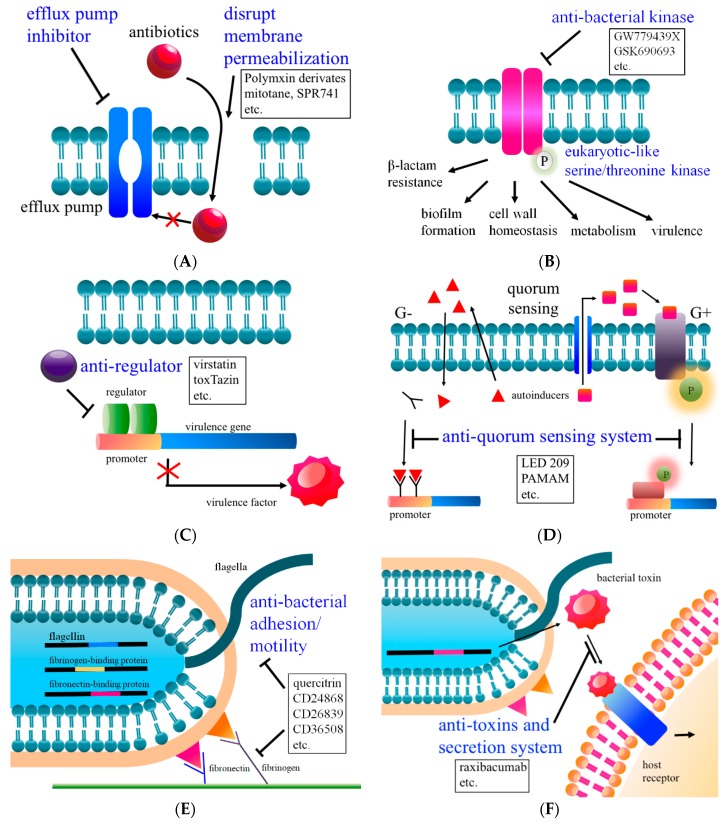
Antibiotics are one of the greatest medical advances of the 20th century, however, they are quickly becoming useless due to antibiotic resistance that has been augmented by poor antibiotic stewardship and a void in novel antibiotic discovery. Few novel classes of antibiotics have been discovered since 1960, and the pipeline of antibiotics under development is limited. We therefore are heading for a post-antibiotic era in which common infections become untreatable and once again deadly. There is thus an emergent need for both novel classes of antibiotics and novel approaches to treatment, including the repurposing of existing drugs or preclinical compounds and expanded implementation of combination therapies. In this review, we highlight to utilize alternative drug targets/therapies such as combinational therapy, anti-regulator, anti-signal transduction, anti-virulence, anti-toxin, engineered bacteriophages, and microbiome, to defeat antibiotic-resistant bacteria.
Keywords: alternative therapies; antibiotic resistance; regulator; signal transduction; virulence factors.
Conflict of interest statement
The authors declare that they have no competing interests.
Figures
References
Publication types
MeSH terms
Substances
Grants and funding
LinkOut - more resources
Full Text Sources
Medical
Molecular Biology Databases
