Diaphragm disease of the terminal ileum presenting as acute small bowel obstruction
- PMID: 32034000
- PMCID: PMC7035816
- DOI: 10.1136/bcr-2019-233537
Diaphragm disease of the terminal ileum presenting as acute small bowel obstruction
Abstract
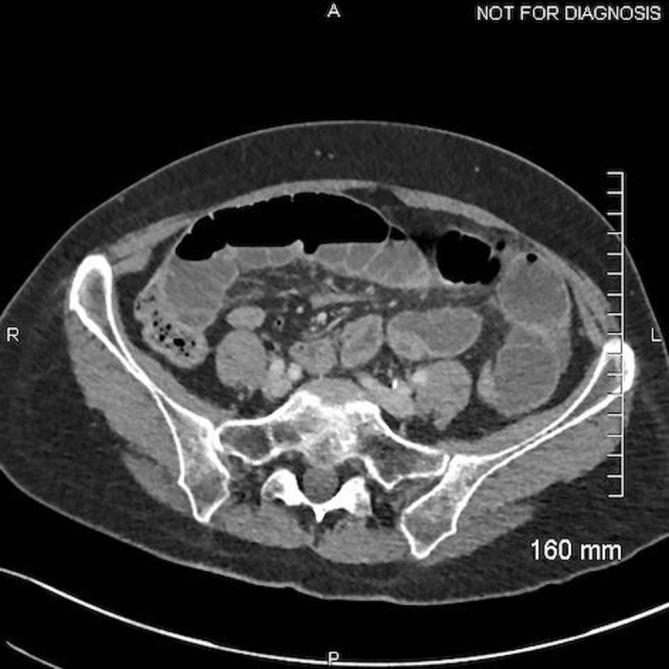
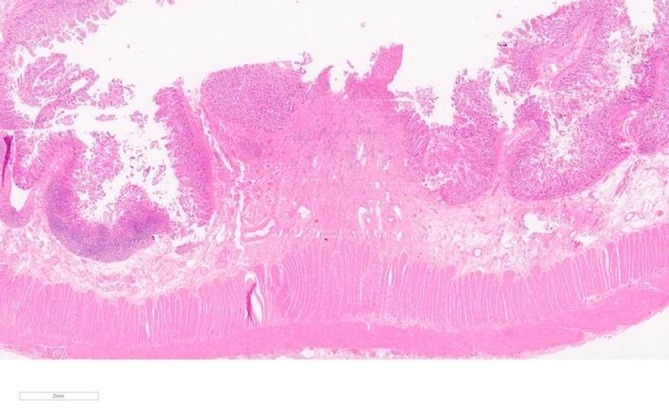
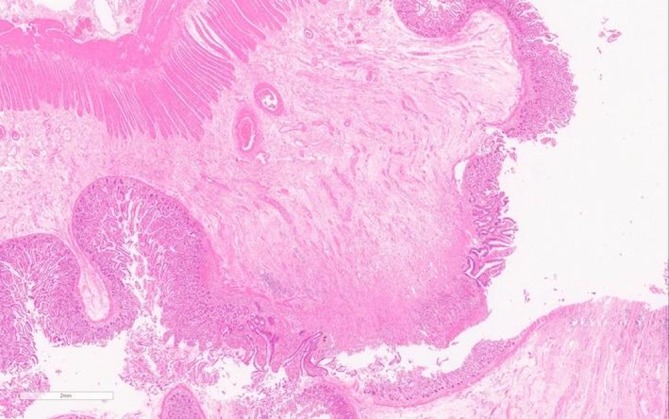
Diaphragm disease (DD) of the small bowel is a rarely reported complication of non-steroidal anti-inflammatory drug (NSAID) use, characterised by diaphragm-like strictures, most commonly in the ileum, causing varying degrees of obstruction. It typically presents in the elderly, over many years with non-specific symptoms. Diagnosis is challenging, the majority of cases relying on histopathology for confirmation. Treatment involves NSAID cessation and surgery through a combination of stricturoplasties and/or segmental resection. Very rarely DD presents as a surgical emergency. A case presenting as acute small bowel obstruction (SBO) is described, initially diagnosed as adhesions, later confirmed to be DD of the terminal ileum following histopathological examination. Given the widespread use of NSAIDs and an ageing population, it is likely the incidence of DD will increase. It is, therefore, important that surgeons are aware of this disease entity and consider it as a potential diagnosis in patients presenting with acute SBO.
Keywords: drugs: gastrointestinal system; gastrointestinal surgery; rheumatoid arthritis; unwanted effects/adverse reactions.
© BMJ Publishing Group Limited 2020. No commercial re-use. See rights and permissions. Published by BMJ.
Conflict of interest statement
Competing interests: None declared.
Figures
References
Publication types
MeSH terms
Substances
LinkOut - more resources
Full Text Sources
Medical