


Frequency, Pattern, and Treatment of Hand Fractures in Children and Adolescents: A 27-Year Review of 4356 Pediatric Hand Fractures
- PMID: 32036680
- PMCID: PMC8721808
- DOI: 10.1177/1558944719900565
Frequency, Pattern, and Treatment of Hand Fractures in Children and Adolescents: A 27-Year Review of 4356 Pediatric Hand Fractures
Abstract
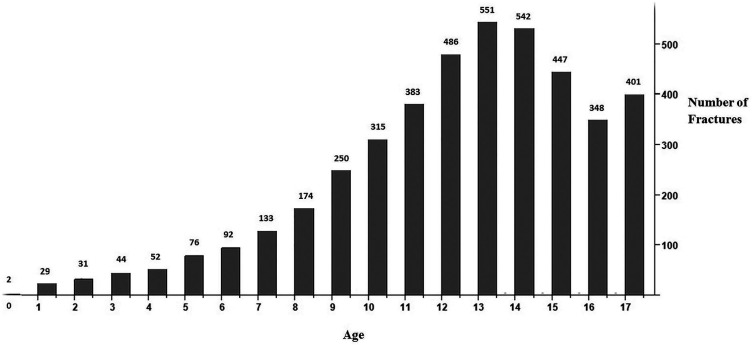
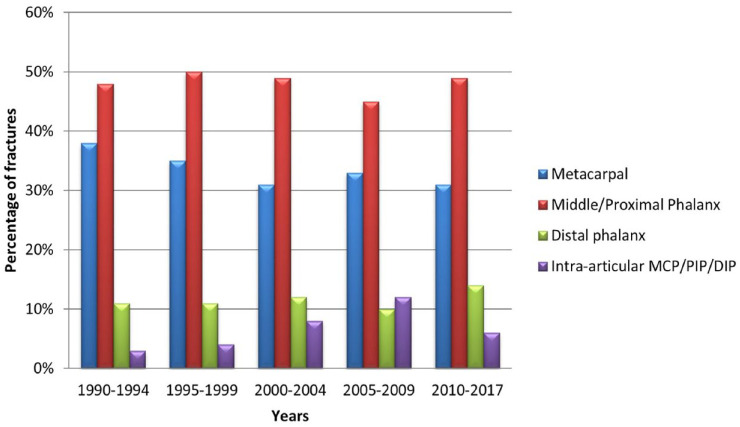
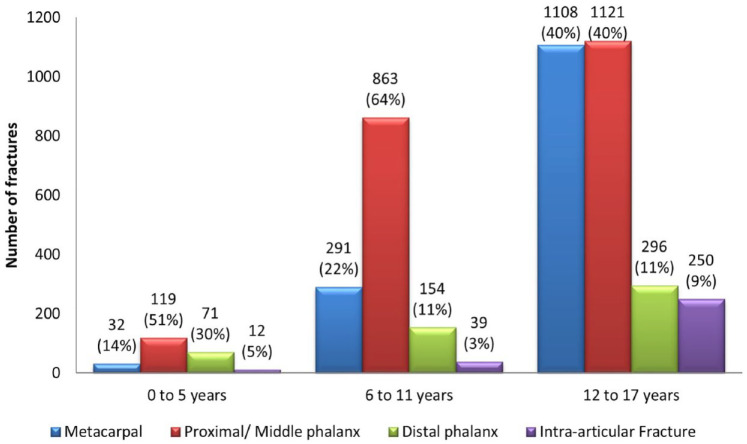
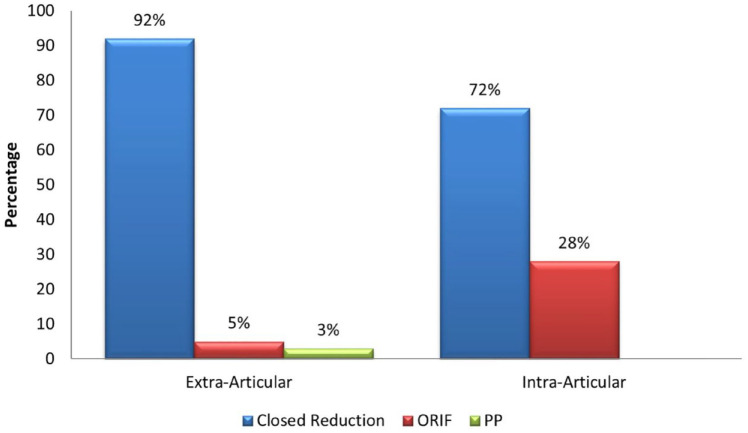
Background: The frequency, pattern, and treatment of pediatric hand fractures are rarely reported. We sought to review our institution's experience in the management of pediatric hand fractures. Methods: A retrospective review of children and adolescents (younger than 18 years) treated for hand fractures between January 1990 and June 2017 was preformed. Fractures were categorized into metacarpal, proximal/middle phalanx, distal phalanx, or intra-articular metacarpophalangeal (MCP)/proximal interphalangeal (PIP)/distal interphalangeal (DIP) fractures. Patients were categorized into 3 age groups (0-5, 6-11, and 12-17 years). Results: A total of 4356 patients were treated for hand fractures at a mean ± SD age of 12.2 ± 3.5 years. Most fractures occurred in patients aged 12 to 17 years (n = 2775, 64%), followed by patients aged 6 to 11 years (n = 1347, 31%). Only 234 (5%) fractures occurred in children younger than 5 years. Most fractures occurred in the proximal/middle phalanx (48%), followed by metacarpal (33%), distal phalangeal (12%), and intra-articular MCP/PIP/DIP joints (7%). Proximal/middle phalangeal fractures were the most common in all age groups. About 58% of intra-articular MCP/PIP/DIP fractures in patients aged between 0 and 5 years required open reduction ± fixation, and the remaining 42% fractures were amenable to closed reduction. In patients older than 5 years, about 70% of these fractures were amenable to closed reduction. All age groups included, most metacarpal (93%), proximal/middle phalangeal (92%), and distal phalangeal (86%) fractures were amenable to closed reduction alone. Conclusions: The frequency, pattern, and treatment of hand fractures vary among different age groups. Understanding the pattern of these fractures helps making the right diagnosis and guides choosing the appropriate treatment.
Keywords: diagnosis; hand fractures; incidence; pattern; pediatric; research and health outcomes; treatment.
Conflict of interest statement
Figures
References
-
- Barton NJ. Fractures of the phalanges of the hand in children. Hand. 1979;11(2):134-143. - PubMed
-
- Hastings H, 2nd, Simmons BP. Hand fractures in children. A statistical analysis. Clin Orthop Relat Res. 1984(188):120-130. - PubMed
-
- Naranje SM, Erali RA, Warner WC, Jr, et al.. Epidemiology of pediatric fractures presenting to Emergency Departments in the United States. J Pediatr Orthop. 2016;36(4):e45-e48. - PubMed
-
- Antabak A, Barisic B, Andabak M, et al.. [Hand fractures in children — causes and mechanisms of injury]. Lijec Vjesn. 2015;137(9-10):306-310. - PubMed
Publication types
MeSH terms
LinkOut - more resources
Full Text Sources
Medical
Miscellaneous
