


AKI-A Relevant Safety End Point?
- PMID: 32037098
- PMCID: PMC7092818
- DOI: 10.1053/j.ajkd.2019.11.010
AKI-A Relevant Safety End Point?
Abstract
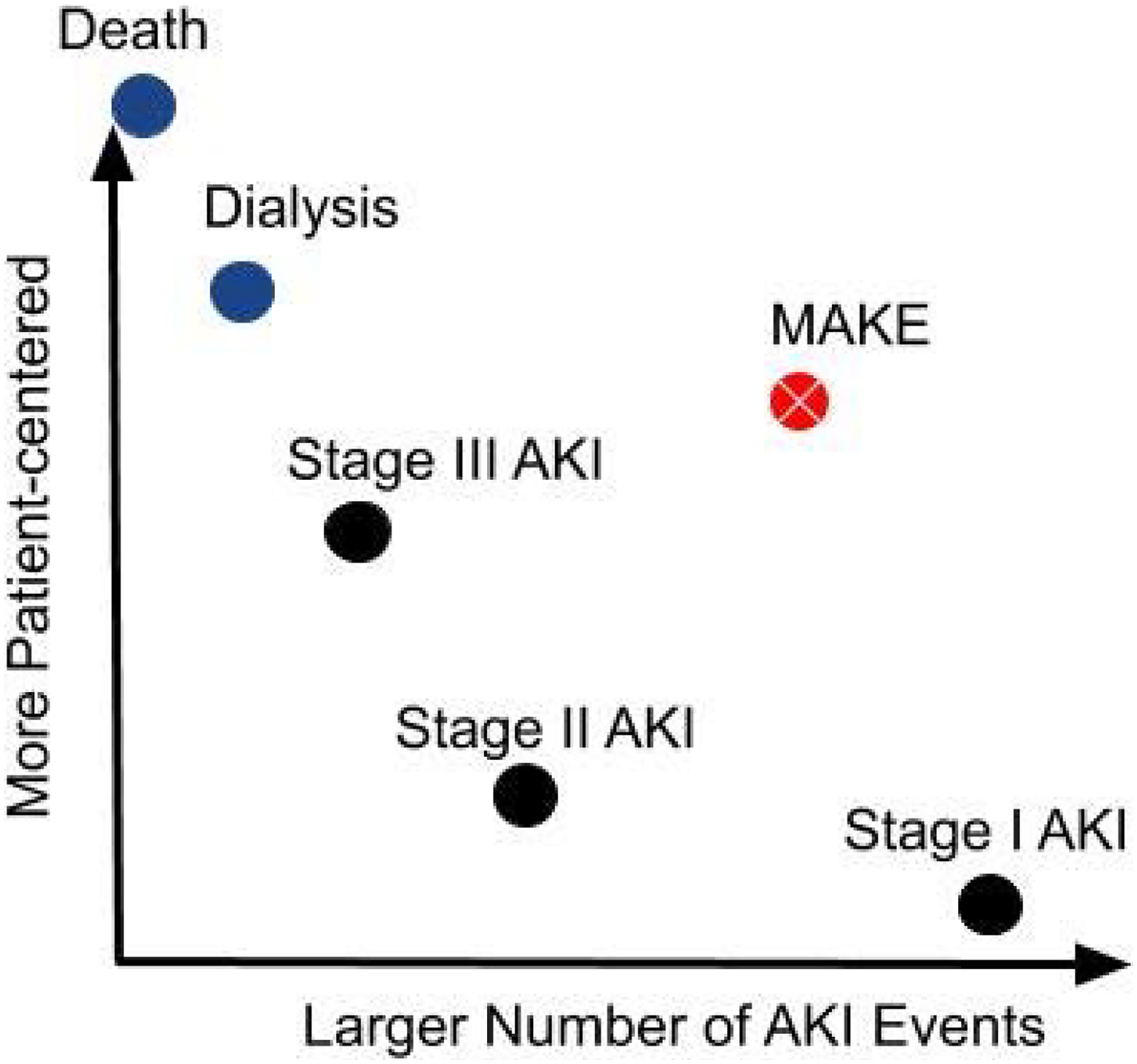
Acute kidney injury (AKI) is a common outcome evaluated in clinical studies, often as a safety end point in a variety of cardiovascular, kidney disease, and other clinical trials. AKI end points that include modest increases in serum creatinine levels from baseline may not associate with patient-centered outcomes such as initiation of dialysis, sustained decline in kidney function, or death. Surprisingly, data from several randomized controlled trials have suggested that in certain settings, the development of AKI may be associated with favorable outcomes. AKI safety end points that are nonspecific and may not associate with patient-centered outcomes could result in beneficial therapies being inappropriately withheld or never developed for commercial use. We review several issues related to commonly used AKI definitions and suggest that future work in AKI use more patient-centered AKI end points such as major adverse kidney events at 30 days or other later time points.
Keywords: AKI definition; Acute kidney injury (AKI); acute decompensated heart failure (ADHF); acute renal failure (ARF); biomarker; blood pressure control; clinical trials; hemodynamics; kidney damage; kidney function; major adverse kidney events (MAKE); patient-centered outcome (PCO); prognosis; safety; safety signal; serum creatinine (sCr); surrogate outcome; trial end point.
Copyright © 2019 National Kidney Foundation, Inc. Published by Elsevier Inc. All rights reserved.
Conflict of interest statement
Figures
References
-
- Bellomo R, Ronco C, Kellum JA, Mehta RL, Palevsky P, Acute Dialysis Quality Initiative workgroup. Acute renal failure - definition, outcome measures, animal models, fluid therapy and information technology needs: the Second International Consensus Conference of the Acute Dialysis Quality Initiative (ADQI) Group. Crit Care. 2004;8(4):R204–12. doi:10.1186/cc2872 - DOI - PMC - PubMed
-
- Kidney Disease: Improving Global Outcomes (KDIGO) Acute Kidney Injury Working Group. KDIGO Clinical Practice Guideline for Acute Kidney Injury. Kidney Int Suppl. 2012;2(1):1–138. doi:10.1038/kisup.2012.7 - DOI
Publication types
MeSH terms
Substances
Grants and funding
LinkOut - more resources
Full Text Sources
