


Physical Activity as a New Tool to Evaluate the Response to Omalizumab and Mepolizumab in Severe Asthmatic Patients: A Pilot Study
- PMID: 32038267
- PMCID: PMC6992710
- DOI: 10.3389/fphar.2019.01630
Physical Activity as a New Tool to Evaluate the Response to Omalizumab and Mepolizumab in Severe Asthmatic Patients: A Pilot Study
Abstract
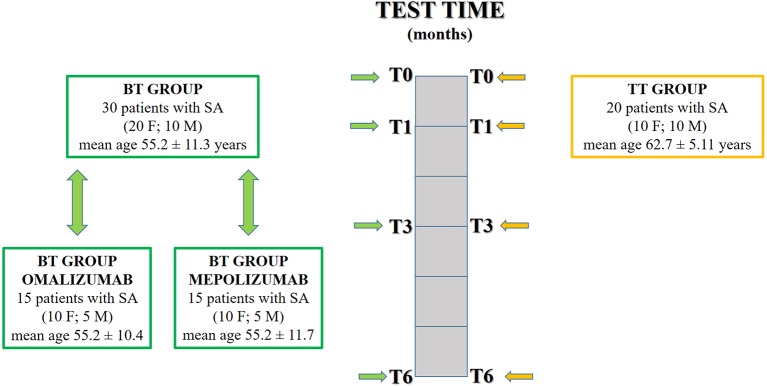
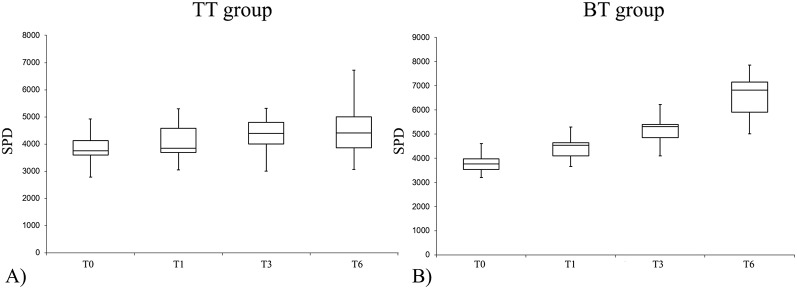
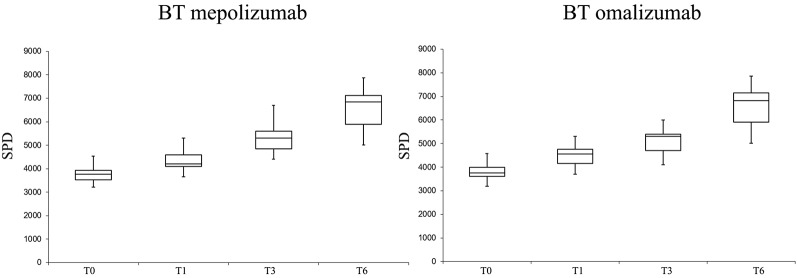
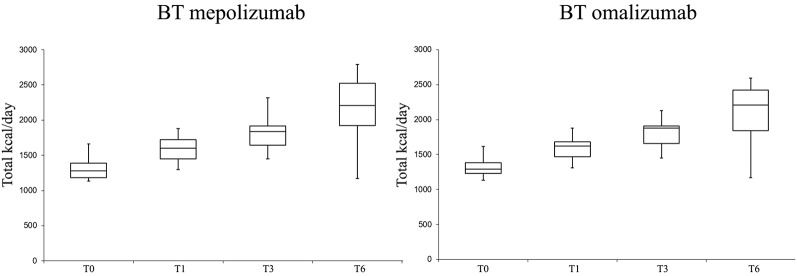
Asthma is a chronic inflammatory airway disease, representing one of the most severe pathologies in developed countries. Based on a report of the World Health Organization (WHO), it affects about 300 million people worldwide. Few studies have analyzed the effects of daily life physical activity (PA) levels in patients with asthma: moreover, little research has been carried out on PA levels in patients suffering from severe asthma (SA). This study aimed to investigate the PA levels in two groups of patients suffering from SA; in particular, this study analyzed the changes that occur in patients treated with biologic therapy (BT group) and patients who underwent traditional treatment (TT group) over 6 months. Moreover, this study represents a pilot study because, to the best of our knowledge, it is the first investigation that analyzed if the kind of biologic drug (omalizumab or mepolizumab) can produce differences in the PA levels of SA patients. Fifty SA patients were enrolled and PA parameters were monitored for 6 months. Subjects were divided into two treatment groups: TT (20 patients) and BT (30 patients), the BT group was further subdivided according to the drugs used (15, omalizumab; 15, mepolizumab). During drug treatment, all subjects improved their PA levels: indeed, considering the intragroup variation, the PA levels were significantly higher comparing the T6 levels to baseline (T0, p < 0.01). Considering the intragroup variation, it is very interesting to note that biologic therapy improved PA levels compared to the effects of traditional therapy; while at T0 there were no significant differences in the steps per day (SPD) values between the two groups (T0, p = 0.85), the differences become statistically significant at T1, T3, and T6 (T1, p = 0.019; T3, p = 3.48x10⁻⁶; T6, p = 4.78x10⁻¹⁰). As expected, the same differences were reported analyzing the energy expenditure data. In conclusion, this pilot study reports a positive relationship between biologic drug therapy and PA patterns, even if further studies are needed.
Keywords: mepolizumab; omalizumab; physical activity; quality of life; severe asthma.
Copyright © 2020 Carpagnano, Sessa, Scioscia, Lacedonia, Foschino, Venuti, Triggiani, Valenzano, Resta, Cibelli and Messina.
Figures
References
-
- Canonica G. W., Rottoli P., Bucca C., Zappa M. C., Michetti G., Macciocchi B., et al. (2018). Improvement of patient-reported outcomes in severe allergic asthma by omalizumab treatment: the real life observational PROXIMA study. World Allergy Organ. J. 11, 33. 10.1186/s40413-018-0214-3 - DOI - PMC - PubMed
LinkOut - more resources
Full Text Sources
Research Materials
