


Culture-Dependent and Culture-Independent Characterization of the Olive Xylem Microbiota: Effect of Sap Extraction Methods
- PMID: 32038682
- PMCID: PMC6988092
- DOI: 10.3389/fpls.2019.01708
Culture-Dependent and Culture-Independent Characterization of the Olive Xylem Microbiota: Effect of Sap Extraction Methods
Abstract
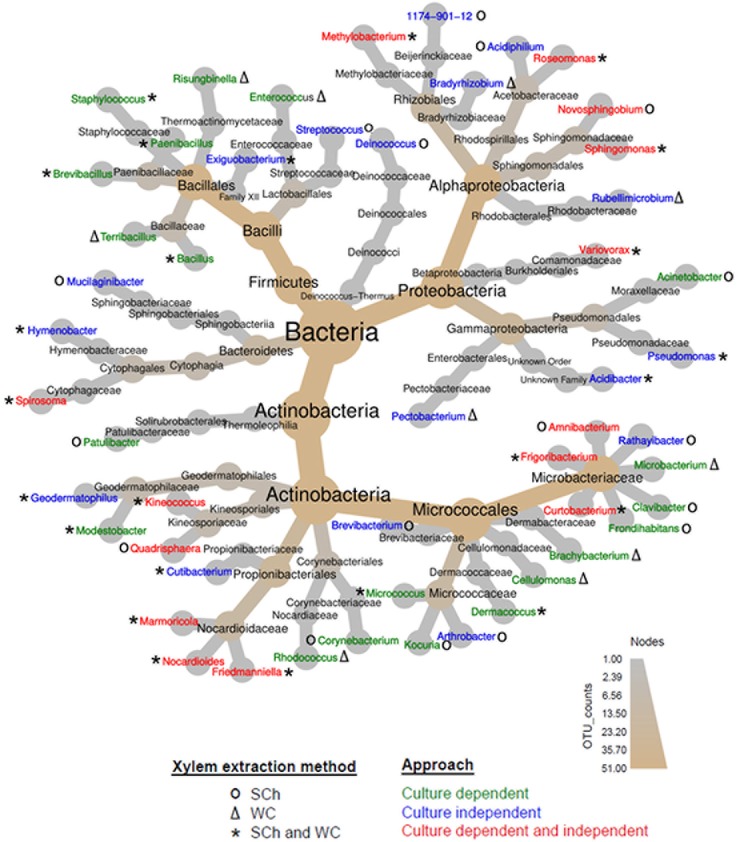
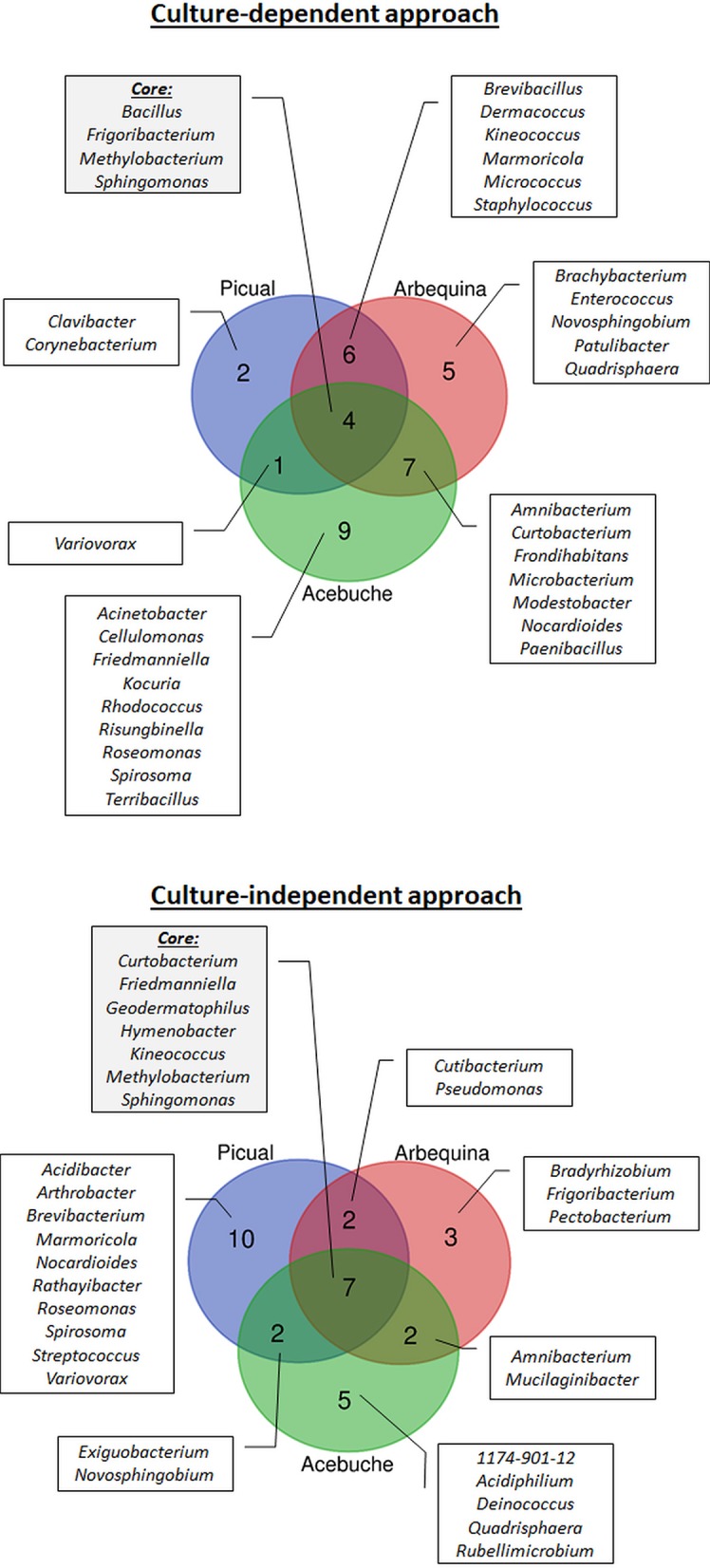
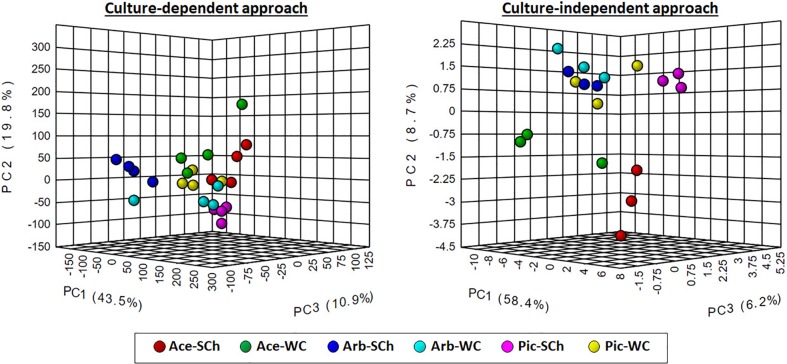
Microbial endophytes are well known to protect host plants against pathogens, thus representing a promising strategy for the control of xylem-colonizing pathogens. To date, the vast majority of microbial communities inhabiting the olive xylem are unknown; therefore, this work pursues the characterization of the xylem-limited microbiome and determines whether the culture isolation medium, olive genotype, and the plant material used to analyze it can have an effect on the bacterial populations retrieved. Macerated xylem tissue and xylem sap extracted with the Scholander chamber from olive branches obtained from two cultivated and a wild olive genotypes were analyzed using culture-dependent and -independent approaches. In the culture-dependent approach using four solid culture media, a total of 261 bacterial isolates were identified after performing Sanger sequencing of 16S rRNA. Culturable bacteria clustered into 34 genera, with some effect of culture media for bacterial isolation. The cultivated bacteria belonged to four phyla and the most abundant genera included Frigoribacterium (18.8%), Methylobacterium (16.4%), and Sphingomonas (14.6%). On the other hand, in the culture-independent approach conducted using Illumina MiSeq 16S rRNA amplicon sequencing [next-generation sequencing (NGS)] of the xylem extracts, we identified a total of 48 operational taxonomic units (OTUs) belonging to five phyla, being Sphingomonas (30.1%), Hymenobacter (24.1%) and Methylobacterium (22.4%) the most representative genera (>76% of reads). In addition, the results indicated significant differences in the bacterial communities detected in the xylem sap depending on the genotype of the olive tree studied and, to a minor extent, on the type of sap extraction method used. Among the total genera identified using NGS, 14 (41.2%) were recovered in the culture collection, whereas 20 (58.8%) in the culture collection were not captured by the NGS approach. Some of the xylem-inhabiting bacteria isolated are known biocontrol agents of plant pathogens, whereas for others little information is known and are first reported for olive. Consequently, the potential role of these bacteria in conferring olive tree protection against xylem pathogens should be explored in future research.
Keywords: culture; microbiome; next-generation sequencing; vascular pathogens; xylem.
Copyright © 2020 Anguita-Maeso, Olivares-García, Haro, Imperial, Navas-Cortés and Landa.
Figures


References
-
- Aranda S., Montes-Borrego M., Jiménez-Díaz R. M., Landa B. B. (2011). Microbial communities associated with the root system of wild olives (Olea europaea L. subsp. europaea var. sylvestris) are good reservoirs of bacteria with antagonistic potential against Verticillium dahliae. Plant Soil 343, 329–345. 10.1007/s11104-011-0721-2 - DOI
LinkOut - more resources
Full Text Sources
Miscellaneous
