


Mutation Spectrum of Stickler Syndrome Type I and Genotype-phenotype Analysis in East Asian Population: a systematic review
- PMID: 32039712
- PMCID: PMC7008542
- DOI: 10.1186/s12881-020-0963-z
Mutation Spectrum of Stickler Syndrome Type I and Genotype-phenotype Analysis in East Asian Population: a systematic review
Abstract
Background: Stickler syndrome is the most common genetic cause of rhegmatogenous retinal detachment (RRD) in children, and has a high risk of blindness. Type I (STL1) is the most common subtype, caused by COL2A1 mutations. This study aims to analyze the mutation spectrum of COL2A1 and further elucidate the genotype-phenotype relationships in the East Asian populations with STL1, which is poorly studied at present.
Methods: By searching MEDLINE, Web of Science, CNKI, Wanfang Data, HGMD and Clinvar, all publications associated with STL1 were collected. Then, they were carefully screened to obtain all reported STL1-related variants in COL2A1 and clinical features in East Asian patients with STL1.
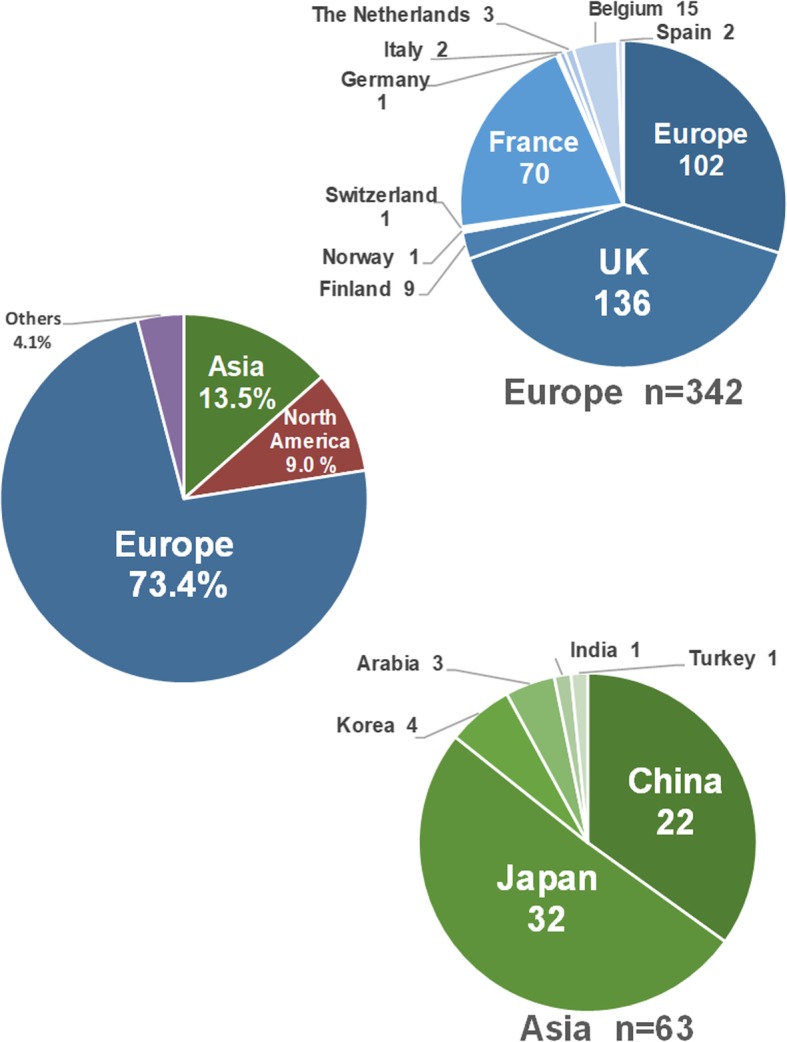
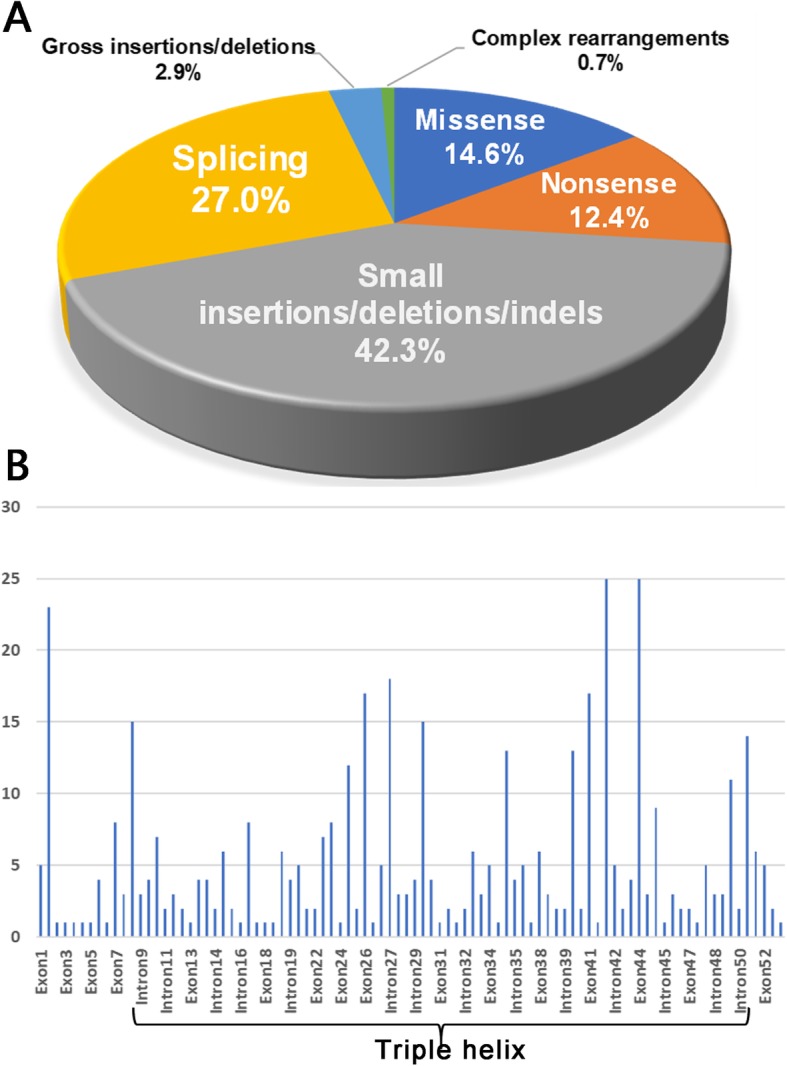
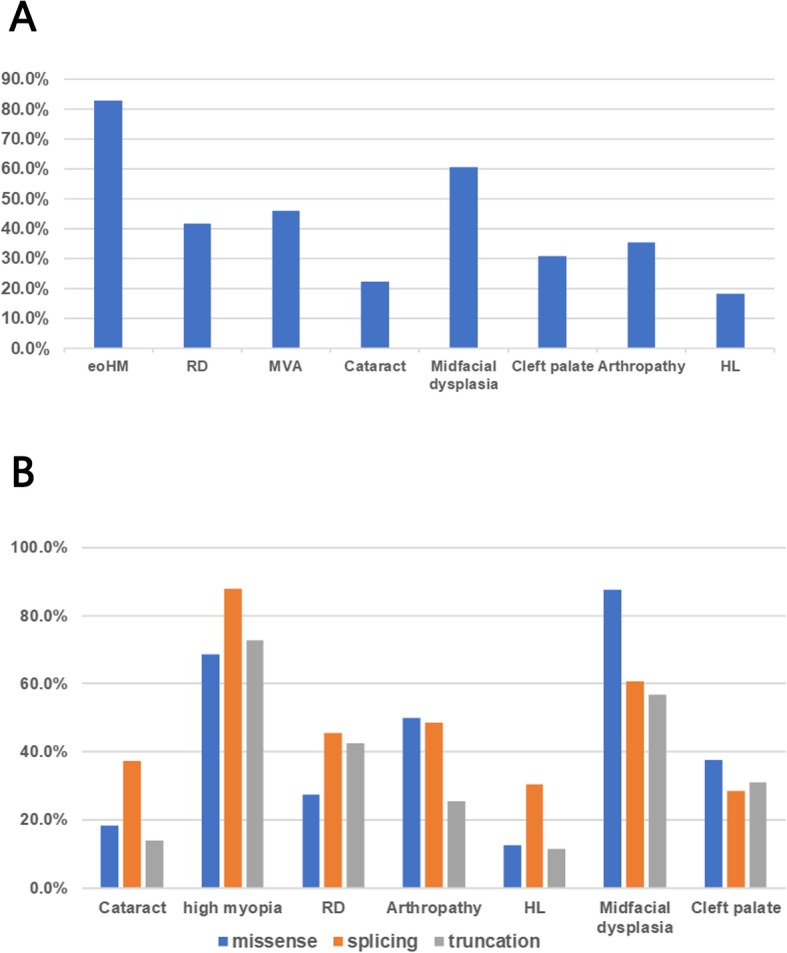
Results: There were 274 COL2A1 variants identified in 999 patients with STL1 from 466 unrelated families, and more than half of them were truncation mutations. Of the 107 STL1 patients reported in the East Asian population, it was found that patients with truncation mutations had milder systemic phenotypes, whereas patients with splicing mutations had severer phenotypes. In addition, several recurrent variants (c.3106C > T, c.1833 + 1G > A, c.2710C > T and c.1693C > T) were found.
Conclusions: Genotype-phenotype correlations should certainly be studied carefully, contributed to making personalized follow-up plans and predicting prognosis of this disorder. Genome editing holds great potential for treating inherited diseases caused by pathogenic mutations. In this study, several recurrent variants were found, providing potential candidate targets for genetic manipulation in the future.
Keywords: COL2A1; Gene therapy; Genotype-phenotype correlation; Retinal detachment; Stickler syndrome.
Conflict of interest statement
The authors declare that they have no competing interests.
Figures
References
-
- Stickler GB, Belau PG, Farrell FJ, Jones JD, Pugh DG, Steinberg AG, Ward LE. Hereditary progressive arthro-ophthalmopathy. Mayo Clin Proc. 1965;40:433–455. - PubMed
Publication types
MeSH terms
Supplementary concepts
LinkOut - more resources
Full Text Sources
Medical
