. 2020 Feb 10;18(1):64.
doi: 10.1186/s12967-020-02243-w.

Overexpression of a panel of cancer stem cell markers enhances the predictive capability of the progression and recurrence in the early stage cholangiocarcinoma

Affiliations

Overexpression of a panel of cancer stem cell markers enhances the predictive capability of the progression and recurrence in the early stage cholangiocarcinoma

Sureerat Padthaisong et al. J Transl Med. .

Abstract

Background: Cancer recurrence is the important problem of cholangiocarcinoma (CCA) patients, lead to a very high mortality rate. Therefore, the identification of candidate markers to predict CCA recurrence is needed in order to effectively manage the disease. This study aims to examine the predictive value of cancer stem cell (CSC) markers on the progression and recurrence of CCA patients.

Methods: The expression of 6 putative CSC markers, cluster of differentiation 44 (CD44), CD44 variant 6 (CD44v6), CD44 variants 8-10 (CD44v8-10), cluster of differentiation 133 (CD133), epithelial cell adhesion molecule (EpCAM), and aldehyde dehydrogenase 1A1 (ALDH1A1), was investigated in 178 CCA tissue samples using immunohistochemistry (IHC) and analyzed with respect to clinicopathological data and patient outcome including recurrence-free survival (RFS) and overall survival (OS). The candidate CSC markers were also investigated in serum from CCA patients, and explored for their predictive ability on CCA recurrence.

Results: Elevated protein level of CD44 and positive expression of CD44v6 and CD44v8-10 were significantly associated with short RFS and OS, while high levels of ALDH1A1 were correlated with a favorable prognosis patient. The elevated CD44v6 level was also correlated with higher tumor staging, whereas a decreasing level of ALDH1A1 was correlated with lower tumor staging. The levels of CD44, CD44v6 and CD44v8-10 were also correlated and were associated with a poor outcome. Furthermore, soluble CD44, CD44v6, CD44v8-10 and EpCAM were significantly increased in the recurrence group for early stage CCA; they also correlated with high levels of the tumor marker CA19-9. Elevated levels of CD44, CD44v6, CD44v8-10 or EpCAM alone or in combination has the potential to predict CCA recurrence.

Conclusions: The overexpression of CD44, CD44v6, CD44v8-10 and EpCAM increases predictability of post-operative CCA recurrence. Moreover, the overexpression of the panel of CSC markers combined with CA19-9 could improve our predictive ability for tumor recurrence in early stage CCA patients. This result may be beneficial for the patients in order to predict the outcome after treatment and may be useful for clinical intervention in order to improve patient survival.

Keywords: Cancer recurrence; Cancer stem cell marker; Cholangiocarcinoma; Prognostic factor; Tumor marker.


Conflict of interest statement

The authors declare that they have no competing interests.

Figures
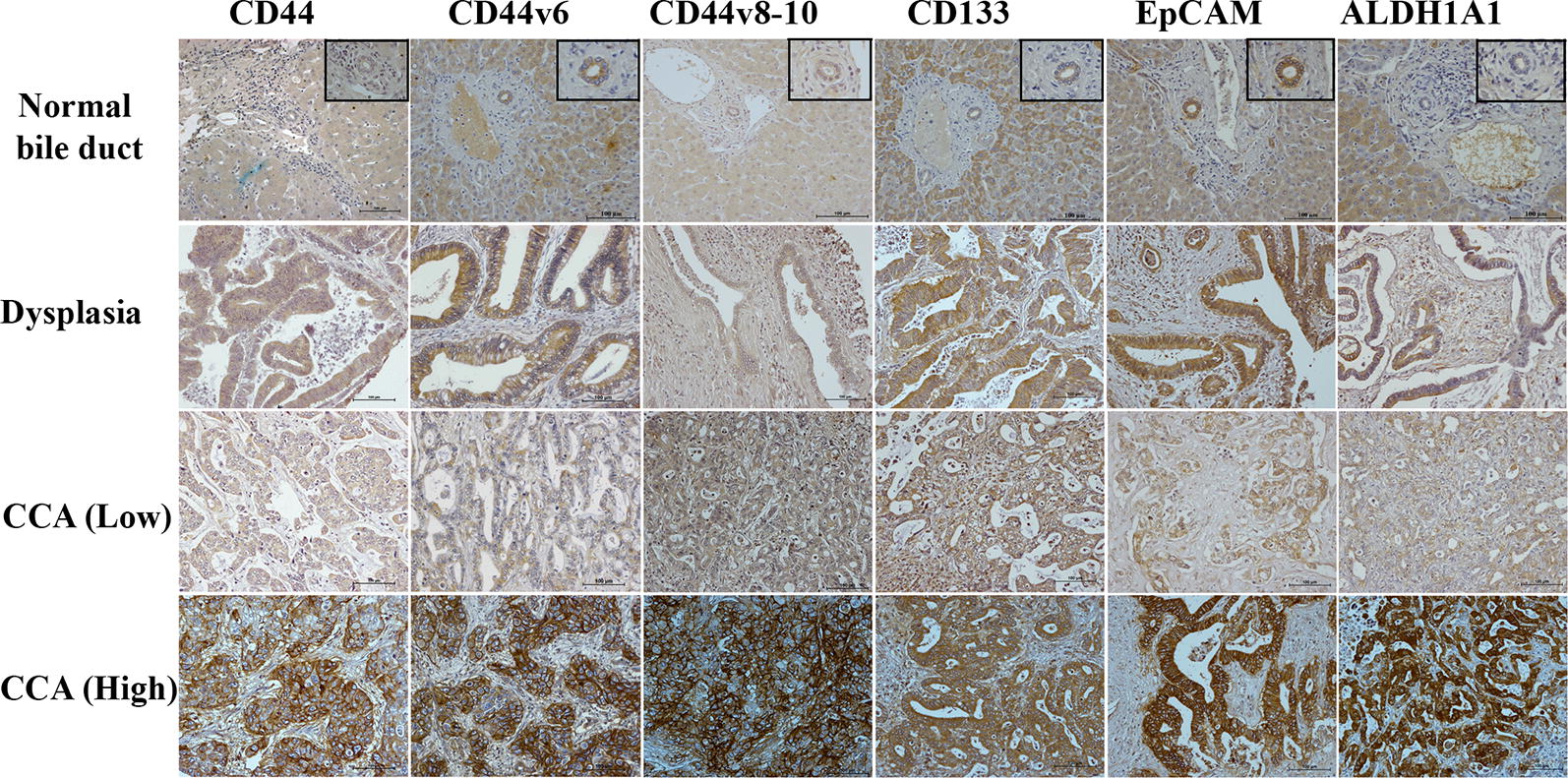
Fig. 1
Fig. 1
Representative immunohistochemical stanning of CD44, CD44v6, CD44v8-10, CD133, EpCAM, and ALDH1A1 in normal bile duct, dysplasia and CCA. For CCA, negative or low membrane expression of CD44, CD44v6, CD44v8-10, CD133, EpCAM are shown in the upper panel and positive and high membrane expression in the lower panel, low cytoplasmic expression of ALDH1A1 is shown in the upper panel and high cytoplasmic expression in the lower panel
Fig. 2
Fig. 2
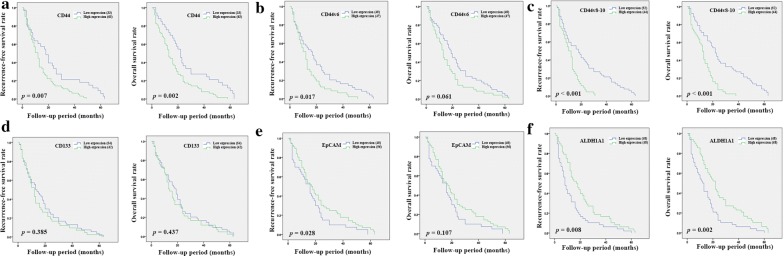
Kaplan–Meier analyses of recurrence-free and overall survival of CD44 (a), CD44v6 (b), CD44v8-10 (c), CD133 (d), EpCAM (e), and ALDH1A1 (f) in intrahepatic CCA patients
Fig. 3
Fig. 3
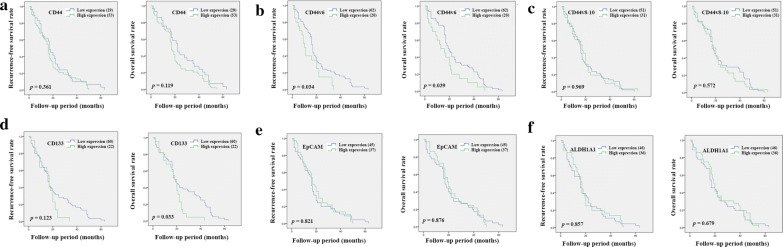
Kaplan–Meier analyses of recurrence-free and overall survival of CD44 (a), CD44v6 (b), CD44v8-10 (c), CD133 (d), EpCAM (e), and ALDH1A1 (f) in extrahepatic CCA patients
Fig. 4
Fig. 4
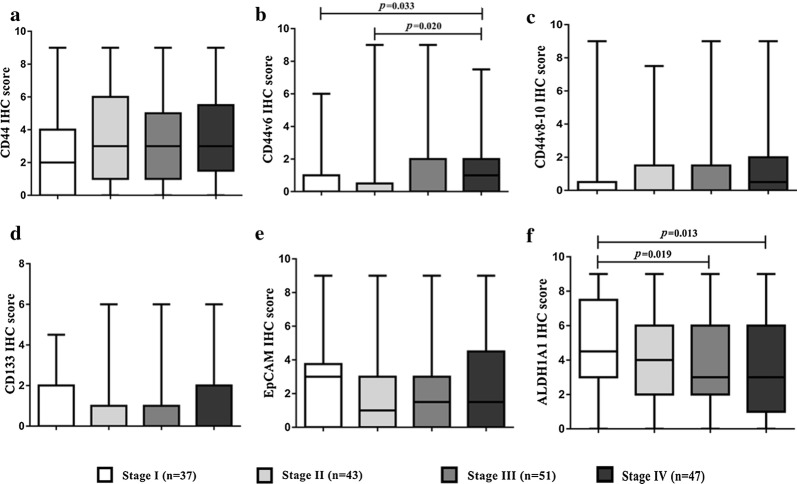
The different IHC scores for the various protein types, CD44 (a), CD44v6 (b), CD44v8-10 (c), CD133 (d), EpCAM (e), and ALDH1A1 (f) according to tumor staging
Fig. 5
Fig. 5
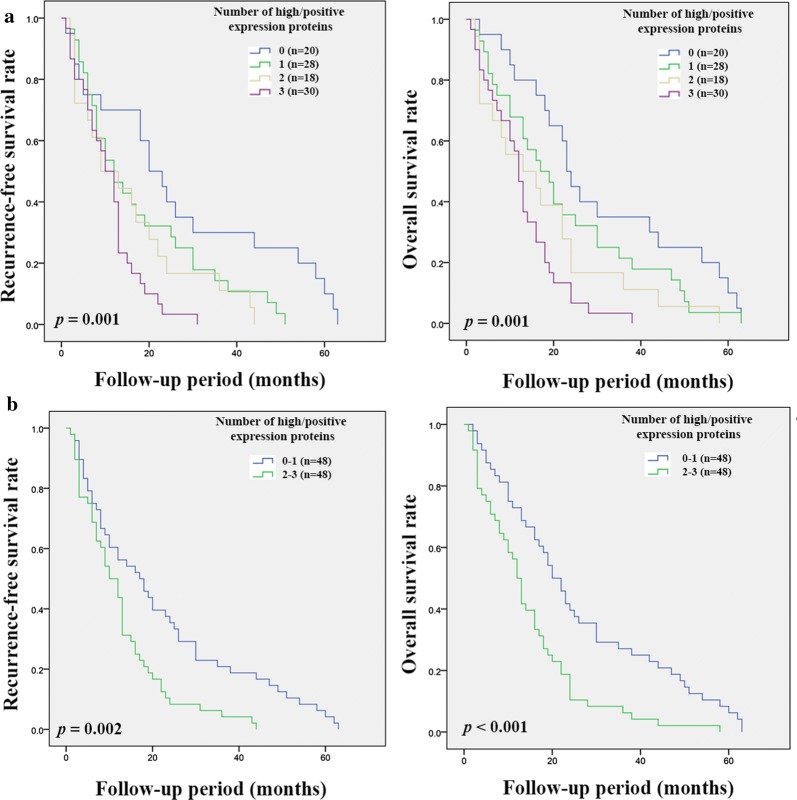
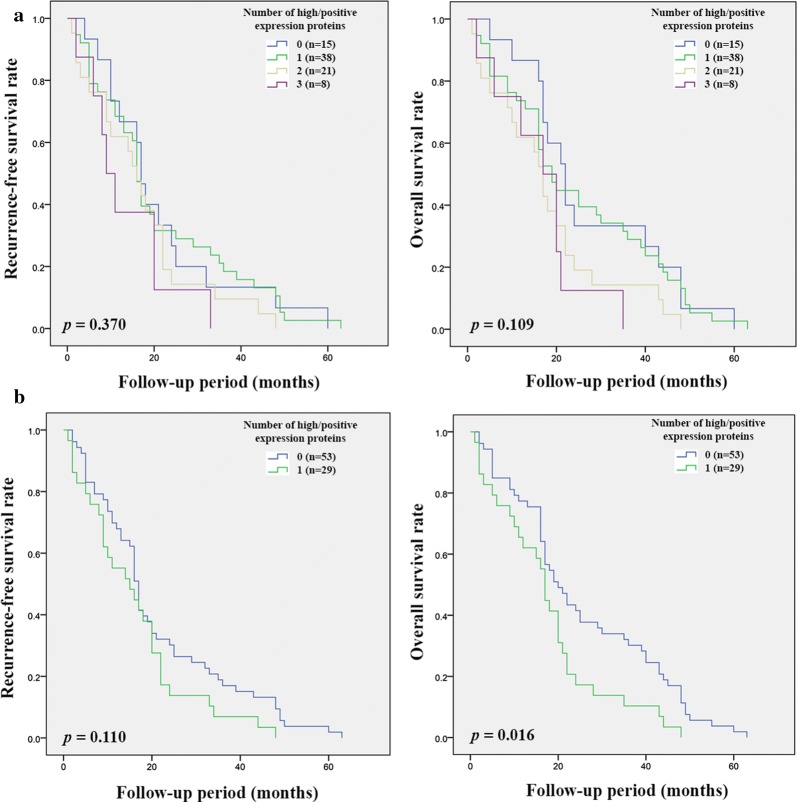
Kaplan–Meier analyses of recurrence-free and overall survival on the combination of CD44, CD44v6, and CD44v8-10 expression in intrahepatic CCA patients. a Recurrence-free and overall survival of patients according to the number of high or positive expression proteins. b Recurrence-free and overall survival of patients with zero or one high or positive expression marker versus high or positive expression of two or three markers
Fig. 6
Fig. 6
Kaplan–Meier analyses of recurrence-free and overall survival on the combination of CD44, CD44v6, and CD44v8-10 expression in extrahepatic CCA patients. a Recurrence-free and overall survival of patients according to the number of high or positive expression proteins. b Recurrence-free and overall survival of patients with zero or one high or positive expression marker versus high or positive expression of two or three markers
Fig. 7
Fig. 7
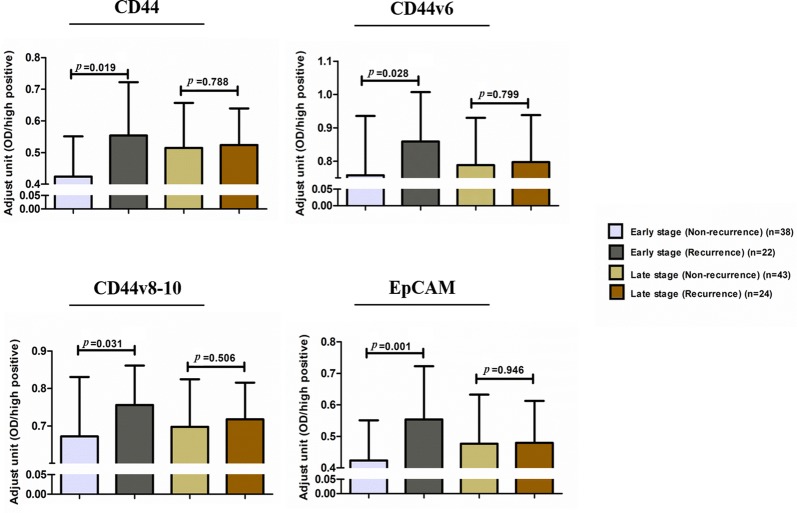
The different levels of soluble CD44, CD44v6, CD44v8-10, and EpCAM in patients with and without recurrence according to tumor staging. Adjusted units were calculated from optical density (OD) sample/OD high positive sample
Fig. 8
Fig. 8
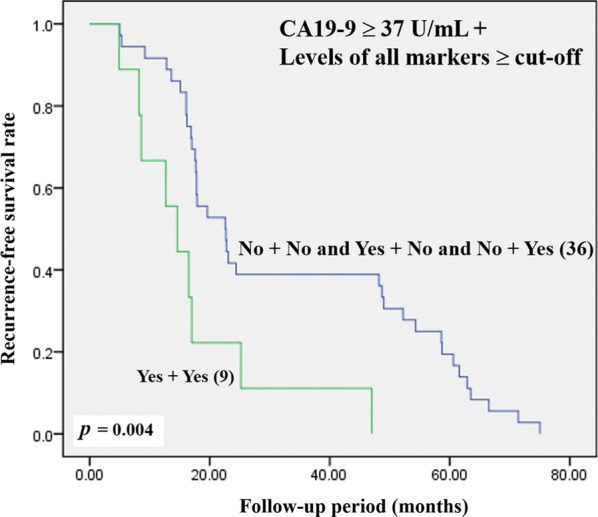
Kaplan–Meier analysis of recurrence-free survival on patients with high levels of CD44, CD44v6, CD44v8-10 and EpCAM with CA19-9 versus other groups of patients

References

    1. Ghouri YA, Mian I, Blechacz B. Cancer review: cholangiocarcinoma. J Carcinog. 2015;14:1. doi: 10.4103/1477-3163.151940. - DOI - PMC - PubMed
    1. Blechacz B. Cholangiocarcinoma: current Knowledge and New Developments. Gut Liver. 2017;11:13–26. doi: 10.5009/gnl15568. - DOI - PMC - PubMed
    1. Titapun A, Pugkhem A, Luvira V, Srisuk T, Somintara O, Saeseow OT, et al. Outcome of curative resection for perihilar cholangiocarcinoma in Northeast Thailand. World J Gastrointest Oncol. 2015;7:503–512. doi: 10.4251/wjgo.v7.i12.503. - DOI - PMC - PubMed
    1. Hoehn RS, Wima K, Ertel AE, Meier A, Ahmad SA, Shah SA, et al. Adjuvant chemotherapy and radiation therapy is associated with improved survival for patients with extrahepatic cholangiocarcinoma. Ann Surg Oncol. 2015;22(Suppl 3):S1133–S1139. doi: 10.1245/s10434-015-4599-8. - DOI - PubMed
    1. Luvira V, Eurboonyanun C, Bhudhisawasdi V, Pugkhem A, Pairojkul C, Luvira V, et al. Patterns of recurrence after resection of mass-forming type intrahepatic cholangiocarcinomas. Asian Pac J Cancer Prev. 2016;17:4735–4739. doi: 10.7314/APJCP.2016.17.1.401. - DOI - PMC - PubMed

Publication types