Frequency and severity of autonomic symptoms in idiopathic hypersomnia
- PMID: 32039754
- PMCID: PMC7849804
- DOI: 10.5664/jcsm.8344
Frequency and severity of autonomic symptoms in idiopathic hypersomnia
Abstract
Study objectives: We aimed to quantify the symptoms of autonomic nervous system dysfunction in a large online cohort of patients with idiopathic hypersomnia, and to determine how the severity of these symptoms interacts with sleepiness, fatigue, and quality of life.
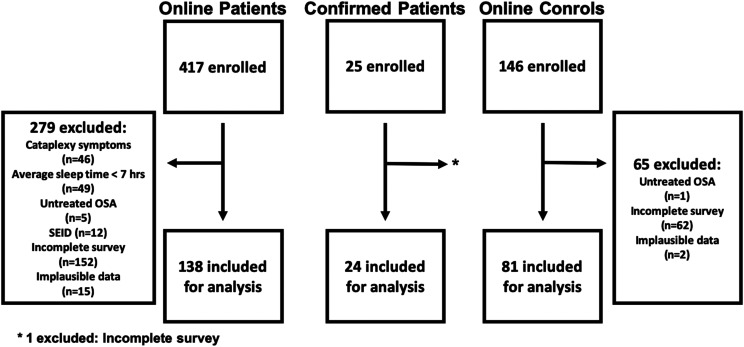
Methods: One hundred thirty-eight patients with idiopathic hypersomnia and 81 age- and sex-matched controls were recruited through the website of the Hypersomnia Foundation, a US-based patient advocacy group. Twenty-four patients with confirmed idiopathic hypersomnia were selected by the study investigators as a comparison group. All participants completed a battery of online sleep, autonomic, and quality of life questionnaires including the composite autonomic symptom score-31 (COMPASS-31).
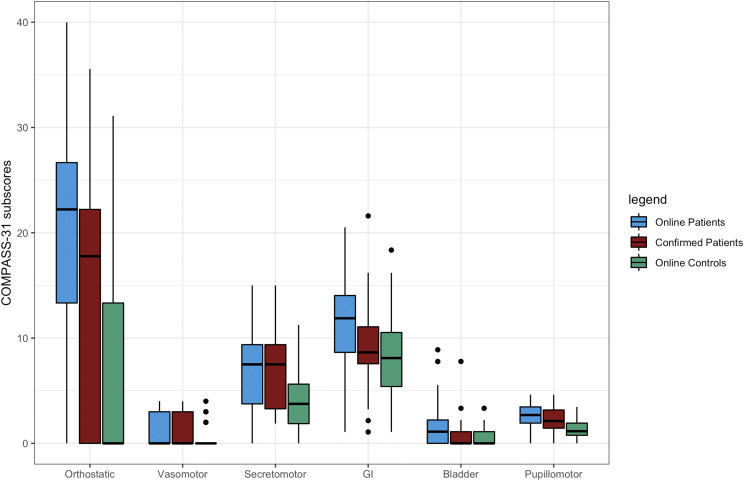
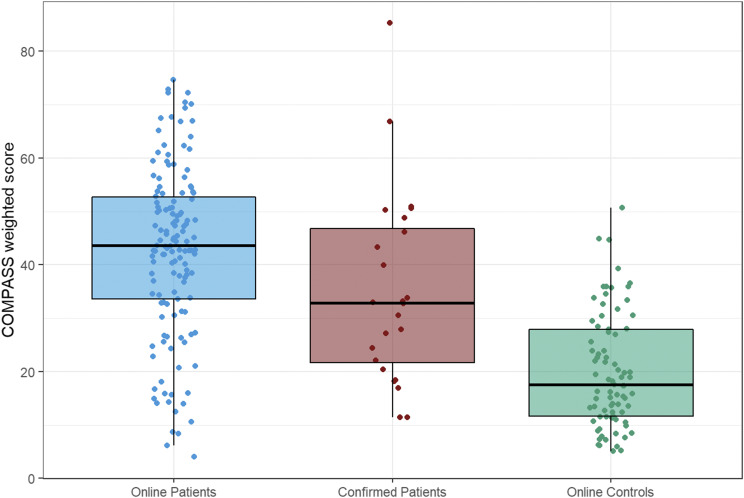
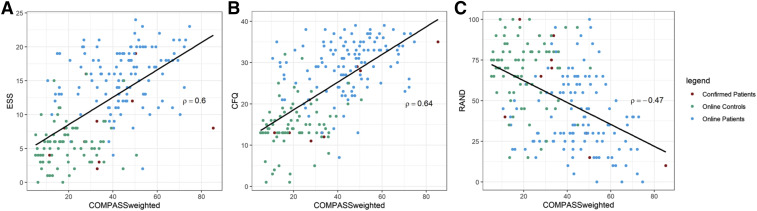
Results: Online and confirmed patients reported significantly higher COMPASS-31 scores (median [interquartile range]) (43.6 [33.6-52.7] and 32.9 [21.7-46.8] vs 17.6 [11.7-27.9], P < .001), with the greatest symptom burden in the orthostatic and vasomotor domains. Online and confirmed patients reported more sleepiness (Epworth sleepiness scale), whereas only online patients reported more fatigue (Chalder fatigue scale). Both the Epworth sleepiness scale and Chalder fatigue scale positively correlated with COMPASS-31 scores. Patients reported lower quality of life as reflected by lower scores across all domains of the RAND 36-item health survey, which was negatively correlated with COMPASS-31 scores.
Conclusions: Symptoms of autonomic nervous system dysfunction are common in idiopathic hypersomnia. In addition, autonomic nervous system symptom burden was positively correlated with sleepiness and negatively correlated with quality of life.
Keywords: POTS; autonomic; fatigue; idiopathic hypersomnia; orthostatic intolerance; syncope.
© 2020 American Academy of Sleep Medicine.
Conflict of interest statement
All authors have seen and approved this manuscript. This work was performed at the Stanford Sleep Disorders Clinic and the Emory Sleep Clinic. This work was supported by NIH grants #K23 NS083748 (Lynn Marie Trotti) and #K23 NS101094 (Joseph Cheung). Writing of this manuscript was supported by the Office of Academic Affiliations, Advanced Fellowship Program in Mental Illness Research and Treatment, Department of Veterans Affairs (Logan Schneider). Dr. Trotti is the chair of the medical advisory board for the Hypersomnia Foundation, an unpaid position. All authors report no financial conflicts to declare.
Figures
References
Publication types
MeSH terms
Grants and funding
LinkOut - more resources
Full Text Sources