


Analysis of Running-Related Injuries: The Vienna Study
- PMID: 32041127
- PMCID: PMC7073658
- DOI: 10.3390/jcm9020438
Analysis of Running-Related Injuries: The Vienna Study
Abstract
Background: This study aimed to provide an extensive and up-to-date analysis of running-related injuries (RRI) and analyze a broad range of contributing factors for a large heterogeneous and non-selected running population from Central Europe.
Methods: Anthropometric, training, footwear, anatomic malalignment, and injury data from 196 injured runners were assessed case-controlled and retrospectively. Univariate and multivariate regression models were developed to identify associated factors for specific injury locations and diagnoses.
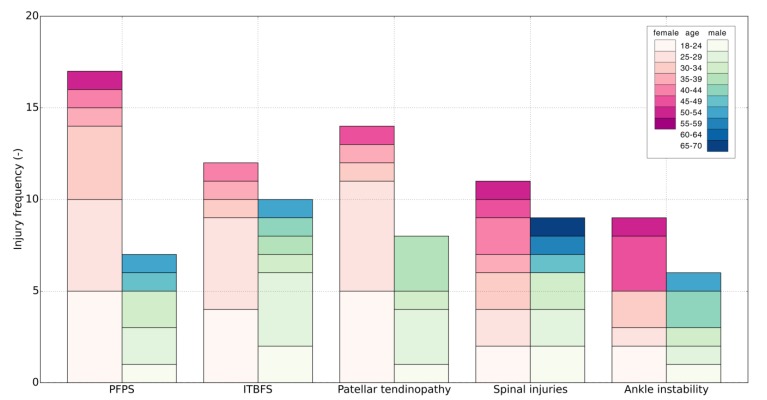
Results: The majority of patients were female (56%). Three most frequently observed malalignments included varus knee alignment, pelvic obliquity, and patellar squinting. The most common injuries were the patellofemoral pain syndrome (PFPS), the iliotibial band friction syndrome (ITBFS), patellar tendinopathy, spinal overload, and ankle instability. A number of contributing factors were identified. Previous injury history was a contributing factor for knee injuries and ITBFS. Lower training load was reported with a higher incidence of PFPS, while a higher training load was positively associated with injuries of the lower leg. Runners with a higher body mass index (BMI) were at a significantly higher risk for lower back injuries.
Conclusions: Running-related injuries are multifactorial associated with a combination of variables including personal data, training load, anatomic malalignments, and injury history. They can furthermore result from a lack of experience/training as well as from overuse. Suffering a specific RRI of high risk could be defined based on individual predispositions and help to induce appropriate training balance.
Keywords: epidemiology; etiology; injuries; running related injury; running related overuse injury.
Conflict of interest statement
The authors declare no conflict of interest.
Figures

References
-
- Spectra Marktforschungsgesellschaft mbH. Spectra Lauf- und Sportstudie 2017. Spectra Marktforschungsgesellschaft mbH.; Linz, Austria: 2017.
LinkOut - more resources
Full Text Sources
