. 2020 Feb 10;10(1):2246.
doi: 10.1038/s41598-020-59055-7.

Protective effect of Polygonatum sibiricum Polysaccharide on D-galactose-induced aging rats model

Affiliations

Protective effect of Polygonatum sibiricum Polysaccharide on D-galactose-induced aging rats model

Shaoyan Zheng. Sci Rep. .

Abstract

The polysaccharide of Polygonatum sibiricum (PSP)is one of the main active ingredients of Polygonatum Polygonatum in Liliaceae. It has anti-tumor, anti-aging, immune regulation, and anti-oxidative effects. Recent studies have shown that the Klotho gene and fibroblast growth factor-23 (FGF-23) have a common receptor, which is closely related to aging and highly expressed in kidney and meninges. Our study aimed to investigate the anti-aging effect of PSP on D-galactose-induced rats and its mechanism. D-galactose (120 mg Kg-1) and PSP (100 mg Kg-1) was used to intervene in rats, respectively. Then The changes of indexes of the natural aging-like model rats before and after PSP intervention were observed. We found that PSP could significantly improve the learning and memory abilities of rats and reverse the pathological changes of kidney tissues in rats. At the same time, PSP up-regulated the expression of Klotho mRNA and Klotho protein in the renal cortex, down-regulated the expression of FOXO3a mRNA and p-FOXO3a protein in renal tissue, and inhibited the expression of FGF-23 protein in the femur. Our studies suggest that PSP may play a role by regulating the Klotho-FGF23 endocrine axis, alleviating oxidative stress, and balancing calcium and phosphorus metabolism.


Conflict of interest statement

The author declares no competing interests.

Figures
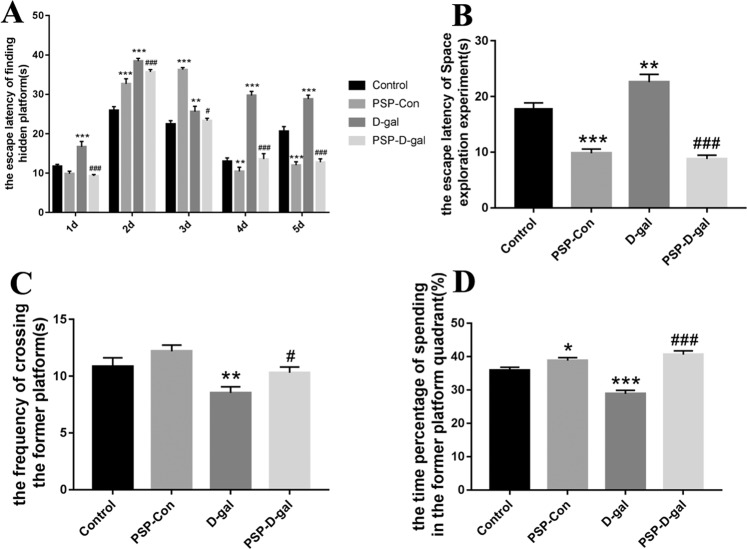
Figure 1
Figure 1
PSP improves the spatial memory ability of rats induced by D-galactose. (A) Effects of PSP on the escape latency in the Hidden Platform Search Experiment of D-galactose-induced rats and PSP shortens latency time (p < 0.001). (B–D) Effect of PSP on space exploration test of D-galactose-induced rats. (B) PSP reduces the escape latency of the Space exploration experiment (p < 0.001). (C) PSP enhances the frequency of crossing the former platform (p < 0.05). (D) PSP increases the time percentage of spending in the former platform quadrant (p < 0.05). *p < 0.05, **p < 0.01, ***p < 0.001 vs. Control group. #p < 0.05, ##p < 0.01, ###p < 0.001 vs. D-gal group.
Figure 2
Figure 2
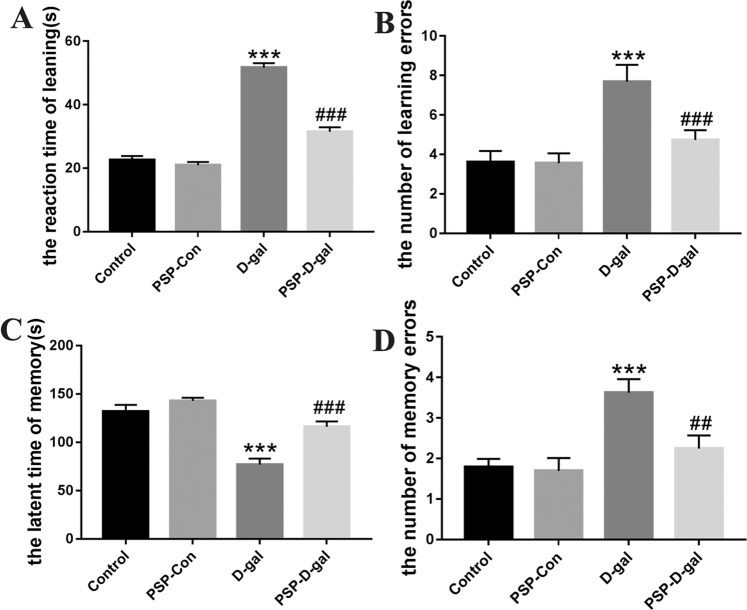
Effects of PSP on the performance of rats in the step-down test. (A) PSP reduces the reaction time of leaning (p < 0.001). (B) PSP decreases the number of learning errors (p < 0.01). (C) PSP prolongs the latent time of memory (p < 0.001). (D) PSP reduces the number of memory errors (p < 0.01). *p < 0.05, **p < 0.01, ***p < 0.001 vs. Control group. #p < 0.05, ##p < 0.01, ###p < 0.001 vs. D-gal group.
Figure 3
Figure 3
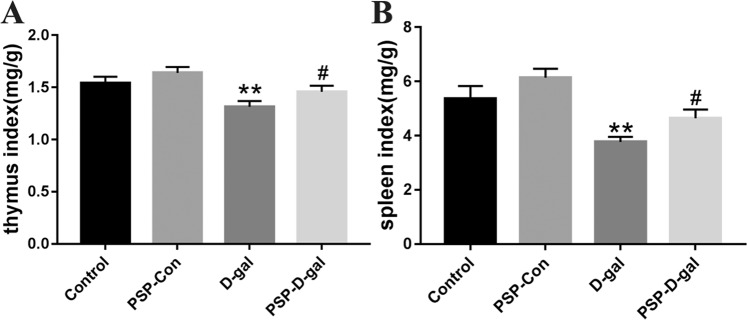
PSP increases the thymus index and spleen index of rats induced by D-galactose. (A) PSP increases thymus index (p < 0.05). (B) PSP improves spleen index (p < 0.05). *p < 0.05, **p < 0.01, ***p < 0.001 vs. Control group. #p < 0.05, ##p < 0.01, ###p < 0.001 vs. D-gal group.
Figure 4
Figure 4
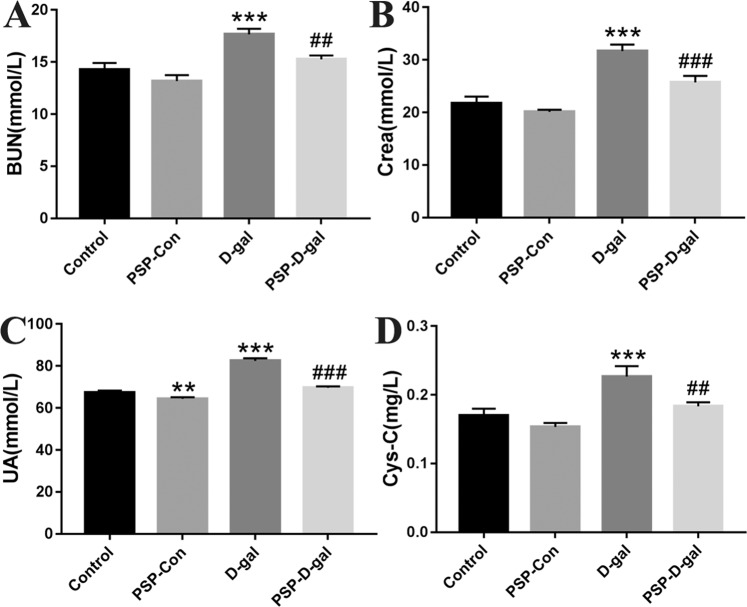
PSP improves renal function in rats induced by D-galactose. (A–D) PSP reduces the contents of BUN, Crea, UA and Cys-C, respectively. *p < 0.05, **p < 0.01, ***p < 0.001 vs. Control group. #p < 0.05, ##p < 0.01, ###p < 0.001 vs. D-gal group.
Figure 5
Figure 5
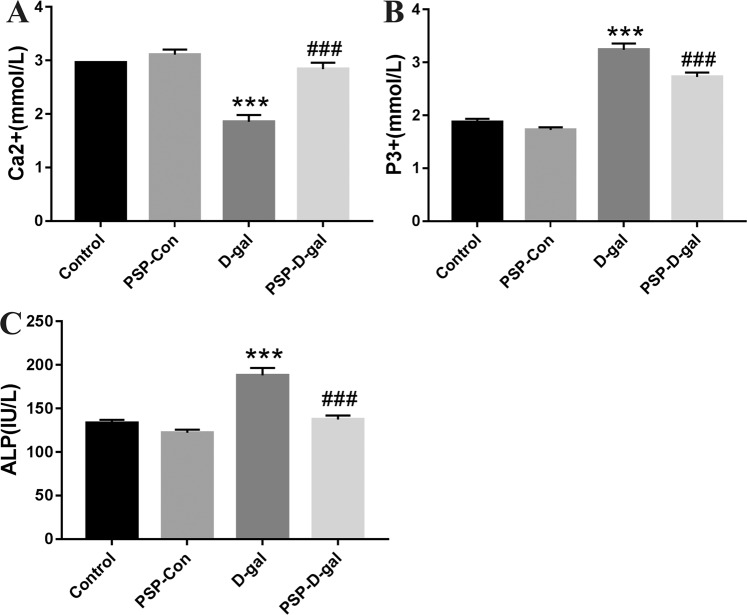
PSP improves calcium and phosphorus metabolism in rats induced by D-galactose. (A) PSP increased the content of Ca2+ in the blood of senile rats (p < 0.001). (B–C)PSP decreased the content of ALP and P3 + in the blood of senile rats (p < 0.001), respectively. *p < 0.05, **p < 0.01, ***p < 0.001 vs. Control group. #p < 0.05, ##p < 0.01, ###p < 0.001 vs. D-gal group.
Figure 6
Figure 6
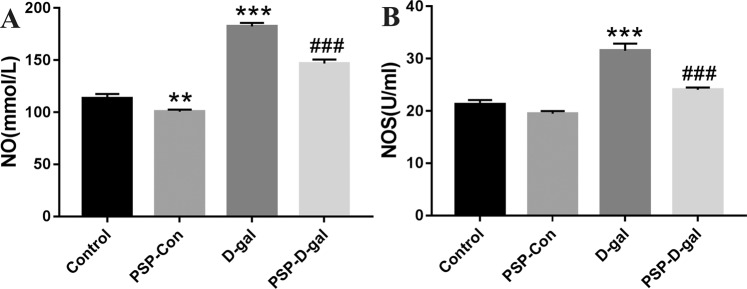
Effects of PSP on NO and NOS in blood of rats. (A) PSP decreases NO content in blood of rats (p < 0.001). (B) PSP reduces NOS content in blood of rats (p < 0.001). *p < 0.05, **p < 0.01, ***p < 0.001 vs. Control group. #p < 0.05, ##p < 0.01, ###p < 0.001 vs. D-gal group.
Figure 7
Figure 7
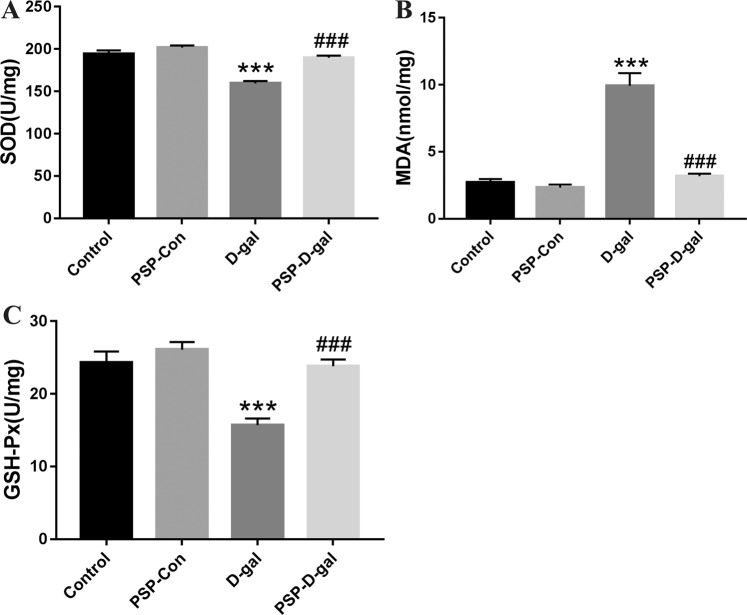
Effects of PSP on SOD, MDA and GSH-Px in kidney tissues of senile rats induced by D-galactose. (A) PSP increases SOD content in kidney tissue of rats (p < 0.001). (B) PSP enhances GSH-Px activity in kidney tissue of rats (p < 0.001). (C) PSP decreases MDA content in kidney tissue of rats (p < 0.001). *p < 0.05, **p < 0.01, ***p < 0.001 vs. Control group. #p < 0.05, ##p < 0.01, ###p < 0.001 vs. D-gal group.
Figure 8
Figure 8
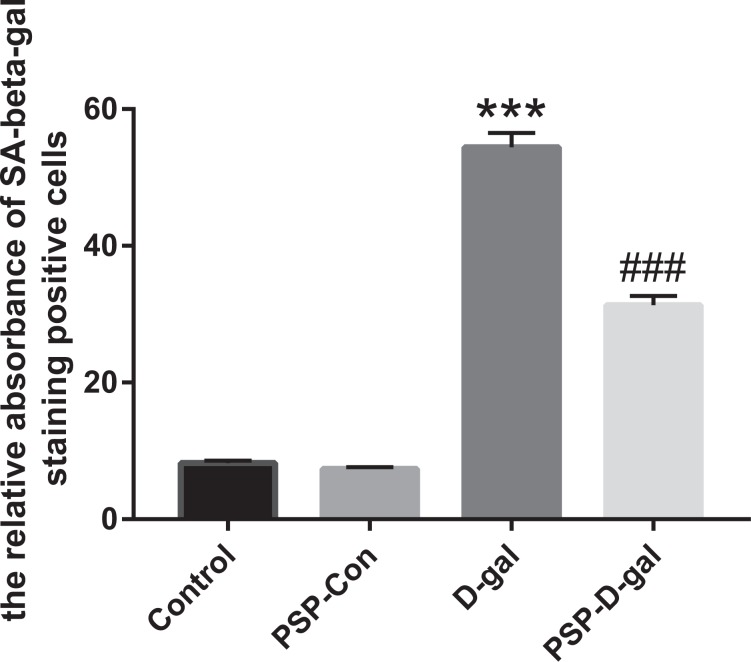
Effect of PSP on the dyeing of beta-galactosidase in kidney tissue of rats in D-gal group. PSP decreases the relative absorbance of SA-beta-gal positive cells and the volume of positive particles (p < 0.001). *p < 0.05, **p < 0.01, ***p < 0.001 vs. Control group. #p < 0.05, ##p < 0.01, ###p < 0.001 vs. D-gal group..
Figure 9
Figure 9
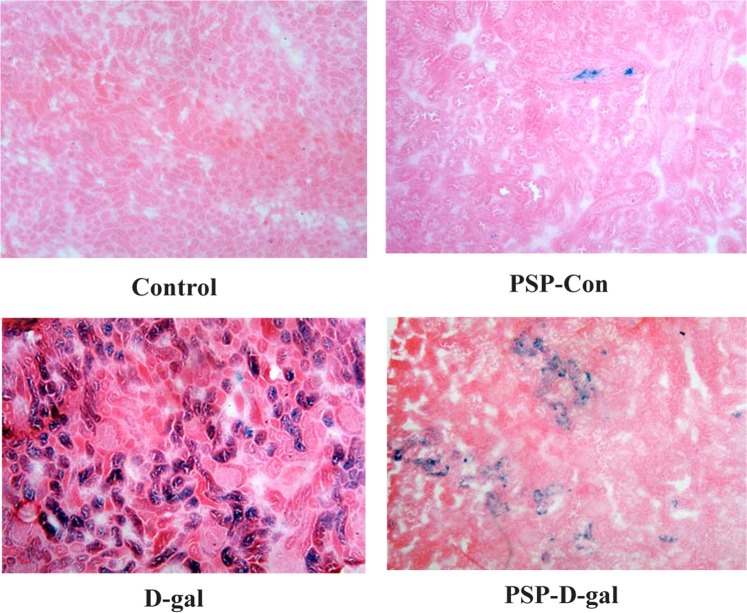
Effect of Polygonatum Polysaccharide on aging of kidney cells in D-galactose model rats (SA-beta-gal staining, ×100). In control group and PSP-Con group, the relative absorbance of SA-beta-gal positive cells in renal tubules was low; in D-gal group, the relative absorbance of SA-beta-gal positive cells was significantly higher; in PSP group, the relative absorbance of SA-beta-gal positive cells was significantly lower.
Figure 10
Figure 10
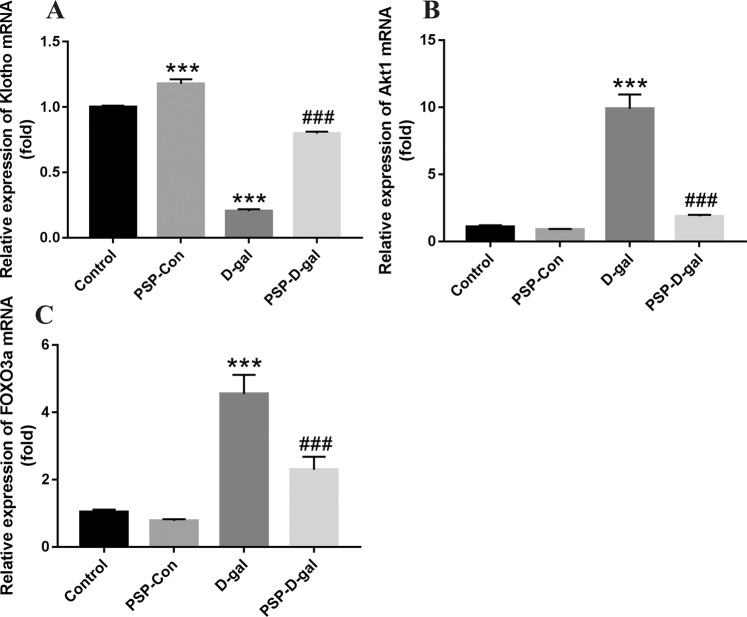
Effects of PSP on the expression of Klotho, Akt1 and FOXO3a mRNA in rats. (A) PSP increases the expression of Klotho mRNA (p < 0.001). (B) PSP decreases the expression of Akt1 mRNA (p < 0.001). (C) PSP reduces the expression of FOXO3a mRNA (p < 0.001). *p < 0.05, **p < 0.01, ***p < 0.001 vs. Control group. #p < 0.05, ##p < 0.01, ###p < 0.001 vs. D-gal group.
Figure 11
Figure 11
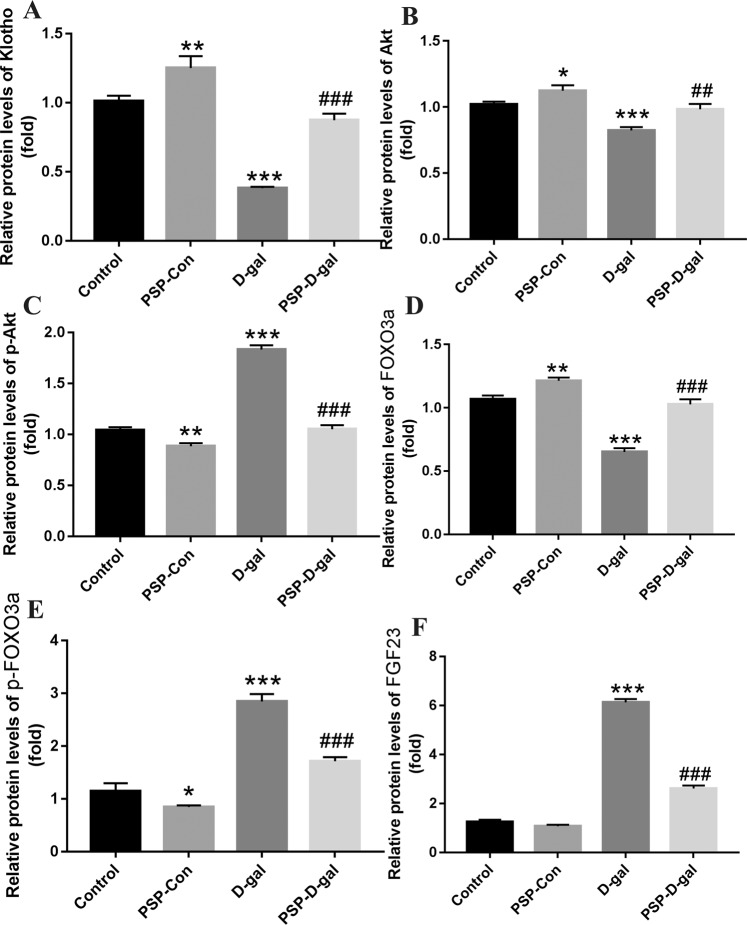
Effects of PSP on the expression of Klotho, Akt, FOXO3a, FGF23, p-Akt and p-FOXO3a proteins. (A) PSP increases the expression of Klotho protein (p < 0.001). (B) PSP enhances the expression of Akt protein (p < 0.01). (C) PSP decreases the expression of p-Akt protein (p < 0.001). (D) PSP increases the expression of FOXO3a protein (p < 0.001). (E) PSPdecreases the expression of FGF23 protein (p < 0.001). *p < 0.05, **p < 0.01, ***p < 0.001 vs. Control group. #p < 0.05, ##p < 0.01, ###p < 0.001 vs. D-gal group.
Figure 12
Figure 12
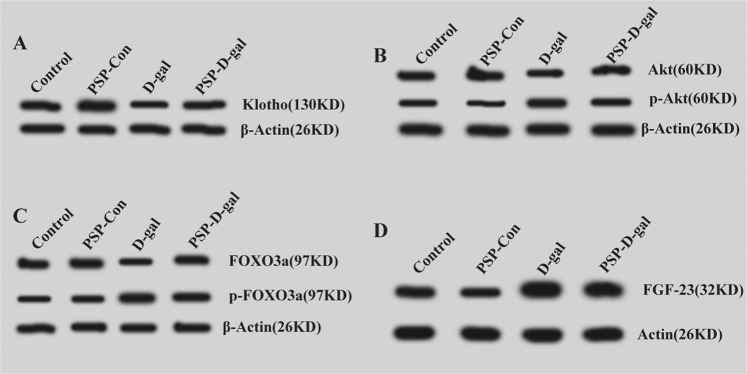
Western blot was used to detect the expression of Klotho, Akt, p-Akt, FOXO3a, p-FOXO3a and FGF23 protein.

References

    1. Kuro-O M, et al. Mutation of the mouse klotho gene leads to a syndrome resembling ageing. J. Nature. 1997;390:45–51. doi: 10.1038/36285. - DOI - PubMed
    1. Xiao NM, Zhang YM, Zheng Q, Gu J. Klotho is a serum factor related to human aging. J. Chin. Med. journal. 2004;117:742–747. - PubMed
    1. Kurosu H, et al. Suppression of aging in rats by the hormone klotho. J. Sci. 2005;30:1829–1833. - PMC - PubMed
    1. Yamamoto M, et al. Regulation of oxdative stress by the anti-aging hormone klotho. J. Biol. Chem. 2005;280:38029–38034. doi: 10.1074/jbc.M509039200. - DOI - PMC - PubMed
    1. Chen G, et al. αKlotho is a non-enzymatic molecular scaffold for FGF23 hormone signaling. J. Nature. 2018;553:461–466. doi: 10.1038/nature25451. - DOI - PMC - PubMed

Publication types