


Intravenous transfusion of iron sucrose reduces blood transfusions and improves postoperative anaemia after a second thoracotomy: a propensity-score matching study
- PMID: 32043401
- PMCID: PMC7111040
- DOI: 10.1177/0300060520902912
Intravenous transfusion of iron sucrose reduces blood transfusions and improves postoperative anaemia after a second thoracotomy: a propensity-score matching study
Abstract
Objective: To evaluate the efficacy of intravenous iron sucrose (IS) in the perioperative period of a second thoracotomy after open-heart surgery.
Methods: This study enrolled patients that underwent a second thoracotomy after previous open-heart surgery. Propensity-score matching was used to match patients that received oral iron therapy with those that received IS after admission. The baseline demographic and clinical characteristics, perioperative data and adverse outcomes were compared between these two matched groups.
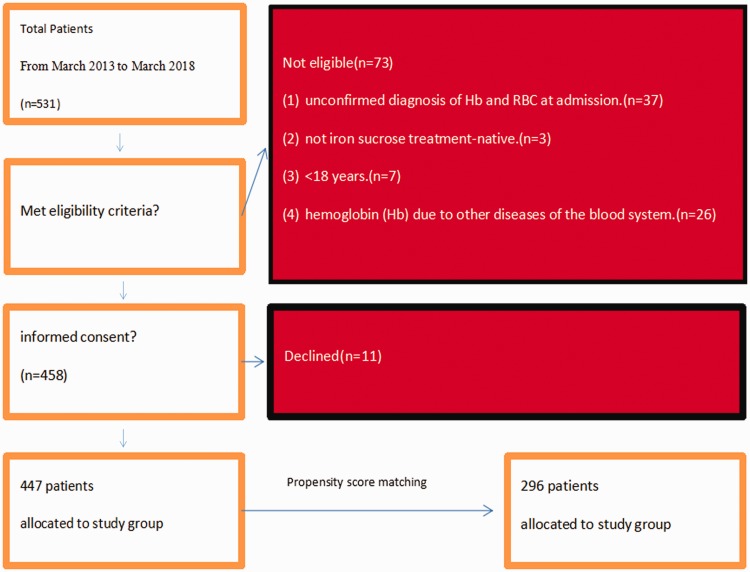
Results: The study enrolled 447 patients: of these, 148 received oral iron therapy and effective dietary guidance; and 299 patients received 300 mg IS per week. After matching the propensity scores, there were no significant differences between the two groups in terms of age, sex, smoking history, incidence of major cardiac adverse events, Euro-score, time between the two thoracotomies, application of recombinant erythropoietin, haemoglobin (Hb) on admission and red blood cell (RBC) count on admission. The differences between the two groups after propensity-score matching in terms of the amount of RBC input and Hb after the operation were significant.
Conclusion: The administration of IS might be useful for improving postoperative Hb levels and reducing intraoperative RBC input in patients undergoing a second thoracotomy.
Keywords: Iron sucrose; blood transfusion; postoperative anaemia; second thoracotomy.
Figures
References
-
- Wang LJ, Qian XY, Wang Met al. Which factor is the most effective one in metabolic Sydrome on the outcomes after coronary artery bypass graft surgery? A cohort study of 5 Years. J Cardiothorac Surg 2018; 13: 1 doi.org/10.1186/s13019-017-0682-5. - PMC - PubMed
-
- Mehta RH, Sheng S, O’Brien SMet al. Reoperation for bleeding in patients undergoing coronary artery bypass surgery: incidence, risk factors, time trends, and outcomes. Circ Cardiovasc Qual Outcomes 2009; 2: 583–590. - PubMed
-
- Nwafor IA, Arua OA, Eze JCet al. Utilisation of blood and blood products during open heart surgery in a low-income country: our local experience in 3 years. Cardiology in the Young 2018; 28: 1289–1294. - PubMed
-
- Zittermann A, Koster A, Faraoni Det al. . The association between the transfusion of small volumes of leucocyte-depleted red blood cells and outcomes in patients undergoing open-heart valve surgery. Interact Cardiovasc Thorac Surg 2017; 24: 209–215. - PubMed
-
- Mazur P, Myć J, Natorska Jet al. . Impaired fibrinolysis in degenerative mitral and aortic valve stenosis. J Thromb Thrombolysis 2018; 46: 193–202. - PubMed
Publication types
MeSH terms
Substances
LinkOut - more resources
Full Text Sources
Medical
