


Genotype-phenotype correlation and molecular heterogeneity in pyruvate kinase deficiency
- PMID: 32043619
- PMCID: PMC8127999
- DOI: 10.1002/ajh.25753
Genotype-phenotype correlation and molecular heterogeneity in pyruvate kinase deficiency
Abstract
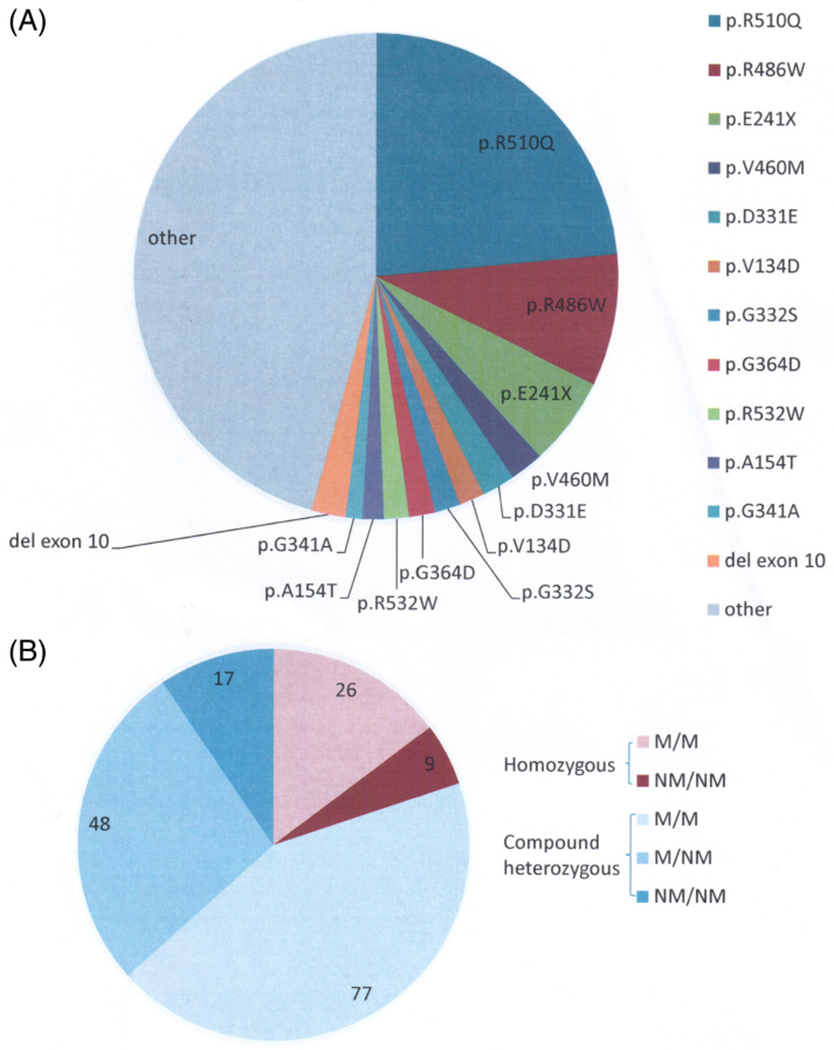
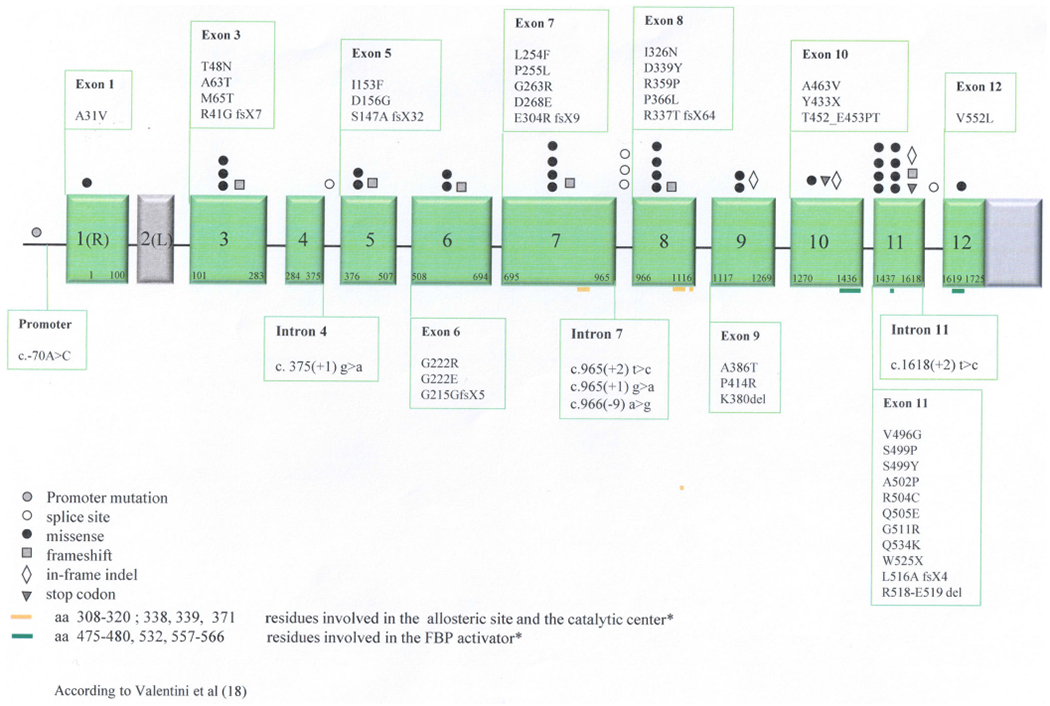
Pyruvate kinase (PK) deficiency is a rare recessive congenital hemolytic anemia caused by mutations in the PKLR gene. This study reports the molecular features of 257 patients enrolled in the PKD Natural History Study. Of the 127 different pathogenic variants detected, 84 were missense and 43 non-missense, including 20 stop-gain, 11 affecting splicing, five large deletions, four in-frame indels, and three promoter variants. Within the 177 unrelated patients, 35 were homozygous and 142 compound heterozygous (77 for two missense, 48 for one missense and one non-missense, and 17 for two non-missense variants); the two most frequent mutations were p.R510Q in 23% and p.R486W in 9% of mutated alleles. Fifty-five (21%) patients were found to have at least one previously unreported variant with 45 newly described mutations. Patients with two non-missense mutations had lower hemoglobin levels, higher numbers of lifetime transfusions, and higher rates of complications including iron overload, extramedullary hematopoiesis, and pulmonary hypertension. Rare severe complications, including lower extremity ulcerations and hepatic failure, were seen more frequently in patients with non-missense mutations or with missense mutations characterized by severe protein instability. The PKLR genotype did not correlate with the frequency of complications in utero or in the newborn period. With ICCs ranging from 0.4 to 0.61, about the same degree of clinical similarity exists within siblings as it does between siblings, in terms of hemoglobin, total bilirubin, splenectomy status, and cholecystectomy status. Pregnancy outcomes were similar across genotypes in PK deficient women. This report confirms the wide genetic heterogeneity of PK deficiency.
© 2020 Wiley Periodicals, Inc.
Figures
References
-
- Beutler E, Gelbart T. Estimating the prevalence of pyruvate kinase deficiency from the gene frequency in the general white population. Blood. 2000;95(11):3585–3588. - PubMed
-
- Carey PJ, Chandler J, Hendrick A, et al. Prevalence of pyruvate kinase deficiency in northern European population in the north of England. Northern Region Haematologists Group. Blood. 2000;96(12):4005–4006. - PubMed
-
- Kanno H, Ballas SK, Miwa S, Fujii H, Bowman HS. Molecular abnormality of erythrocyte pyruvate kinase deficiency in the Amish. Blood. 1994;83(8):2311–2316. - PubMed