. 2020 Feb 11;18(2):e3000611.
doi: 10.1371/journal.pbio.3000611. eCollection 2020 Feb.

Combining genomics and epidemiology to track mumps virus transmission in the United States

Affiliations

Combining genomics and epidemiology to track mumps virus transmission in the United States

Shirlee Wohl et al. PLoS Biol. .

Abstract

Unusually large outbreaks of mumps across the United States in 2016 and 2017 raised questions about the extent of mumps circulation and the relationship between these and prior outbreaks. We paired epidemiological data from public health investigations with analysis of mumps virus whole genome sequences from 201 infected individuals, focusing on Massachusetts university communities. Our analysis suggests continuous, undetected circulation of mumps locally and nationally, including multiple independent introductions into Massachusetts and into individual communities. Despite the presence of these multiple mumps virus lineages, the genomic data show that one lineage has dominated in the US since at least 2006. Widespread transmission was surprising given high vaccination rates, but we found no genetic evidence that variants arising during this outbreak contributed to vaccine escape. Viral genomic data allowed us to reconstruct mumps transmission links not evident from epidemiological data or standard single-gene surveillance efforts and also revealed connections between apparently unrelated mumps outbreaks.


Conflict of interest statement

The authors have declared that no competing interests exist.

Figures
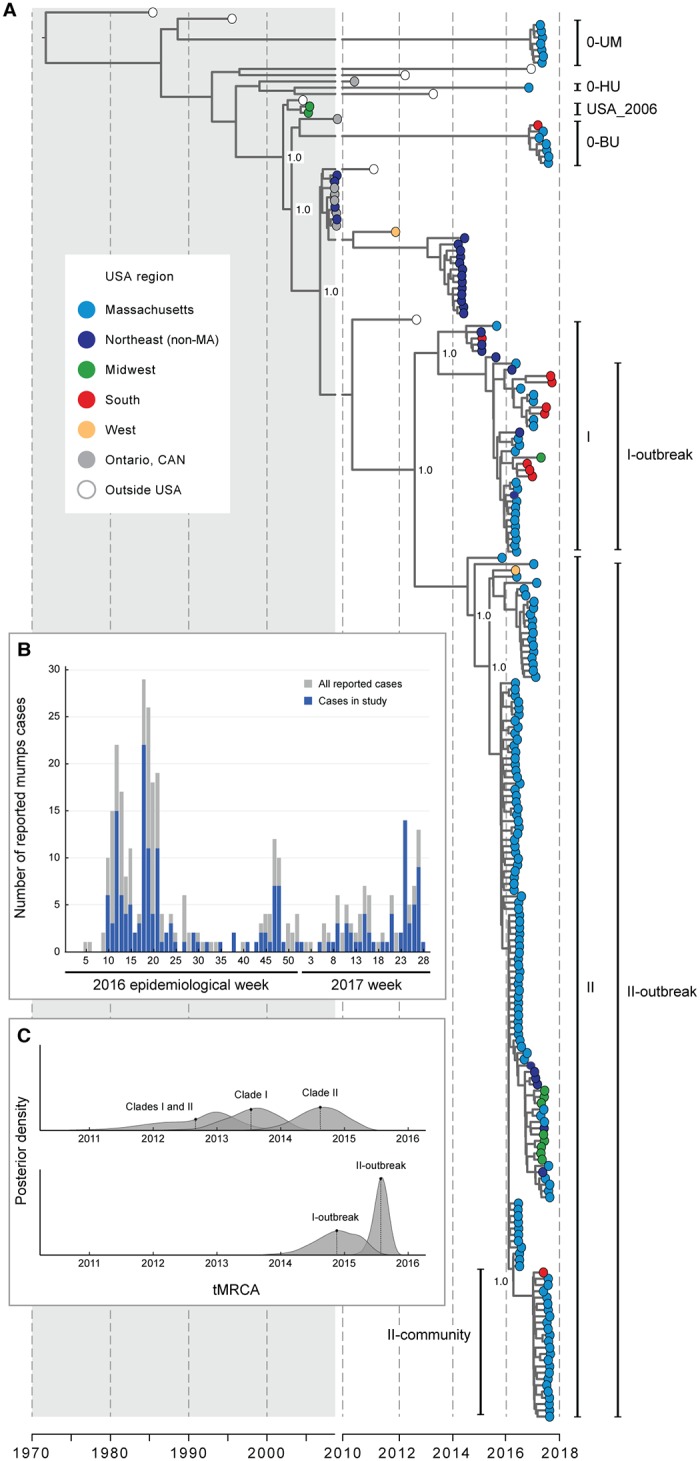
Fig 1
Fig 1. Massachusetts mumps outbreak overview.
(A) Maximum clade credibility tree of 225 mumps virus genotype G whole genome sequences, including 200 generated in this study. Labels on internal nodes indicate posterior support. Clades I and II contain 91% of the samples from the 2016 and 2017 Massachusetts (MA) outbreak; I-outbreak and II-outbreak are the largest clades within them that contain only samples from the outbreak. Clade 0-UM contains samples associated with UMass other than those in Clades I and II; the same is true for 0-BU (BU) and 0-HU (Harvard). II-community contains primarily samples associated with a local Massachusetts community. (B) Number of reported mumps cases in 2016 by epidemiological week in Massachusetts (gray) and in this study (blue). (C) Probability distributions for the date of the most recent common ancestor (computed from tMRCA) of selected clades (see S2 Table for additional clades). Dotted line is the mean of each distribution. BU, Boston University; HU, Harvard Univeristy; tMRCA, time to the most recent common ancestor; UM, University of Massachusetts Amherst; UMass, University of Massachusetts Amherst.
Fig 2
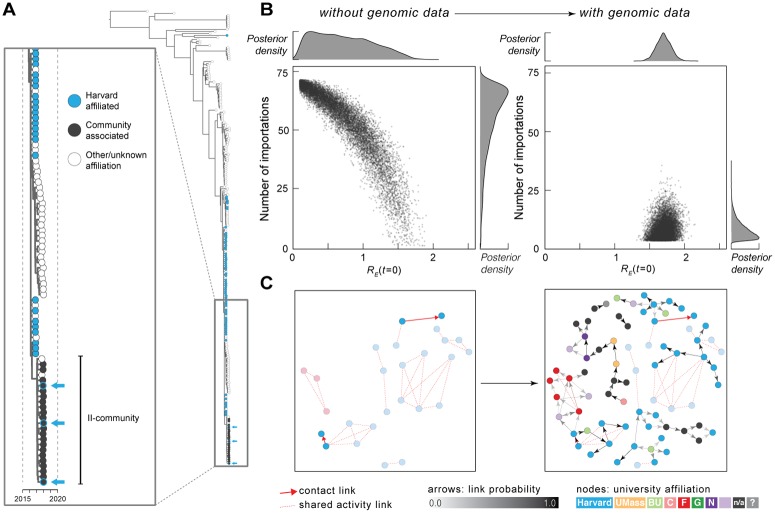
Fig 2. Epidemiological modeling and transmission reconstruction.
(A) Zoom view of Clade II-community and its ancestors (see Fig 1A). Arrows: individuals affiliated with both II-community and Harvard. (B) Number of importations into Harvard calculated without (left) and with (right) viral genetic information as input. Each point represents a sample from the posterior distribution of RE(t = 0) and the number of introductions, based on simulated transmission dynamics. (C) Transmission reconstruction of individuals within Clade II-outbreak; samples are colored by institution affiliation (light purple: other institution; n/a: no affiliation; question mark: unknown affiliation). Left: reconstruction using epidemiological data only; all individuals in Clade II-outbreak with known epidemiological links (red arrows) are shown. Right: reconstruction using mumps genomes and collection dates. Arrow shading indicates probability of direct transmission between individuals (minimum probability shown: 0.3); cases with 1 or more inferred links are shown and are colored by institution. Arrows outlined in red represent transmission events identified by both genomic and epidemiological data. Faded nodes are those only connected by shared activity links (i.e., no inferred or known direct transmission). BU, Boston University; Harvard, Harvard University; RE, effective reproduction number; UMass, University of Massachusetts Amherst.
Fig 3
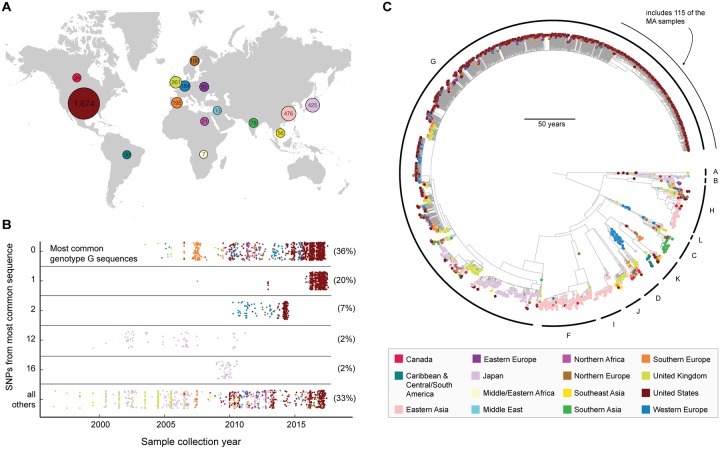
Fig 3. Global spread of mumps virus based on SH gene sequences.
Colors in all panels are by region (legend in bottom right). (A) Number of SH sequences in our data set from each of the 15 regions. (B) Identical genotype G sequences over time from 1995 through 2017. Each dot represents a sample; each row contains samples with identical SH sequences, except the bottom, which includes samples with sequences distinct from those in the above 5 categories. Numbers on the right: percentage of all genotype G samples found in that row. (C) Maximum clade credibility tree of 3,646 publicly available SH gene sequences, including 193 complete SH sequences generated in this study. SH, small hydrophobic.

References

    1. Centers for Disease Control and Prevention. Mumps Cases and Outbreaks. 9 Feb 2018. https://www.cdc.gov/mumps/outbreaks.html. [cited 9 Mar 2018].
    1. Centers for Disease Control and Prevention. FastStats—Immunization. J Infect Dis. 2017;198: 508–515.
    1. Centers for Disease Control and Prevention. Measles Prevention: Recommendations of the Immunization Practices Advisory Committee (ACIP). MMWR Surveill Summ. 1989;38: 1–18.
    1. Dayan GH, Quinlisk MP, Parker AA, Barskey AE, Harris ML, Schwartz JMH, et al. Recent resurgence of mumps in the United States. N Engl J Med. 2008;358: 1580–1589. 10.1056/NEJMoa0706589 - DOI - PubMed
    1. Lewnard JA, Grad YH. Vaccine waning and mumps re-emergence in the United States. Sci Transl Med. 2018. - PMC - PubMed

Publication types