


Intratumoral Genetic Heterogeneity in Papillary Thyroid Cancer: Occurrence and Clinical Significance
- PMID: 32046148
- PMCID: PMC7072350
- DOI: 10.3390/cancers12020383
Intratumoral Genetic Heterogeneity in Papillary Thyroid Cancer: Occurrence and Clinical Significance
Abstract
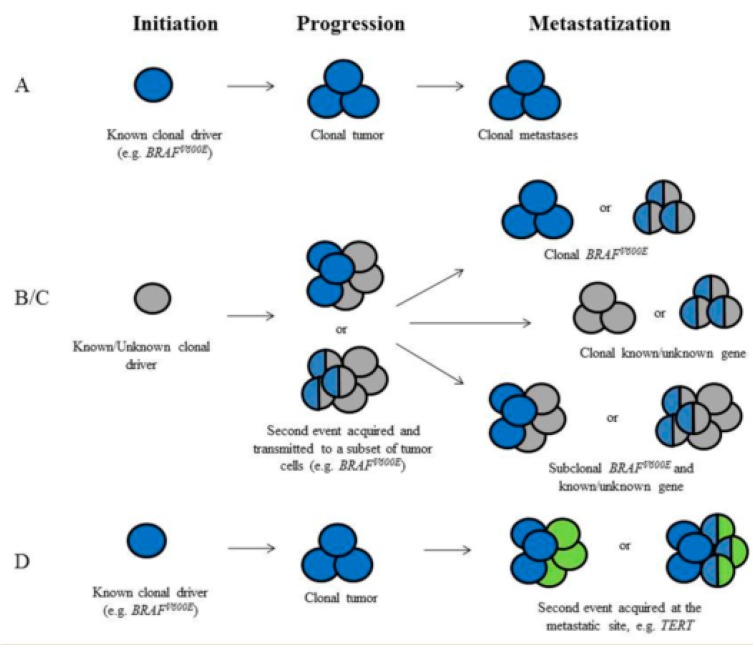
Intratumoral heterogeneity (ITH) refers to a subclonal genetic diversity observed within a tumor. ITH is the consequence of genetic instability and accumulation of genetic alterations, two mechanisms involved in the progression from an early tumor stage to a more aggressive cancer. While this process is widely accepted, the ITH of early stage papillary thyroid carcinoma (PTC) is debated. By different genetic analysis, several authors reported the frequent occurrence of PTCs composed of both tumor cells with and without RET/PTC or BRAFV600E genetic alterations. While these data, and the report of discrepancies in the genetic pattern between metastases and the primary tumor, demonstrate the existence of ITH in PTC, its extension and biological significance is debated. The ITH takes on a great significance when involves oncogenes, such as RET rearrangements and BRAFV600E as it calls into question their role of driver genes. ITH is also predicted to play a major clinical role as it could have a significant impact on prognosis and on the response to targeted therapy. In this review, we analyzed several data indicating that ITH is not a marginal event, occurring in PTC at any step of development, and suggesting the existence of unknown genetic or epigenetic alterations that still need to be identified.
Keywords: BRAF 3; RET/PTC; clonality; heterogeneity; thyroid cancer.
Conflict of interest statement
The authors declare no conflict of interest.
Figures
References
Publication types
Grants and funding
LinkOut - more resources
Full Text Sources
Research Materials
