


Cervical Augmentation with an Injectable Silk-Based Gel: Biocompatibility in a Rat Model of Pregnancy
- PMID: 32046447
- PMCID: PMC7255554
- DOI: 10.1007/s43032-019-00111-7
Cervical Augmentation with an Injectable Silk-Based Gel: Biocompatibility in a Rat Model of Pregnancy
Abstract
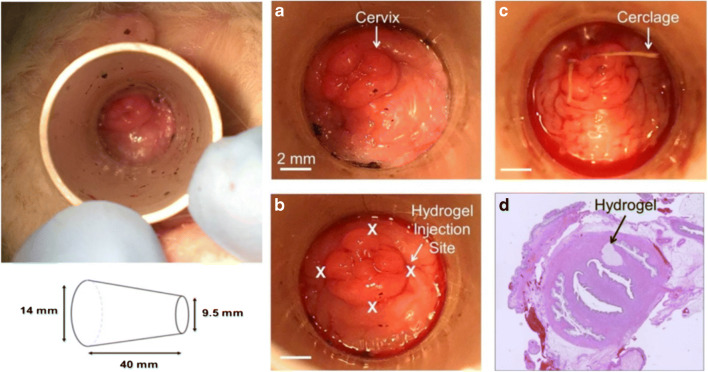
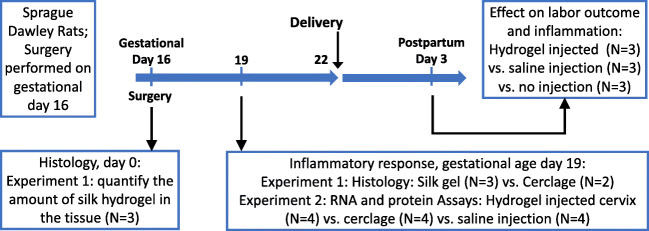
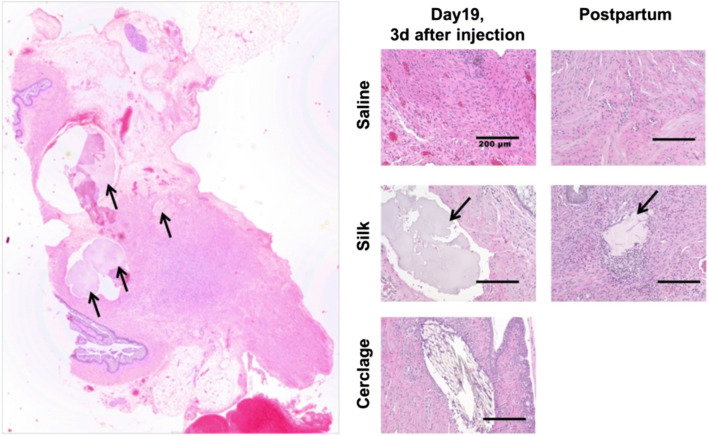
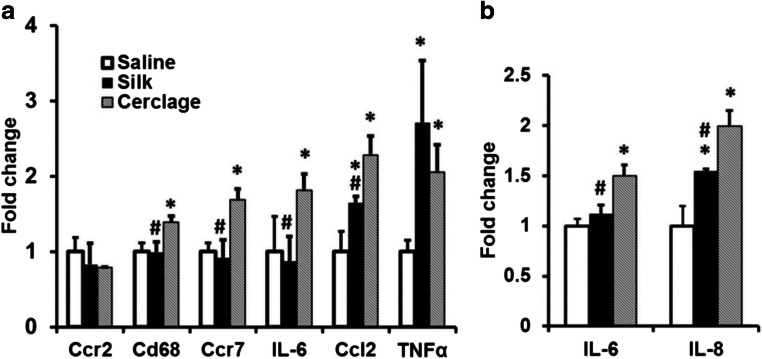
The aim of this study was to study the biocompatibility of an injectable silk gel in the cervix in a rat model of pregnancy. The rationale is to study an injectable gel as an alternate treatment for cervical insufficiency. We further aimed to perform cervical injections via a vaginal route to mimic the clinical procedure of a cervical cerclage. We performed an in vivo study in pregnant female Sprague Dawley rats. Cervical procedures were performed using a customized speculum under general anesthesia. Injections were performed on gestational day 16. The responses to silk gel injections were compared to polyethylene terephthalate suture and saline controls on gestational day 19 and postpartum. The inflammatory response was evaluated by histology, PCR for inflammatory gene expression, and ELISA for protein levels of proinflammatory mediators. Silk gel injections were performed on 13 animals. All animals tolerated the procedure. Silk gel occupied 5% of the stroma after injection. Injected silk gel caused neither preterm birth nor prolonged pregnancy and had no effect on the kits. When comparing inflammatory responses, expression of inflammatory genes and proinflammatory proteins in the silk gel group was intermediate between saline (lowest) and cerclage suture (highest). Injectable silk gel was more inflammatory compared to saline injections but less inflammatory compared to the suture material used for cervical cerclage. This study is an important step toward development of an alternative treatment for cervical insufficiency.
Keywords: Cerclage; Cervical insufficiency; Injectable gel; Preterm birth.
Conflict of interest statement
The authors declare that they have no conflict of interest.
Figures
References
-
- Wang H, Bhutta ZA, Coates MM, et al. Global, regional, national, and selected subnational levels of stillbirths, neonatal, infant, and under-5 mortality, 1980–2015: a systematic analysis for the global burden of disease study 2015. Lancet. 2016;388(10053):1725–1774. doi: 10.1016/S0140-6736(16)31575-6. - DOI - PMC - PubMed
-
- Blencowe H, Cousens S, Oestergaard MZ, et al. National, regional, and worldwide estimates of preterm birth rates in the year 2010 with time trends since 1990 for selected countries: a systematic analysis and implications. Lancet (London, England) 2012;379(9832):2162–2172. doi: 10.1016/S0140-6736(12)60820-4. - DOI - PubMed
-
- American College of Obstetricians and Gynecologists Practice Bulletin No. 142. Obstet Gynecol. 2014;123(2, PART 1):372–379. doi: 10.1097/01.AOG.0000443276.68274.cc. - DOI - PubMed
-
- McElrath TF, Hecht JL, Dammann O, Boggess K, Onderdonk A, Markenson G, Harper M, Delpapa E, Allred EN, Leviton A, ELGAN Study Investigators Pregnancy disorders that lead to delivery before the 28th week of gestation: an epidemiologic approach to classification. Am J Epidemiol. 2008;168(9):980–989. doi: 10.1093/aje/kwn202. - DOI - PMC - PubMed
Publication types
MeSH terms
Substances
Grants and funding
LinkOut - more resources
Full Text Sources
