High Behavioral Inhibition System/Behavioral Activation System Sensitivity, Childhood Emotional Neglect and Their Interaction as Possible Related Factors for Adult Attachment Style in Depression
- PMID: 32046471
- PMCID: PMC7047001
- DOI: 10.30773/pi.2019.0165
High Behavioral Inhibition System/Behavioral Activation System Sensitivity, Childhood Emotional Neglect and Their Interaction as Possible Related Factors for Adult Attachment Style in Depression
Abstract
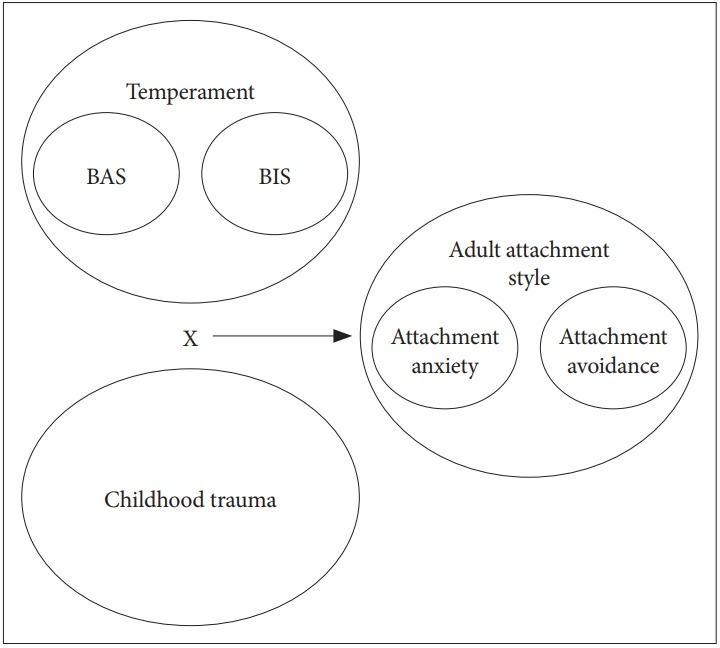
Objective: Individual differences in attachment insecurity are important in a broad range of mental health problems. However, few empirical studies have examined the clinical factors that contribute to individual differences in attachment style. This study examines the nature of interrelationships among adult attachment styles, sensitivities of behavioral activation system/behavioral inhibition system (BIS/BAS), and childhood trauma in patients with depressive disorders.
Methods: Patients with depressive disorders (n=294) completed self-report questionnaires evaluating adult attachment style, childhood trauma, and BIS/BAS sensitivity. We performed multiple regression analyses to examine the associations between attachment style and other clinical factors, including childhood trauma and BIS/BAS sensitivity. We also conducted hierarchical regression analyses and simple slope analyses to examine the interaction between BIS/BAS sensitivity and childhood trauma.
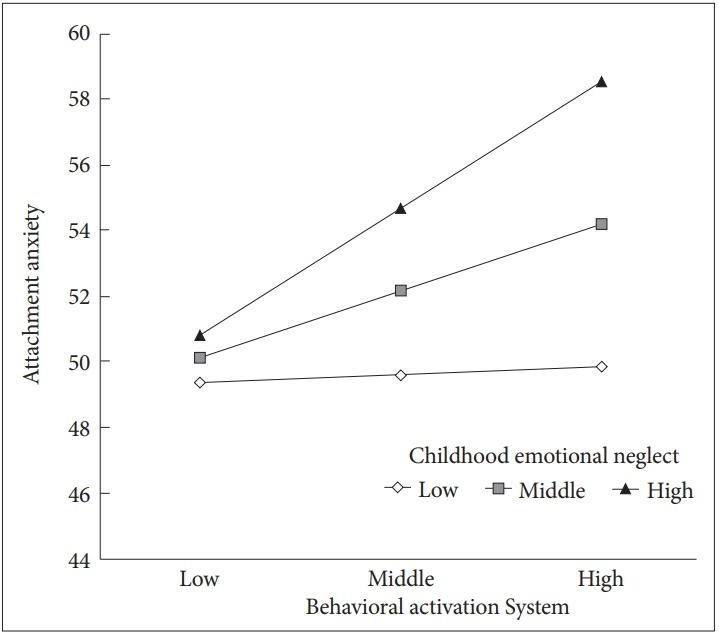
Results: The BAS sensitivity was negatively associated with attachment avoidance. The higher was the BIS/BAS sensitivity, the higher was the level of attachment anxiety. Among childhood trauma, emotional neglect contributed to both dimensions of insecure attachment. The interaction between BAS sensitivity and emotional neglect is significantly associated with attachment anxiety.
Conclusion: This study used data regarding the interrelationship of childhood trauma and basic motivational systems to contribute to the understanding of adult insecure attachment behaviors, a risk factor for depression.
Keywords: Attachment; Behavioral activation system; Behavioral inhibition system; Childhood trauma; Depression.
Conflict of interest statement
The authors have no potential conflicts of interest to disclose.
Figures
References
-
- Lieberman AF, Van Horn P. Psychotherapy with Infants and Young Children: Repairing the Effects of Stress and Trauma on Early Attachment. New York, NY: Guilford Press; 2008.
-
- Corcoran M, McNulty M. Examining the role of attachment in the relationship between childhood adversity, psychological distress and subjective well-being. Child Abuse Negl. 2018;76:297–309. - PubMed
-
- Ju S, Lee Y. Developmental trajectories and longitudinal mediation effects of self-esteem, peer attachment, child maltreatment and depression on early adolescents. Child Abuse Negl. 2018;76:353–363. - PubMed
-
- Lee DG, Park JJ, Bae BH, Lim HW. Moderating effects of preventionfocus on the paths from two insecure attachment dimensions to depression. J Psychol. 2018:1–13. - PubMed
Grants and funding
LinkOut - more resources
Full Text Sources
Miscellaneous