


Remineralising effect of 45S5 bioactive glass on artificial caries in dentine
- PMID: 32046691
- PMCID: PMC7014937
- DOI: 10.1186/s12903-020-1038-4
Remineralising effect of 45S5 bioactive glass on artificial caries in dentine
Abstract
Background: This study investigated the remineralisation effect of bioactive glass on artificial dentine caries.
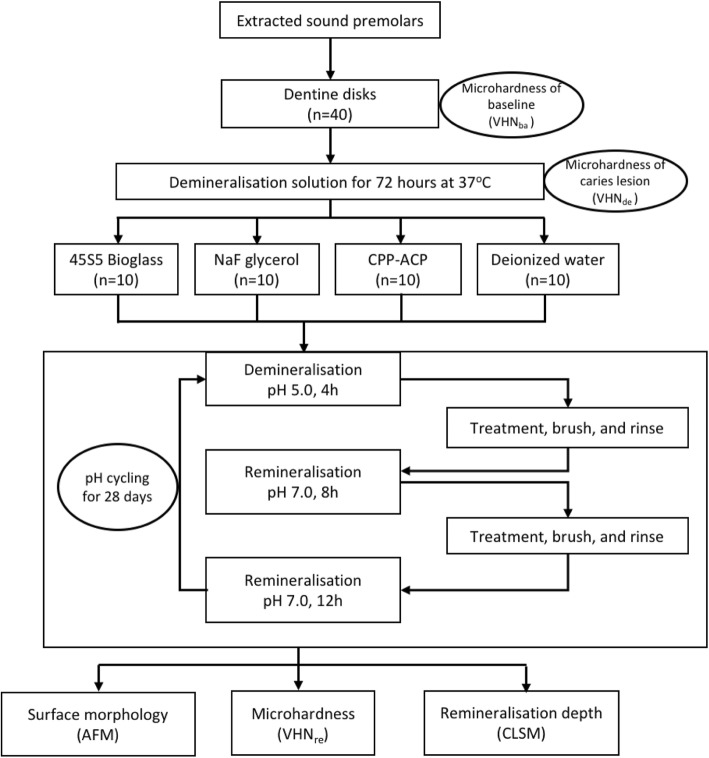
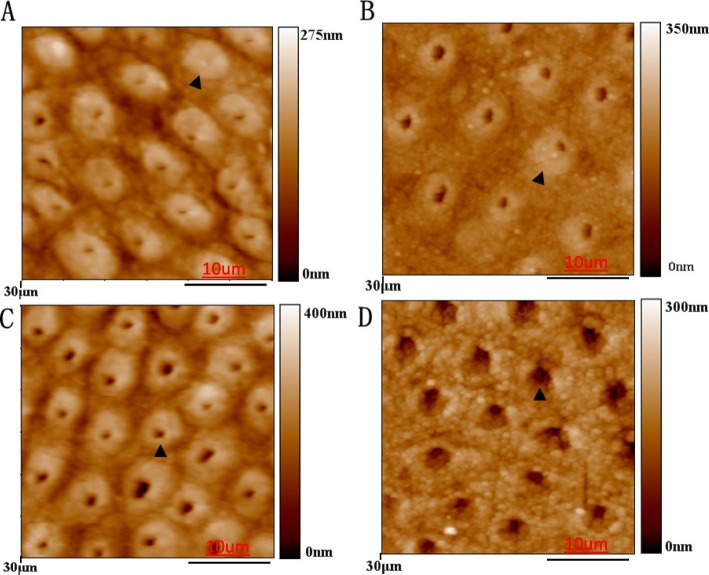
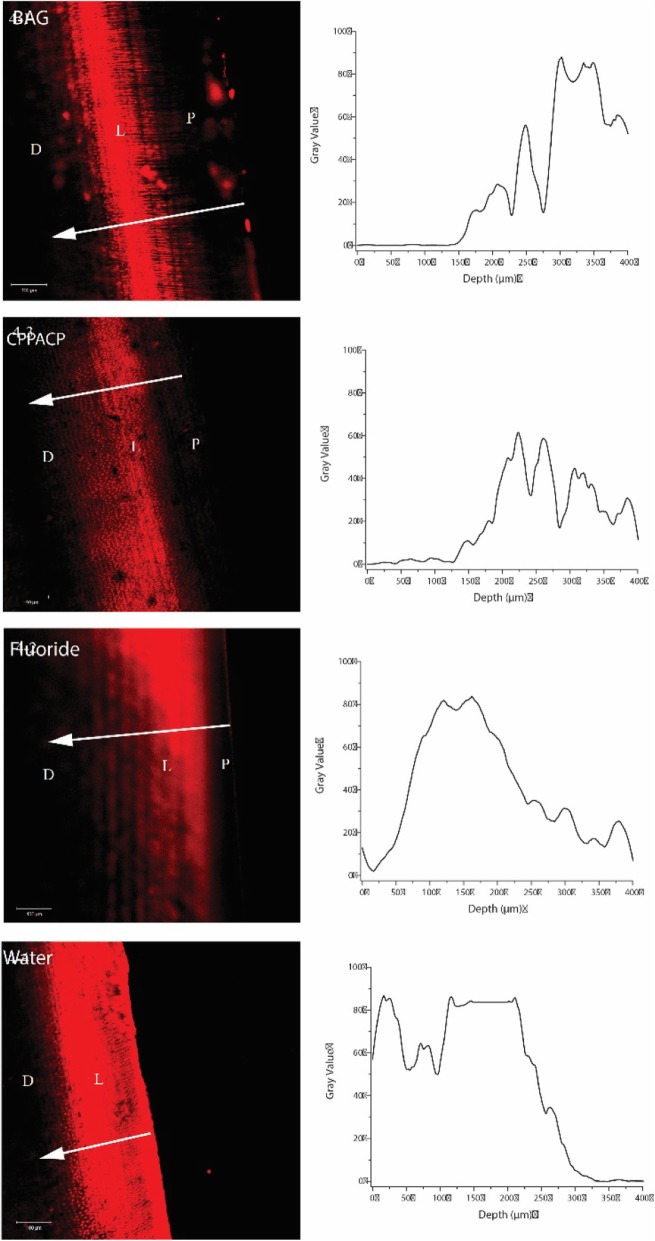
Methods: Dentine disks with artificial caries were treated with bioactive glass (group BAG), casein phosphopeptide-amorphous calcium phosphate (CPP-ACP) (group CPP-ACP), sodium fluoride glycerol (group F) or deionized water (group W). All disks were subjected to pH cycling for 28 days subsequently. The topography, microhardness and remineralisation depth of the dentine carious lesion were assessed by atomic force microscopy (AFM), microhardness testing and confocal laser scanning microscope (CLSM), respectively.
Results: AFM images indicated mineral depositions on the surface of the carious lesion in group BAG. The changes of Vickers hardness number (ΔVHN, mean ± SD) after pH cycling were 9.67 ± 3.60, 6.06 ± 3.83, 5.00 ± 2.19 and - 1.90 ± 2.09 (p < 0.001) in group BAG, group CPP-ACP, group F and group W, respectively. The remineralisation depth (mean ± SD) of the carious lesion in group BAG, group CPP-ACP, group F and group W were 165 ± 11 μm, 111 ± 11 μm, 75 ± 6 μm and 0 μm (p < 0.001), respectively.
Conclusion: Bioactive glass possessed a promising remineralisation effect on artificial dentine caries and could be a therapeutic choice for caries management.
Keywords: Artificial caries; Bioactive glass; CPP-ACP; Dentine; Remineralisation.
Conflict of interest statement
The authors declare that they have no competing interests.
Figures
References
-
- Rizwan M, Hamdi M, Basirun WJ. Bioglass® 45S5-based composites for bone tissue engineering and functional applications. Journal of biomedical materials research. Part A. 2017;105(11):3197–3223. - PubMed
Publication types
MeSH terms
Substances
LinkOut - more resources
Full Text Sources
Medical
Miscellaneous
