


Mechanism of action and therapeutic benefit of rifaximin in patients with irritable bowel syndrome: a narrative review
- PMID: 32047534
- PMCID: PMC6984424
- DOI: 10.1177/1756284819897531
Mechanism of action and therapeutic benefit of rifaximin in patients with irritable bowel syndrome: a narrative review
Abstract
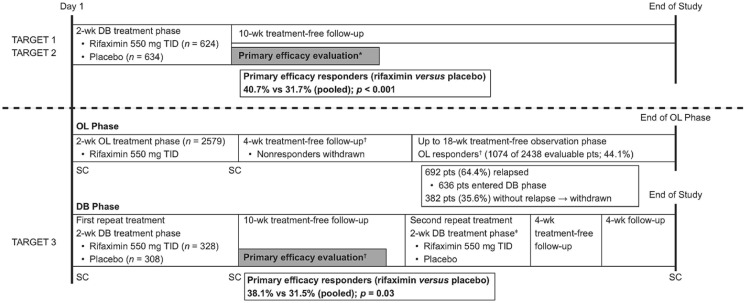
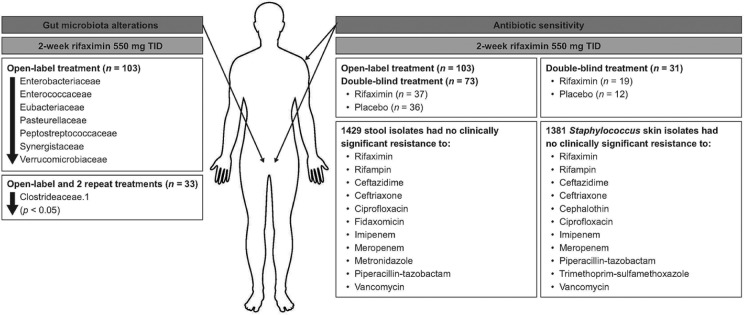
Irritable bowel syndrome (IBS) is a common functional gastrointestinal disorder with a multifactorial pathophysiology. The gut microbiota differs between patients with IBS and healthy individuals. After a bout of acute gastroenteritis, postinfection IBS may result in up to approximately 10% of those affected. Small intestinal bacterial overgrowth (SIBO) is more common in patients with IBS than in healthy individuals, and eradication of SIBO with systemic antibiotics has decreased symptoms of IBS in some patients with IBS and SIBO. The nonsystemic (i.e. low oral bioavailability) antibiotic rifaximin is indicated in the United States and Canada for the treatment of adults with IBS with diarrhea (IBS-D). The efficacy and safety of 2-week single and repeat courses of rifaximin have been demonstrated in randomized, placebo-controlled studies of adults with IBS. Rifaximin is widely thought to exert its beneficial clinical effects in IBS-D through manipulation of the gut microbiota. However, current studies indicate that rifaximin induces only modest effects on the gut microbiota of patients with IBS-D, suggesting that the efficacy of rifaximin may involve other mechanisms. Indeed, preclinical data reveal a potential role for rifaximin in the modulation of inflammatory cytokines and intestinal permeability, but these two findings have not yet been examined in the context of clinical studies. The mechanism of action of rifaximin in IBS is likely multifactorial, and further study is needed.
Keywords: antibiotic; irritable bowel syndrome; mechanism; microbiota; pathophysiology; rifaximin.
© The Author(s), 2020.
Conflict of interest statement
Conflict of interest statement: WD Chey reports serving as a consultant for Allergan, Alnylam Pharmaceuticals, Biomerica, Inc., IM Health, Ironwood Pharmaceuticals, Outpost Medicine, Ritter Pharmaceuticals, Inc., Salix Pharmaceuticals, and Urovant Sciences, Inc. He also reports receiving funding from Biomerica, Inc., IM Health, Ironwood Pharmaceuticals, Nestlé, Salix Pharmaceuticals, and Urovant Sciences, Inc. ED Shah reports having no relevant disclosures. HL DuPont reports serving as a consultant for Aries and Salix Pharmaceuticals.
Figures
References
-
- Lacy BE, Mearin F, Chang L, et al. Bowel disorders. Gastroenterology 2016; 150: 1393–1407. - PubMed
-
- Lovell RM, Ford AC. Global prevalence of and risk factors for irritable bowel syndrome: a meta-analysis. Clin Gastroenterol Hepatol 2012; 10: 712–721. - PubMed
-
- Sperber AD, Dumitrascu D, Fukudo S, et al. The global prevalence of IBS in adults remains elusive due to the heterogeneity of studies: a Rome foundation working team literature review. Gut 2017; 66: 1075–1082. - PubMed
-
- Palsson OS, van Tilburg MA, Simren M, et al. Population prevalence of Rome IV and Rome III irritable bowel syndrome (IBS) in the United States (US), Canada and the United Kingdom (UK). Gastroenterology 2016; 150: S739–S740.
-
- Chey WD, Kurlander J, Eswaran S. Irritable bowel syndrome: a clinical review. JAMA 2015; 313: 949–958. - PubMed
Publication types
LinkOut - more resources
Full Text Sources
Other Literature Sources
