The effect of biofeedback training on intestinal function among patients with middle and low rectal cancer: a randomized controlled study
- PMID: 32047766
- PMCID: PMC7011590
- DOI: 10.21037/atm.2019.09.62
The effect of biofeedback training on intestinal function among patients with middle and low rectal cancer: a randomized controlled study
Abstract
Background: To evaluate the effect of biofeedback on intestinal function among patients with middle and low rectal cancer.
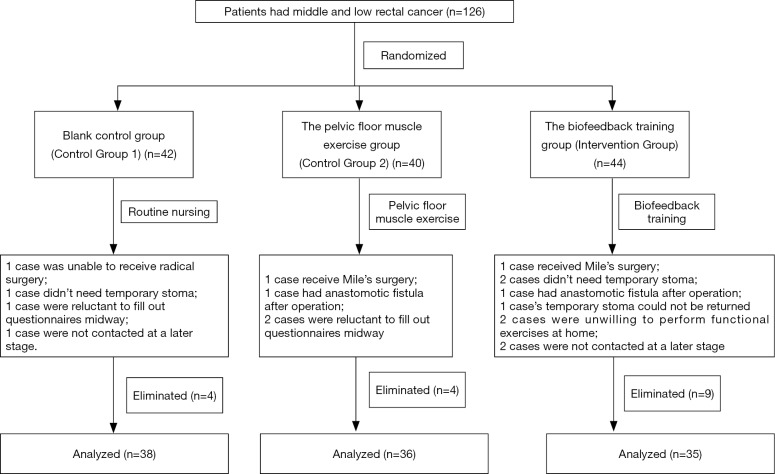
Methods: Using a randomized controlled trial design, 109 patients with middle and low rectal cancer indicated to have preoperative radiochemotherapy, anterior resection of the rectum, and preventive stoma were randomly divided into three groups: the blank control group, the pelvic floor muscle exercise group, and the biofeedback training group. A 16-month intervention and longitudinal follow-up study was conducted, and a questionnaire on intestinal function by the Memorial Sloan-Kettering Cancer Center (MSKCC) was adopted into a Chinese version to evaluate patients' intestinal function situation.
Results: The intestinal function of the biofeedback training group was better than the blank control group and pelvic floor muscle exercise group. The total score of intestinal function and the scores of each dimension were statistically significant (P<0.05).
Conclusions: Biofeedback training could significantly improve the intestinal function of patients with middle and low rectal cancer, promote its recovery, and is thus worthy of clinical application.
Keywords: Biofeedback; ileostomy; intestinal function; rectal neoplasms; sphincter preservation operation (SPO).
2019 Annals of Translational Medicine. All rights reserved.
Conflict of interest statement
Conflicts of Interest: The authors have no conflicts of interest to declare.
Comment in
-
Maintaining anorectal function in patients with rectal cancer using biofeedback training.Ann Transl Med. 2020 Feb;8(4):63. doi: 10.21037/atm.2019.12.84. Ann Transl Med. 2020. PMID: 32175356 Free PMC article. No abstract available.
-
Mind body medicine: a tangible link between the gut and the brain.Ann Transl Med. 2020 Feb;8(4):64. doi: 10.21037/atm.2019.12.80. Ann Transl Med. 2020. PMID: 32175357 Free PMC article. No abstract available.
References
-
- Sun KX, Zheng RS, Zhang SW, et al. Report of Cancer Incidence and Mortality in Different Areas of China, 2015. China Cancer 2019;28:1-11.
LinkOut - more resources
Full Text Sources