


Validation of an Electronic Visual Analog Scale mHealth Tool for Acute Pain Assessment: Prospective Cross-Sectional Study
- PMID: 32049063
- PMCID: PMC7055746
- DOI: 10.2196/13468
Validation of an Electronic Visual Analog Scale mHealth Tool for Acute Pain Assessment: Prospective Cross-Sectional Study
Abstract
Background: Accurate measurement of pain is required to improve its management and in research. The visual analog scale (VAS) on paper format has been shown to be an accurate, valid, reliable, and reproducible way to measure pain intensity. However, some limitations should be considered, some of which can be implemented with the introduction of an electronic VAS version, suitable to be used both in a tablet and a smartphone.
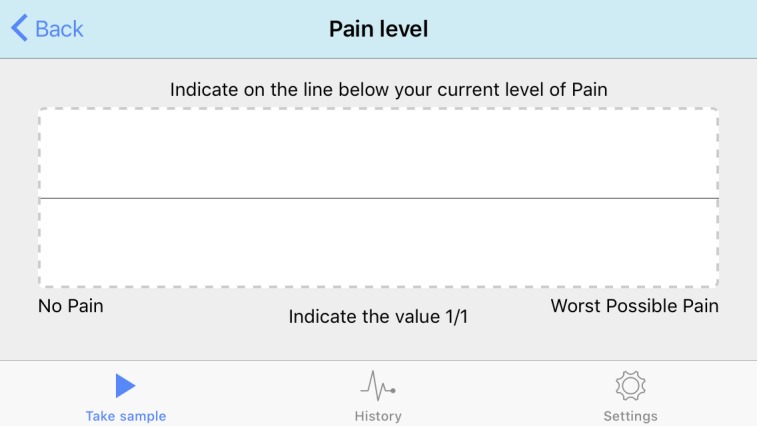
Objective: This study aimed to validate a new method of recording pain level by comparing the traditional paper VAS with the pain level module on the newly designed Interactive Clinics app.
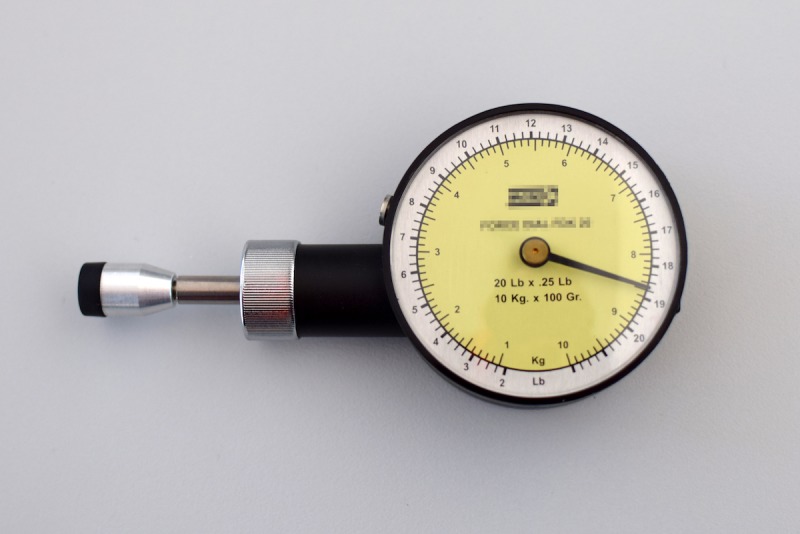
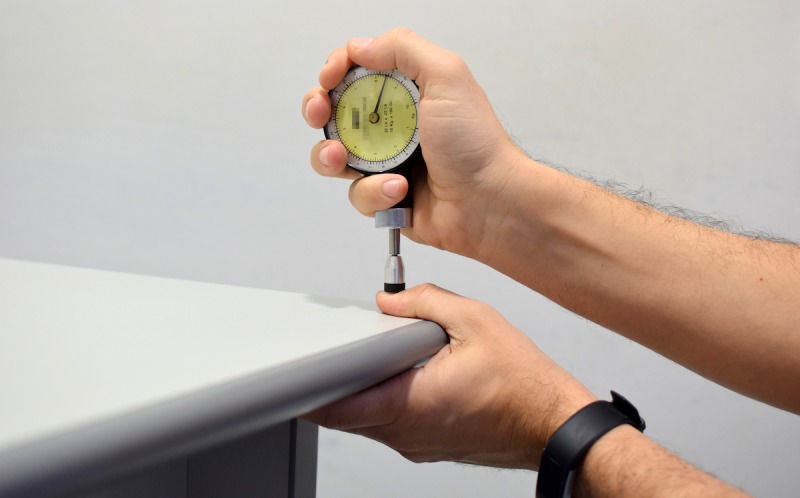
Methods: A prospective observational cross-sectional study was designed. The sample consisted of 102 participants aged 18 to 65 years. A Force Dial FDK 20 algometer (Wagner Instruments) was employed to induce mild pressure symptoms on the participants' thumbs. Pain was measured using a paper VAS (10 cm line) and the app.
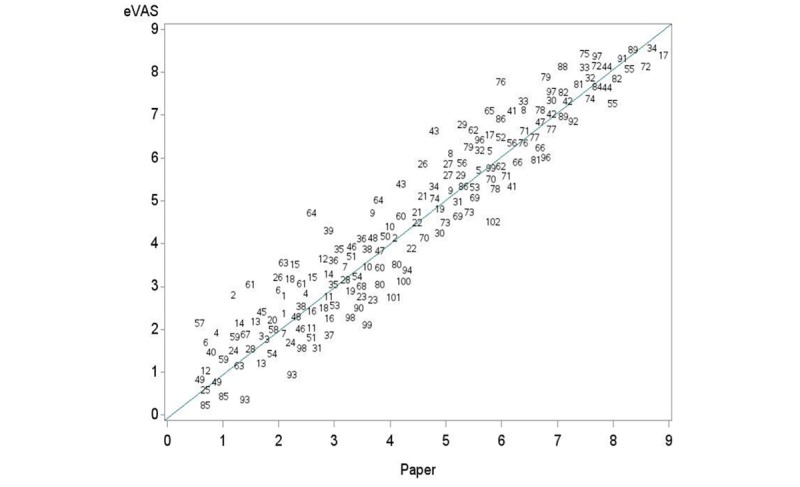
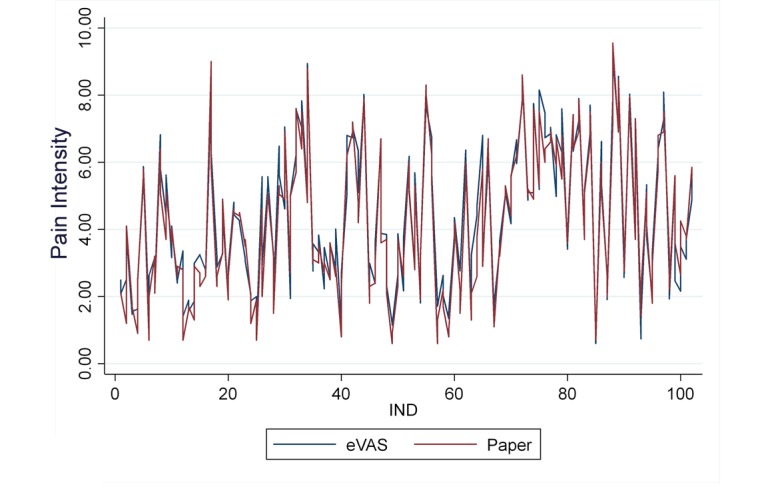
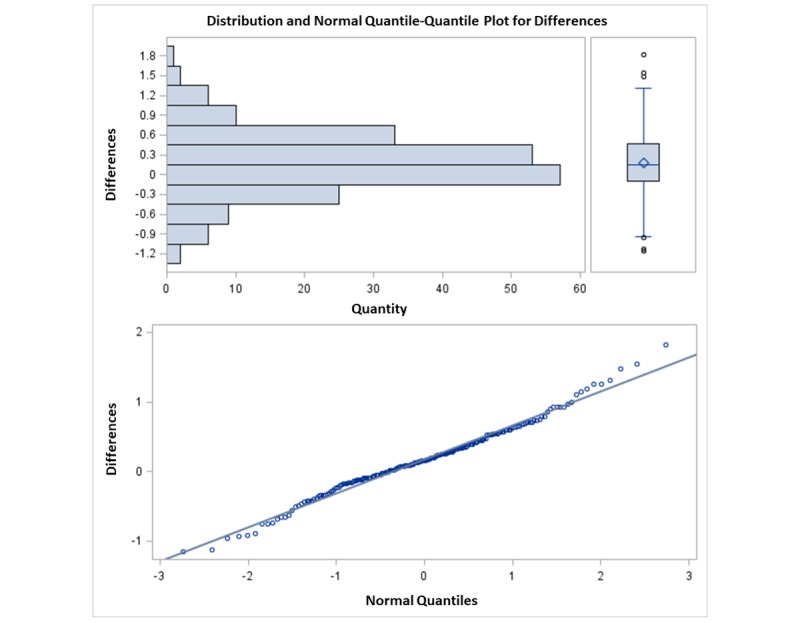
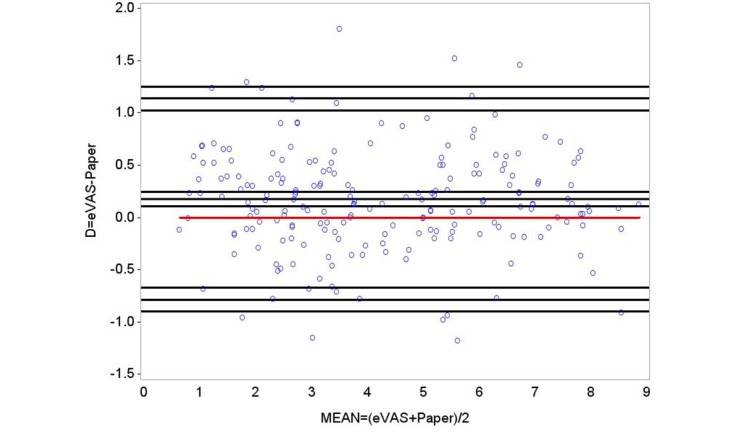
Results: Intermethod reliability estimated by ICC(3,1) was 0.86 with a 95% confidence interval of 0.81 to 0.90, indicating good reliability. Intramethod reliability estimated by ICCa(3,1) was 0.86 with a 95% confidence interval of 0.81 to 0.90, also indicating good reliability. Bland-Altman analysis showed a difference of 0.175 (0.49), and limits of agreement ranged from -0.79 to 1.14.
Conclusions: The pain level module on the app is highly reliable and interchangeable with the paper VAS version. This tool could potentially help clinicians and researchers precisely assess pain in a simple, economic way with the use of a ubiquitous technology.
Keywords: mHealth; mobile phone; pain; pain measurement; tablet; validation; visual analog pain scale.
©Carles Escalona-Marfil, Andrea Coda, Jorge Ruiz-Moreno, Lluís Miquel Riu-Gispert, Xavier Gironès. Originally published in the Journal of Medical Internet Research (http://www.jmir.org), 12.02.2020.
Conflict of interest statement
Conflicts of Interest: None declared.
Figures
References
-
- Coda A, Sculley D, Santos D, Girones X, Brosseau L, Smith DR, Burns J, Rome K, Munro J, Singh-Grewal D. Harnessing interactive technologies to improve health outcomes in juvenile idiopathic arthritis. Pediatr Rheumatol Online J. 2017 May 16;15(1):40. doi: 10.1186/s12969-017-0168-y. https://ped-rheum.biomedcentral.com/articles/10.1186/s12969-017-0168-y - DOI - DOI - PMC - PubMed
-
- Scott J, Huskisson EC. Graphic representation of pain. Pain. 1976 Jun;2(2):175–184. - PubMed
-
- Stone AA, Broderick JE, Schwartz JE, Shiffman S, Litcher-Kelly L, Calvanese P. Intensive momentary reporting of pain with an electronic diary: reactivity, compliance, and patient satisfaction. Pain. 2003 Jul;104(1-2):343–351. - PubMed
-
- Stone AA, Shiffman S, Schwartz JE, Broderick JE, Hufford MR. Patient compliance with paper and electronic diaries. Control Clin Trials. 2003 Apr;24(2):182–199. - PubMed
-
- Stinson JN, Stevens BJ, Feldman BM, Streiner D, McGrath PJ, Dupuis A, Gill N, Petroz GC. Construct validity of a multidimensional electronic pain diary for adolescents with arthritis. Pain. 2008 Jun;136(3):281–292. doi: 10.1016/j.pain.2007.07.002. http://paperpile.com/b/7zTvJ7/wlcBh - DOI - PubMed
MeSH terms
LinkOut - more resources
Full Text Sources
Other Literature Sources
Medical
