


Tuning T helper cell differentiation by ITK
- PMID: 32049330
- PMCID: PMC7227417
- DOI: 10.1042/BST20190486
Tuning T helper cell differentiation by ITK
Abstract
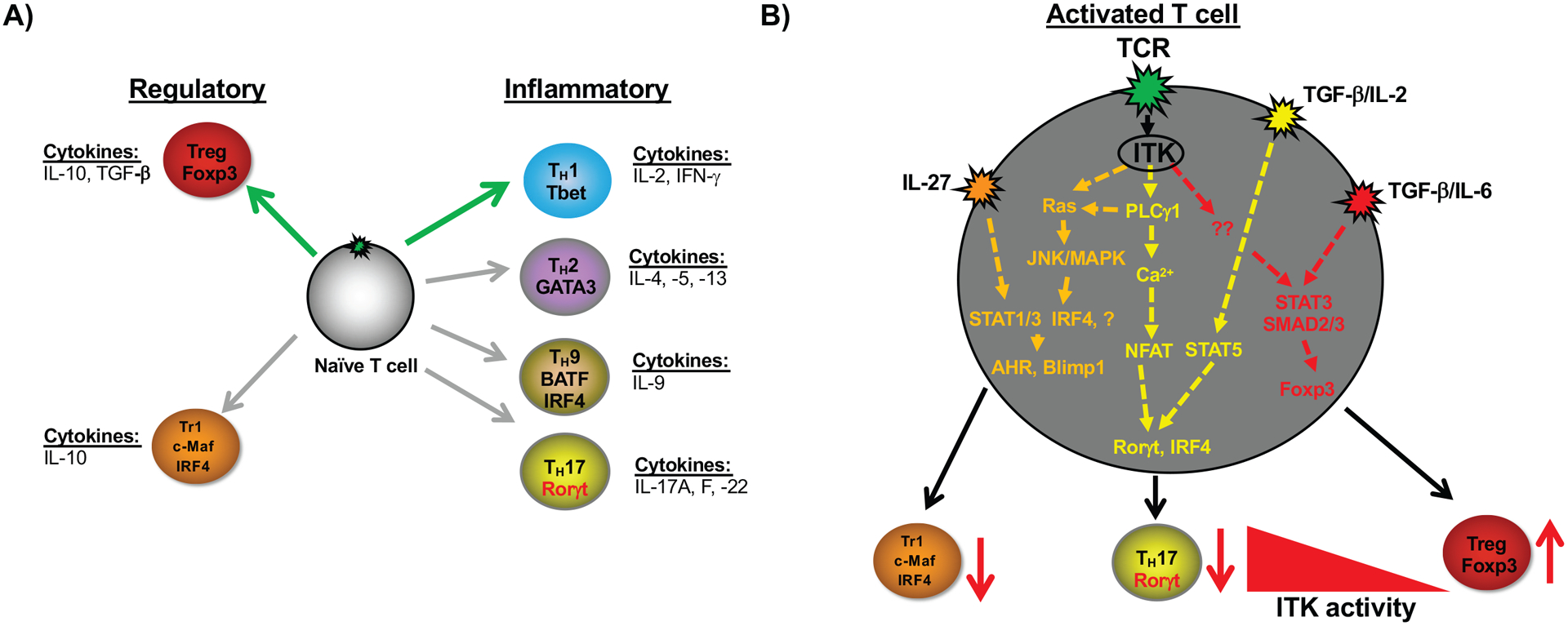
CD4+ effector T cells effectuate T cell immune responses, producing cytokines to orchestrate the nature and type of immune responses. The non-receptor tyrosine kinase IL-2 inducible T cell kinase (ITK), a mediator of T cell Receptor signaling, plays a critical role in tuning the development of these effector cells. In this review we discussed the role that signals downstream of ITK, including the Ras/MAPK pathway, play in differentially controlling the differentiation of TH17, Foxp3+ T regulatory (Treg) cells, and Type 1 regulatory T (Tr1) cells, supporting a model of ITK signals controlling a decision point in the effector T cell differentiation process.
Keywords: Itk; T-cells; cytokines; kinase; signaling.
© 2020 The Author(s). Published by Portland Press Limited on behalf of the Biochemical Society.
Conflict of interest statement
Conflict of Interest disclosure
A.A. receives research support from 3M Corporation. The other authors have no commercial or financial conflicts of interest.
Figures
References
-
- Coquet JM, Rausch L, and Borst J, The importance of co-stimulation in the orchestration of T helper cell differentiation. Immunol Cell Biol, 2015. 93(9): p. 780–8. - PubMed
-
- Gagliani N, et al., Coexpression of CD49b and LAG-3 identifies human and mouse T regulatory type 1 cells. Nat Med, 2013. 19(6): p. 739–46. - PubMed
Publication types
MeSH terms
Substances
Grants and funding
LinkOut - more resources
Full Text Sources
Research Materials
