


Disclosure of Amyloid Status for Risk of Alzheimer Disease to Cognitively Normal Research Participants With Subjective Cognitive Decline: A Longitudinal Study
- PMID: 32052640
- PMCID: PMC10623980
- DOI: 10.1177/1533317520904551
Disclosure of Amyloid Status for Risk of Alzheimer Disease to Cognitively Normal Research Participants With Subjective Cognitive Decline: A Longitudinal Study
Abstract
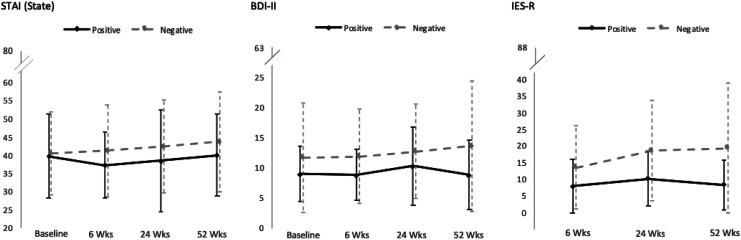
This study aimed to investigate the long-term impacts of disclosing amyloid status for a risk of Alzheimer disease (AD) to cognitively normal research participants with subjective cognitive decline (SCD), which represents an initial manifestation of AD. Forty-two participants were classified as the amyloid-positive (n = 10) or amyloid-negative (n = 32) groups. We assessed symptoms of anxiety, depression, and test-related distress at 6, 24, and 52 weeks after results disclosure. No difference was found over time in anxiety, depression, and test-related distress in either group. Although no significant differences were observed between groups in anxiety or depression, the amyloid-negative group had a significantly higher level of test-related distress than the amyloid-positive group at 52 weeks. Disclosing amyloid status to cognitively healthy research participants with SCD did not cause significant long-term psychological risks. However, a theoretical spectrum of subjective concern may exist about cognitive decline in amyloid-negative individuals.
Keywords: Alzheimer disease; amyloid imaging; disclosure; ethics; subjective cognitive decline.
Conflict of interest statement
The authors declared no potential conflicts of interest with respect to the research, authorship, and/or publication of this article.
Figures

References
Publication types
MeSH terms
Substances
LinkOut - more resources
Full Text Sources
Medical
