


The threshold of alpha-fetoprotein (AFP) for the diagnosis of hepatocellular carcinoma: A systematic review and meta-analysis
- PMID: 32053643
- PMCID: PMC7018038
- DOI: 10.1371/journal.pone.0228857
The threshold of alpha-fetoprotein (AFP) for the diagnosis of hepatocellular carcinoma: A systematic review and meta-analysis
Abstract
Objective: Hepatocellular carcinoma (HCC) has become a pressing health problem facing the world today due to its high morbidity, high mortality, and late discovery. As a diagnostic criteria of HCC, the exact threshold of Alpha-fetoprotein (AFP) is controversial. Therefore, this study was aimed to systematically estimate the performance of AFP in diagnosing HCC and to clarify its optimal threshold.
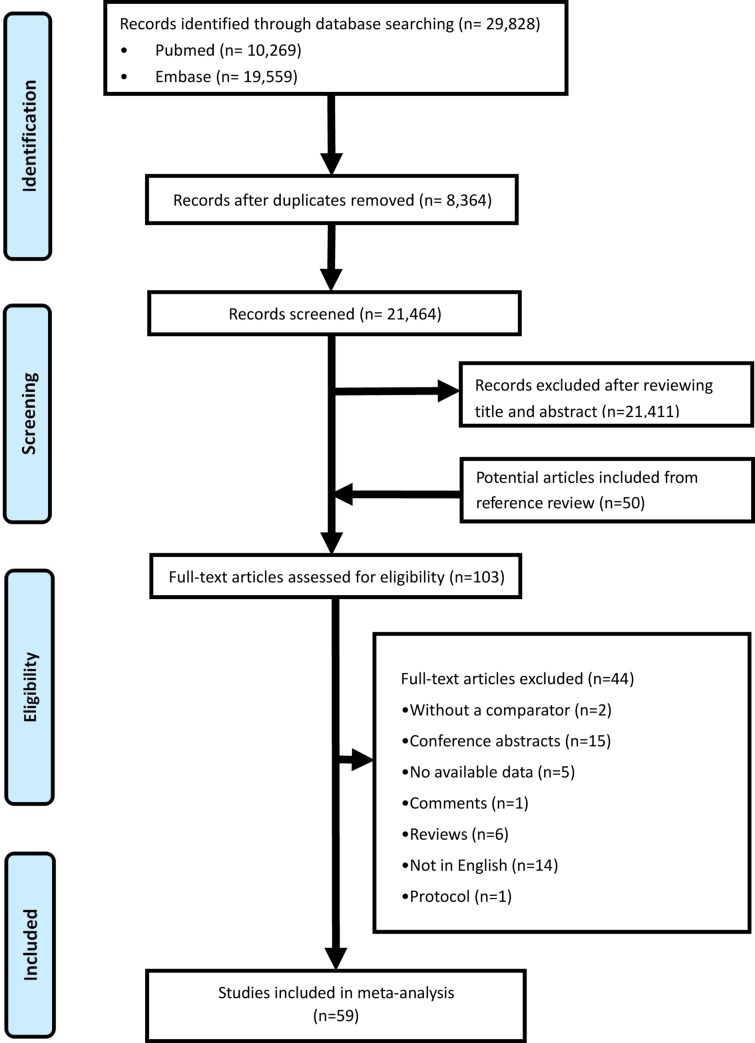
Methods: Medline and Embase databases were searched for articles indexed up to November 2019. English language studies were included if both the sensitivity and specificity of AFP in the diagnosis of HCC were provided. The basic information and accuracy data included in the studies were extracted. Combined estimates for sensitivity and specificity were statistically analyzed by random-effects model using MetaDisc 1.4 and Stata 15.0 software at the prespecified threshold of 400 ng/mL, 200 ng/mL, and the range of 20-100 ng/mL. The optimal threshold was evaluated by the area under curve (AUC) of the summary receiver operating characteristic (SROC).
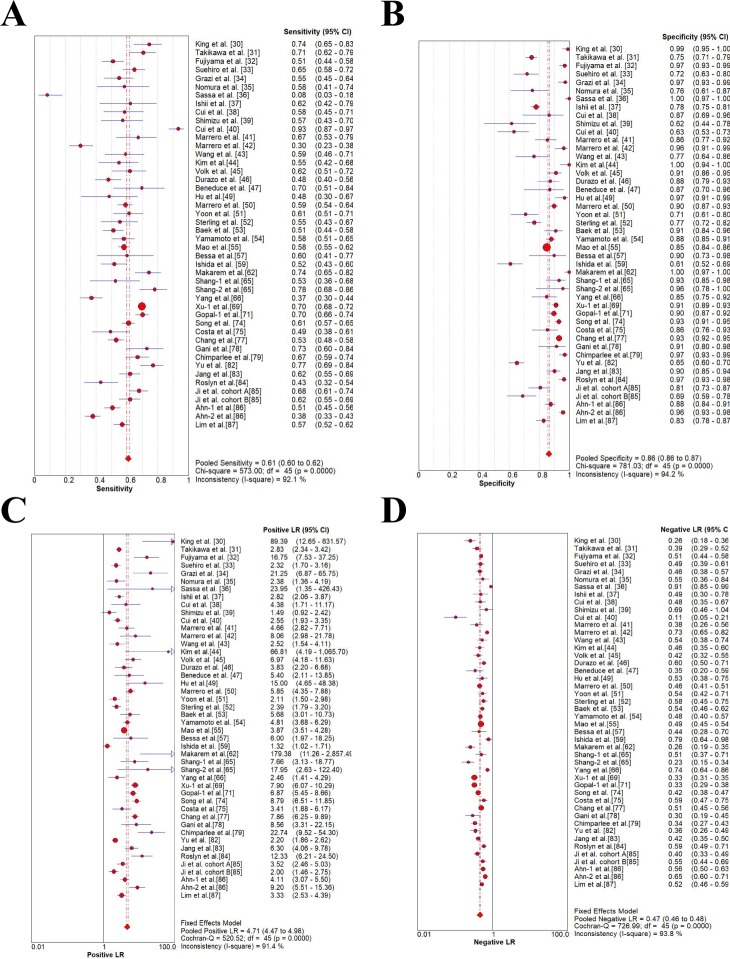
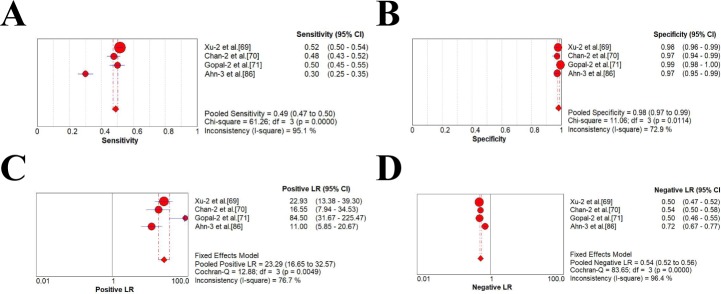
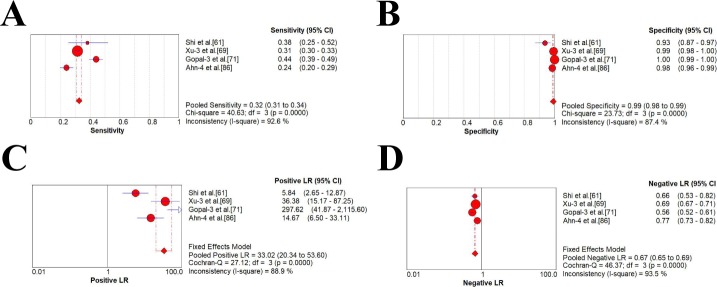
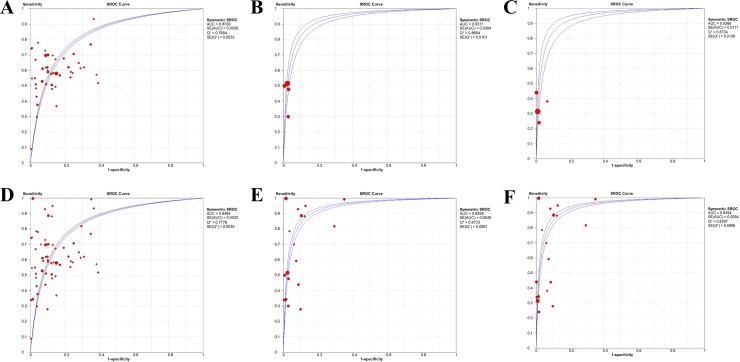
Results: We retrieved 29,828 articles and included 59 studies and 1 review with a total of 11,731 HCC cases confirmed by histomorphology and 21,972 control cases without HCC. The included studies showed an overall judgment of at risk of bias. Four studies with AFP threshold of 400 ng/mL showed the summary sensitivity and specificity of 0.32 (95%CI 0.31-0.34) and 0.99 (95%CI 0.98-0.99), respectively. Four studies with AFP threshold of 200 ng/mL showed the summary sensitivity and specificity of 0.49 (95%CI 0.47-0.50) and 0.98 (95%CI 0.97-0.99), respectively. Forty-six studies with AFP threshold of 20-100 ng/mL showed the summary sensitivity and specificity of 0.61 (95%CI 0.60-0.62) and 0.86 (95%CI 0.86-0.87), respectively. The AUC of SROC and Q index of 400 ng/mL threshold were 0.9368 and 0.8734, respectively, which were significantly higher than those in 200 ng/mL threshold (0.9311 and 0.8664, respectively) and higher than those in 20-100 ng/mL threshold (0.8330 and 0.7654, respectively). Furthermore, similar result that favored 400 ng/mL were shown in the threshold in terms of AFP combined with ultrasound.
Conclusion: AFP levels in serum showed good accuracy in HCC diagnosis, and the threshold of AFP with 400 ng/mL was better than that of 200 ng/mL in terms of sensitivity and specificity no matter AFP is used alone or combined with ultrasound.
Conflict of interest statement
The authors have declared that no competing interests exist.
Figures
References
-
- Altekruse SF, McGlynn KA, Reichman ME. Hepatocellular carcinoma incidence, mortality, and survival trends in the United States from 1975 to 2005. Journal of clinical oncology: official journal of the American Society of Clinical Oncology. 2009;27(9):1485–91. Epub 2009/02/20. 10.1200/jco.2008.20.7753 - DOI - PMC - PubMed
-
- Llovet JM, Bustamante J, Castells A, Vilana R, Ayuso Mdel C, Sala M, et al. Natural history of untreated nonsurgical hepatocellular carcinoma: rationale for the design and evaluation of therapeutic trials. Hepatology (Baltimore, Md). 1999;29(1):62–7. Epub 1998/12/24. 10.1002/hep.510290145 . - DOI - PubMed
Publication types
MeSH terms
Substances
LinkOut - more resources
Full Text Sources
Research Materials
