The Impact of Skeletal Muscle ERα on Mitochondrial Function and Metabolic Health
- PMID: 32053721
- PMCID: PMC7017798
- DOI: 10.1210/endocr/bqz017
The Impact of Skeletal Muscle ERα on Mitochondrial Function and Metabolic Health
Abstract
The incidence of chronic disease is elevated in women after menopause. Increased expression of ESR1 (the gene that encodes the estrogen receptor alpha, ERα) in muscle is highly associated with metabolic health and insulin sensitivity. Moreover, reduced muscle expression levels of ESR1 are observed in women, men, and animals presenting clinical features of the metabolic syndrome (MetSyn). Considering that metabolic dysfunction elevates chronic disease risk, including type 2 diabetes, heart disease, and certain cancers, treatment strategies to combat metabolic dysfunction and associated pathologies are desperately needed. This review will provide published work supporting a critical and protective role for skeletal muscle ERα in the regulation of mitochondrial function, metabolic homeostasis, and insulin action. We will provide evidence that muscle-selective targeting of ERα may be effective for the preservation of mitochondrial and metabolic health. Collectively published findings support a compelling role for ERα in the control of muscle metabolism via its regulation of mitochondrial function and quality control. Studies identifying ERα-regulated pathways essential for disease prevention will lay the important foundation for the design of novel therapeutics to improve metabolic health of women while limiting secondary complications that have historically plagued traditional hormone replacement interventions.
Keywords: estradiol action; estrogen receptor alpha; metabolic health; mitochondrial function; skeletal muscle metabolism.
Published by Oxford University Press on behalf of the Endocrine Society 2020.
Figures
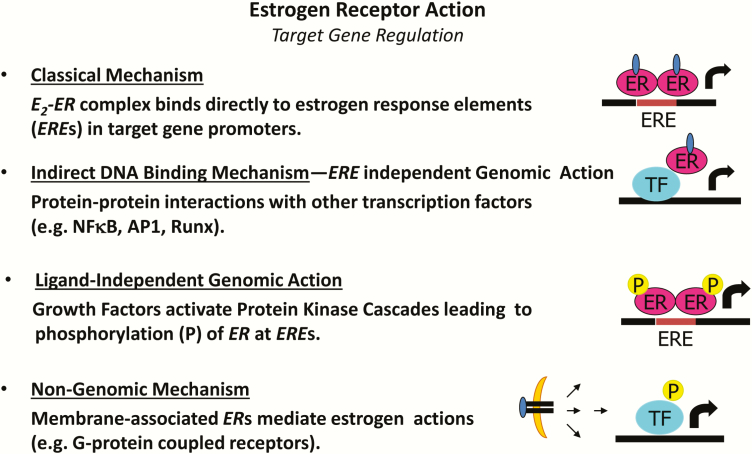

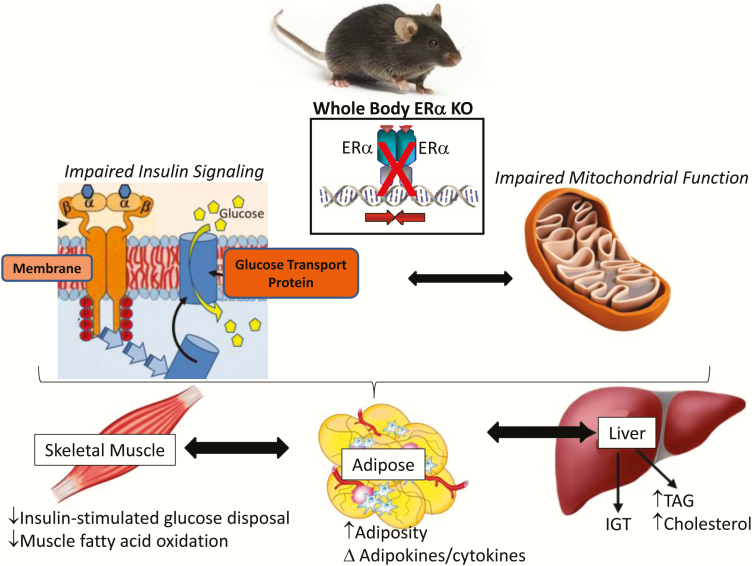
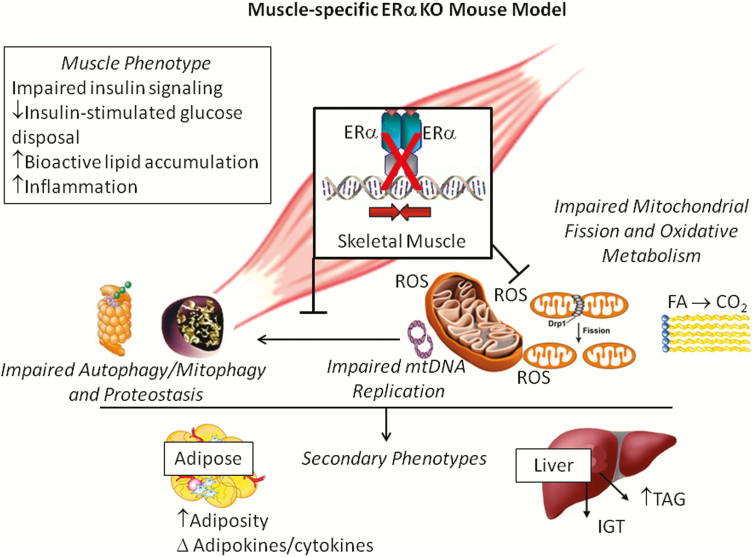
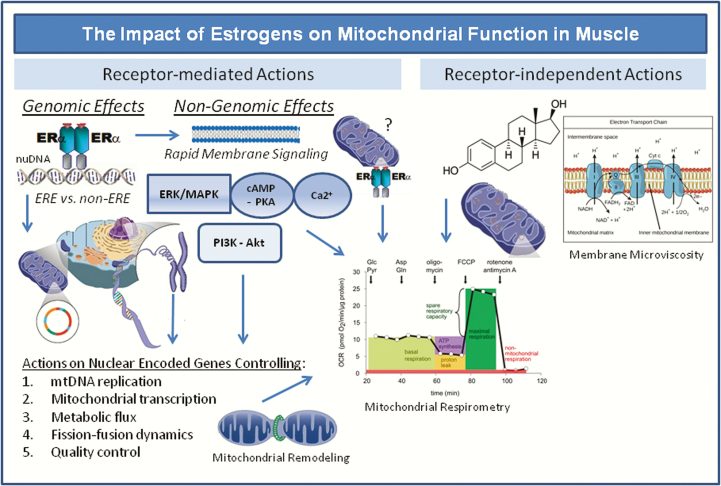
References
-
- Kenneth D. Kochanek M.A., Sherry L. Murphy B.S., Jiaquan Xu M.D., and Elizabeth Arias Ph.D., Division of Vital Statistics National Vital Statistics Reports, Vol. 68, No. 9, June 24, 2019 - PubMed
-
- Bonds DE, Lasser N, Qi L, et al. . The effect of conjugated equine oestrogen on diabetes incidence: the Women’s Health Initiative randomised trial. Diabetologia. 2006;49(3):459–468. - PubMed
-
- Kanaya AM, Herrington D, Vittinghoff E, et al. ; Heart and Estrogen/progestin Replacement Study Glycemic effects of postmenopausal hormone therapy: the Heart and Estrogen/progestin Replacement Study. A randomized, double-blind, placebo-controlled trial. Ann Intern Med. 2003;138(1):1–9. - PubMed
-
- Margolis KL, Bonds DE, Rodabough RJ, et al. ; Women’s Health Initiative Investigators Effect of oestrogen plus progestin on the incidence of diabetes in postmenopausal women: results from the Women’s Health Initiative Hormone Trial. Diabetologia. 2004;47(7):1175–1187. - PubMed
-
- Szmuilowicz ED, Stuenkel CA, Seely EW. Influence of menopause on diabetes and diabetes risk. Nat Rev Endocrinol. 2009;5(10):553–558. - PubMed
Publication types
MeSH terms
Substances
Grants and funding
LinkOut - more resources
Full Text Sources
Other Literature Sources
Miscellaneous