Worldwide trends in penile implantation surgery: data from over 63,000 implants
- PMID: 32055463
- PMCID: PMC6995940
- DOI: 10.21037/tau.2019.09.26
Worldwide trends in penile implantation surgery: data from over 63,000 implants
Abstract
Background: Penile prosthesis implantation represents the gold standard of treatment for severe or medically refractory erectile dysfunction (ED). We sought to address the paucity of currently available literature about global penile prosthesis usage in regard to geography, patient age, surgical approach, implanter volume, and etiology of ED.
Methods: From device manufacturer information, we compiled data on over 63,000 implants performed worldwide. Data was grouped and then analyzed to examine trends in penile implantation between the years of 2005-2012.
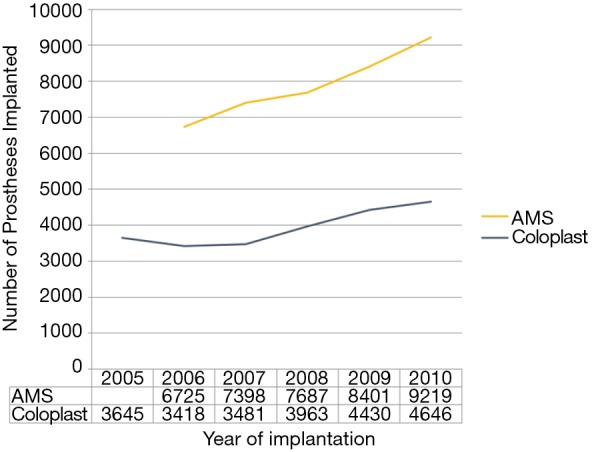
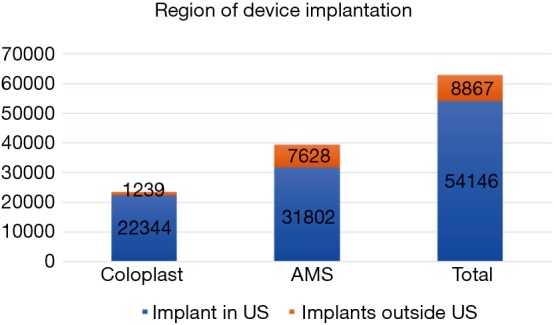
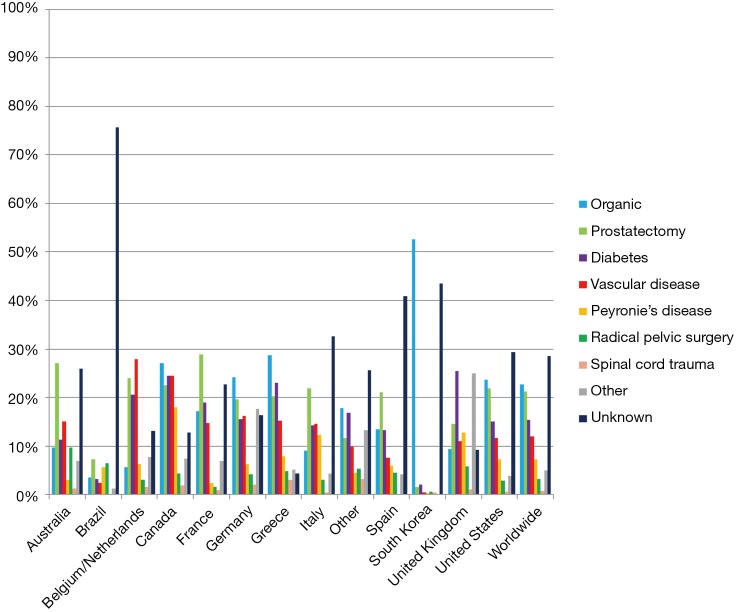
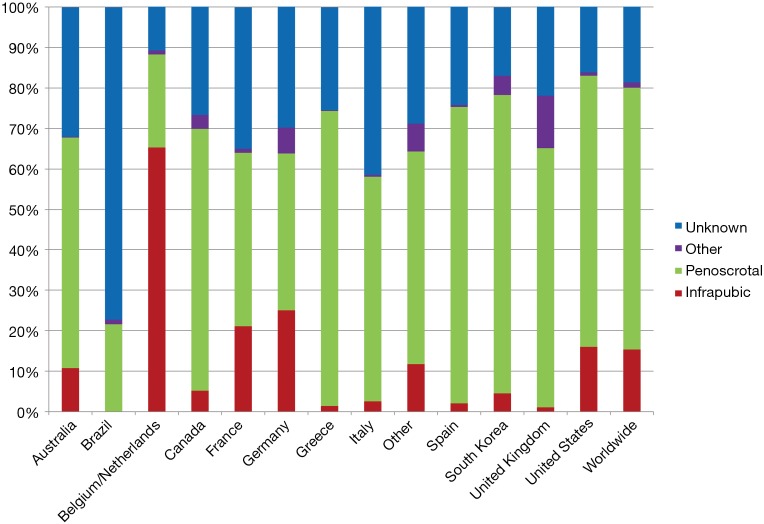
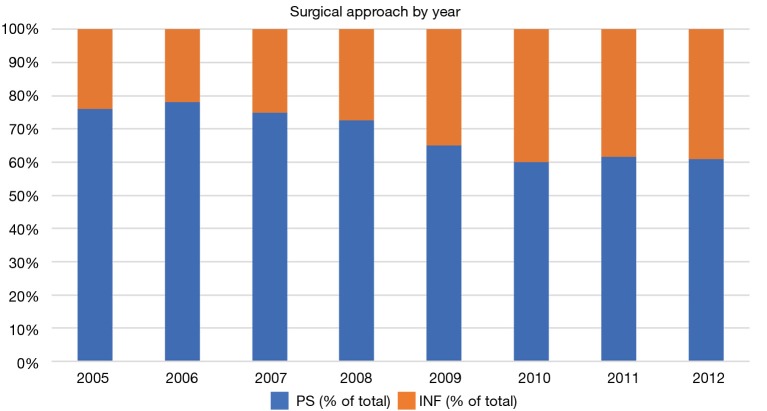
Results: The number of implants was seen to steadily increase over the study period. Of the 63,013 total procedures recorded, 85.9% were performed within the United States. 60-78% of procedures were done using the penoscrotal (PS) approach, with only Belgium/Netherlands as an outlier with an infrapubic (INF) majority. The US was notable for having an increasing number of implanters doing 16-30, 31-50, or >100 implants yearly. Etiology of ED worldwide was variable, but "organic," post-prostatectomy, and diabetes accounted for the vast majority of cases worldwide.
Conclusions: Penile prosthesis implantation is an increasing practice, as evidenced by a steady increase in the number of implants performed over a 7-year study period. Acceptance of this treatment option for ED is variable by region with the US leading the annual number of implantations by a wide margin. Worldwide, there appears to be a predominance of surgeons placing implants via the PS approach.
Keywords: Erectile dysfunction (ED); penile implant; penile prosthesis.
2020 Translational Andrology and Urology. All rights reserved.
Conflict of interest statement
Conflicts of Interest: Dr. Köhler is a consultant for both Coloplast and Boston Scientific. The other authors have no conflicts of interest to declare.
Figures
Comment in
-
Male and Female Sexual Function and Dysfunction; Andrology.J Urol. 2021 Mar;205(3):912-914. doi: 10.1097/JU.0000000000001556. Epub 2020 Dec 23. J Urol. 2021. PMID: 33356458 No abstract available.
References
LinkOut - more resources
Full Text Sources