


Efficacy of a certified modular ultrasound curriculum
- PMID: 32055882
- PMCID: PMC7056694
- DOI: 10.1007/s00101-020-00730-9
Efficacy of a certified modular ultrasound curriculum
Abstract
Background: In recent years, ultrasound (US) has become more incorporated into anesthesia and intensive care medicine. The German Anesthesia Society established a modular curriculum to teach US skills. Until now, the efficacy of this modular curriculum has not been validated.
Objective: The main objective of this study was to determine whether there is an increase of knowledge and of psychomotor skills for the trainees in this curriculum.
Material and methods: After ethical committee approval, 41 anesthesia physicians were enrolled. To determine the increase of knowledge and of practical skills theoretical and practical tests performed were evaluated before and after two different US courses.
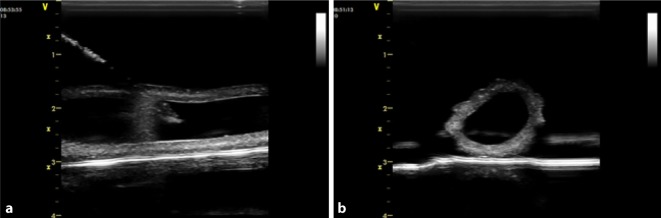
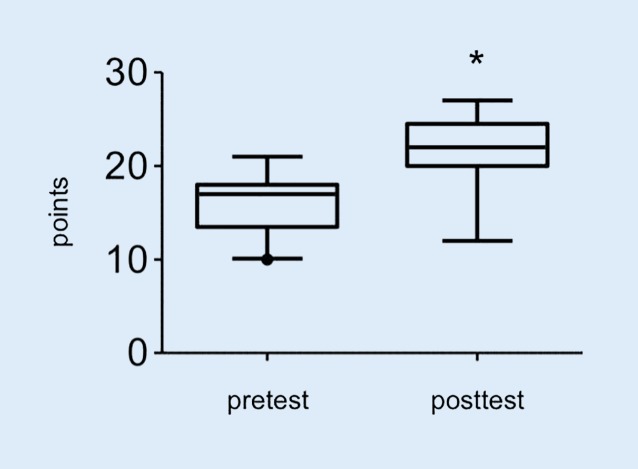
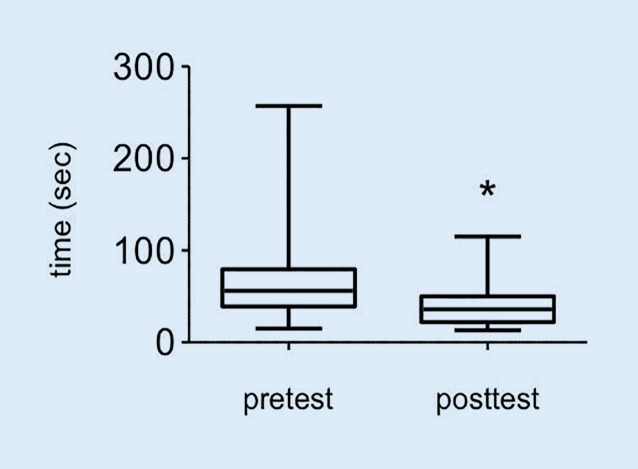
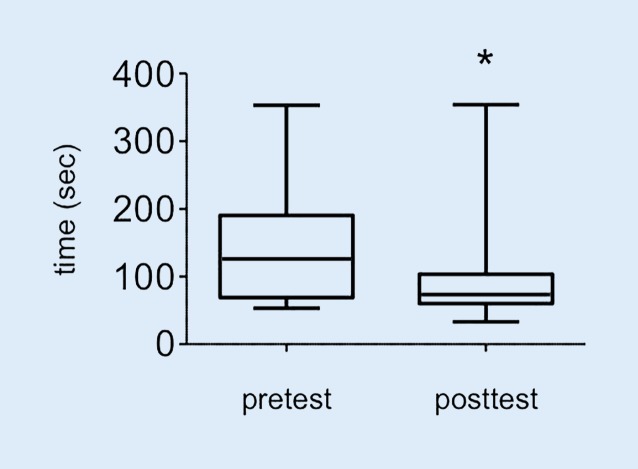
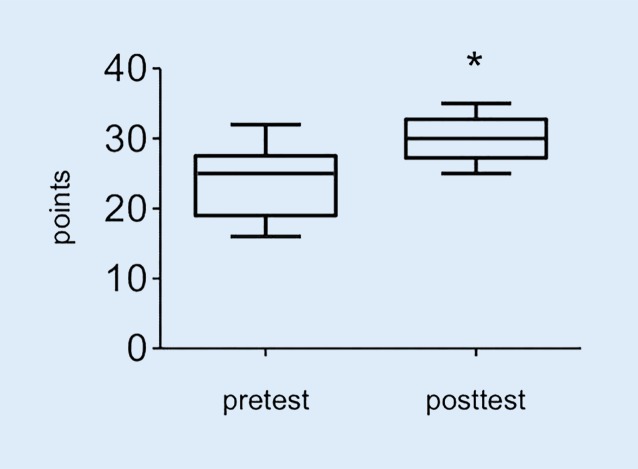
Results: Comparing before and after course tests, the participants showed significant improvement in theoretical multiple choice tests (p = 0.008). Regarding psychomotor skills following course 1, the trainees improved significantly in the time needed to perform the two practical tests (p = 0.03), but not in the performance of the test. Better needle visualization during simulated US-guided vessel puncture (p = 0.52) and better identification of the anatomical structures in the axillary region (p = 0.56) could not be achieved.
Conclusion: This study shows that although this US course curriculum has positively enhanced the trainees' theoretical knowledge of US practice, it does not enhance the practical application of that theoretical knowledge. To improve this curriculum, a supervised clinically practical training should follow the course.
Hintergrund: Ultraschall (US) hat in den letzten Jahren zunehmend Einzug in die Anästhesie und Intensivmedizin erhalten. Die Deutsche Gesellschaft für Anästhesiologie & Intensivmedizin hat ein modulares Kurssystem zur Vermittlung von US-Kompetenzen entwickelt. Die Wirksamkeit dieses modularen Curriculums wurde bisher nicht validiert.
Ziel: Ziel dieser Studie war zu ermitteln, ob es bei den Teilnehmern durch den Besuch von Modulen dieses Kurssystems zu einer Verbesserung theoretischer Kenntnisse und praktischer Fertigkeiten kommt.
Material und Methode: Nach Zustimmung durch die Ethikkommission wurden 41 Anästhesisten in die Studie eingeschlossen. Um den Zugewinn an Wissen und praktischen Fertigkeiten zu ermitteln, wurden theoretische und praktische Tests vor und nach zwei verschiedenen US-Kursen ausgewertet.
Ergebnisse: Nach den Kursen zeigten die Teilnehmer eine signifikante Verbesserung in den Ergebnissen der Multiple-Choice-Tests (p = 0,008). Hinsichtlich der psychomotorischen Fähigkeiten nach Kurs 1 verbesserten sich die Teilnehmer in der zur Durchführung der beiden praktischen Tests benötigten Zeit signifikant (p = 0,03), nicht aber in der Durchführung der Tests. Die praktischen Aufgaben konnten nach dem Kurs 1 zwar signifikant schneller durchgeführt werden (p = 0,03), die Qualität der Nadelführung (p = 0,52) und die korrekte Benennung anatomischer Strukturen in der Achselregion konnten aber nicht verbessert werden.
Schlussfolgerung: Diese Studie zeigt, dass obwohl dieses Kurssystem die theoretischen Kenntnisse über die US-Praxis verbessert hat, die praktische Anwendung dieses theoretischen Wissens aber nicht verbessert werden konnten. Um dieses Curriculum zu verbessern, sollte es von einem praktischen Training unter Anleitung ergänzt werden.
Keywords: AFS curriculum; Certified ultrasound course; Modular ultrasound curriculum; Ultrasound in anesthesia; Ultrasound teaching.
Conflict of interest statement
R. Tomasi, K. Stark and P. Scheiermann declare that they have no competing interests.
Figures
References
-
- Archer E, van Hoving DJ, de Villiers A. In search of an effective teaching approach for skill acquisition and retention: teaching manual defibrillation to junior medical students. Afr J Emerg Med. 2015;5:54–59. doi: 10.1016/j.afjem.2014.10.009. - DOI
-
- Cartier V, Inan C, Zingg W, et al. Simulation-based medical education training improves short and long-term competency in, and knowledge of central venous catheter insertion: a before and after intervention study. Eur J Anaesthesiol. 2016;33:568–574. doi: 10.1097/EJA.0000000000000423. - DOI - PubMed
MeSH terms
LinkOut - more resources
Full Text Sources
