


Neurotensin in reward processes
- PMID: 32057800
- PMCID: PMC7238864
- DOI: 10.1016/j.neuropharm.2020.108005
Neurotensin in reward processes
Abstract
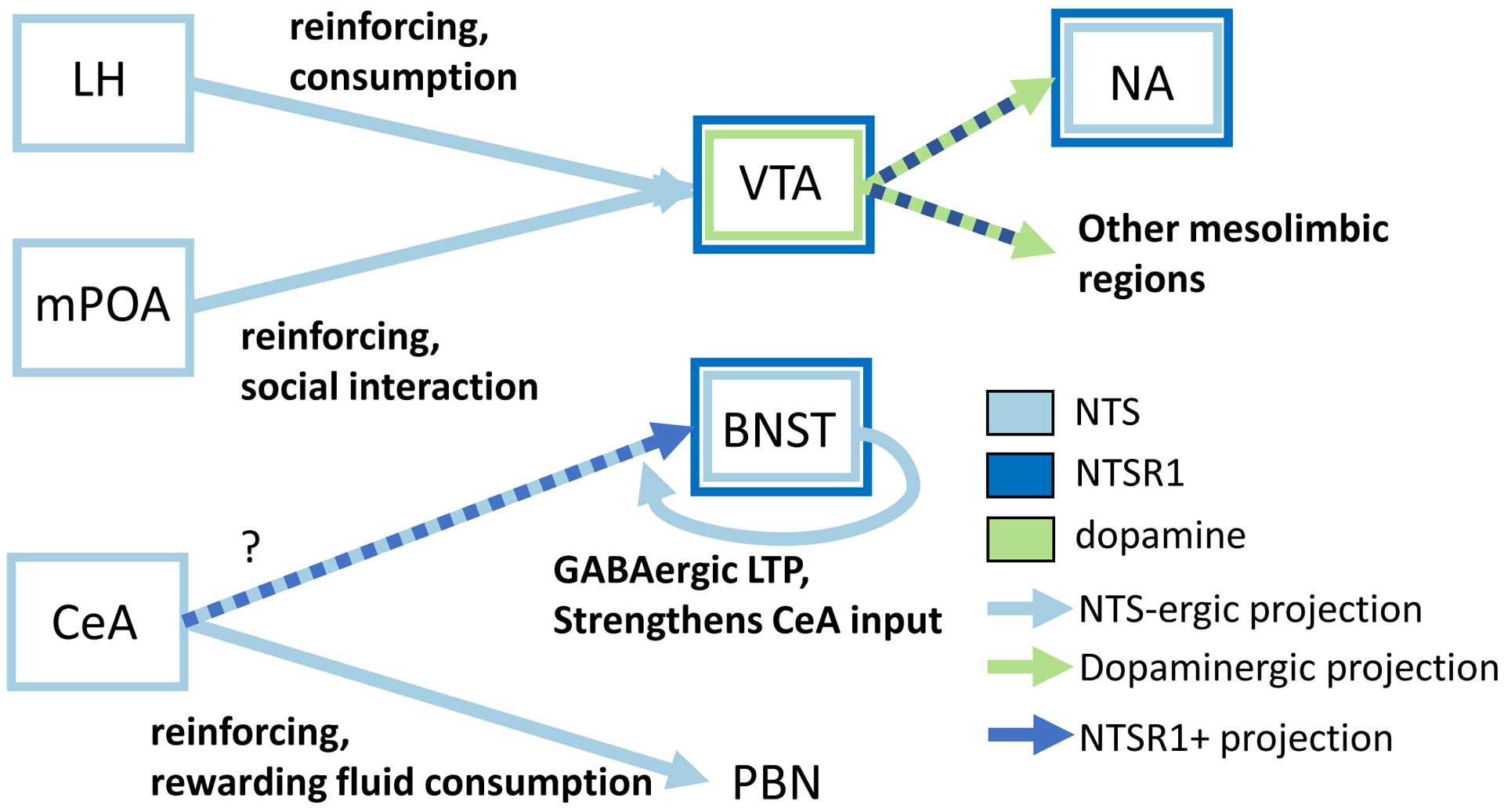
Neurotensin (NTS) is a neuropeptide neurotransmitter expressed in the central and peripheral nervous systems. Many studies over the years have revealed a number of roles for this neuropeptide in body temperature regulation, feeding, analgesia, ethanol sensitivity, psychosis, substance use, and pain. This review provides a general survey of the role of neurotensin with a focus on modalities that we believe to be particularly relevant to the study of reward. We focus on NTS signaling in the ventral tegmental area, nucleus accumbens, lateral hypothalamus, bed nucleus of the stria terminalis, and central amygdala. Studies on the role of NTS outside of the ventral tegmental area are still in their relative infancy, yet they reveal a complex role for neurotensinergic signaling in reward-related behaviors that merits further study. This article is part of the special issue on 'Neuropeptides'.
Keywords: Alcohol; Dopamine; Feeding; NTSR1; NTSR2; Neurotensin; Reward; Substance use disorder.
Copyright © 2020. Published by Elsevier Ltd.
Figures
References
-
- Arluison M, Brochier G, Vankova M, Leviel V, Villalobos J, Tramu G, 1994. Demonstration of peptidergic afferents to the bed nucleus of the stria terminalis using local injections of colchicine. A combined immunohistochemical and retrograde tracing study. Brain Res. Bull 34, 319–337. 10.1016/0361-9230(94)90026-4 - DOI - PubMed
Publication types
MeSH terms
Substances
Grants and funding
LinkOut - more resources
Full Text Sources
