


Incidence, Pathotyping, and Antibiotic Susceptibility of Avian Pathogenic Escherichia coli among Diseased Broiler Chicks
- PMID: 32059459
- PMCID: PMC7168244
- DOI: 10.3390/pathogens9020114
Incidence, Pathotyping, and Antibiotic Susceptibility of Avian Pathogenic Escherichia coli among Diseased Broiler Chicks
Abstract
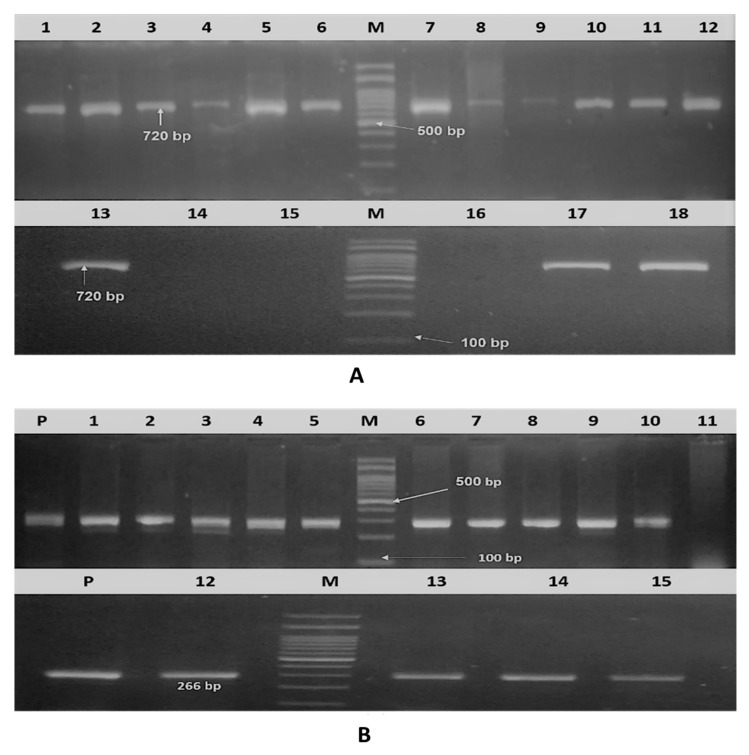
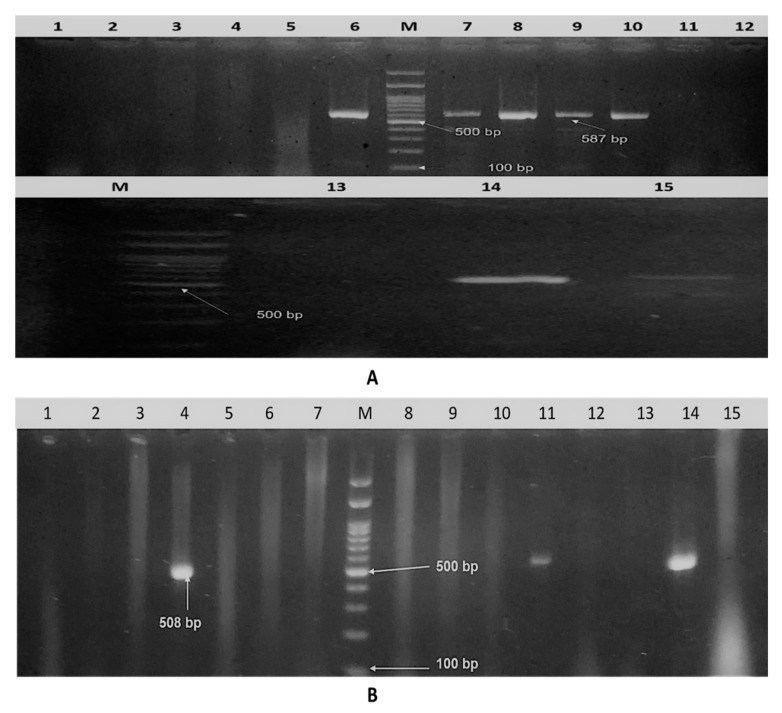
A total of 54 broiler flocks during the first two weeks of life was used to investigate the incidence of avian pathogenic E. coli in Egypt; 28 isolates (51.85%) were revealed by colony morphology and biochemical identification which then investigated for their serogroups and only 18/28 isolates were serotyped. The most prevalent serotypes were O115, O142, O158, O55, O125, O114, O27, O20, and O15. By application of polymerase chain reaction (PCR), 83.3% (15/18) of the serotyped isolates were confirmed to be E. coli, and 93.3% (14/15), 46.6% (7/15), and 20% (3/15) of isolates harbored the iss, iutA, and fimH genes, respectively. Virulence testing of the selected 13 APEC isolates on the specific-pathogen-free (SPF) chicks revealed them to be highly virulent (15.4%), moderately virulent (23.1%), and avirulent (61.5%); however, all isolates (100%) were extremely virulent towards SPF embryonated chicken eggs. Antibiotic resistance (100% of isolates (n = 13)) was observed for ampicillin, amoxycillin-clavulanic acid, and tetracyclines, colistin (92.31%; 12/13), doxycycline and spiramycin (84.62%; 11/13), florfenicol (69.23%; 9/13), cefotaxime (61.54%; 8/13), and ciprofloxacin (53.85%; 7/13). The highest percentage of sensitivity (53.85% of isolates; 7/13) was recorded for ofloxacin and enrofloxacin followed by gentamycin (46.15%; 6/13). The results suggest that the diagnosis of APEC with PCR is rapid and more accurate than traditional methods for E. coli identification; moreover, the presence or absence of iss, iutA, and/or fimH genes is not an indicator of in vivo pathogenicity of APEC. Thus, further studies, including a wider range of virulence genes and gene sequencing, are required. In addition, serotyping has no effect on the virulence of APEC.
Keywords: APEC; E. coli; PCR; antibiotics; broilers; resistance; serotyping; virulence gene.
Conflict of interest statement
The authors declare no conflict of interests.
Figures
References
-
- Filho H.K., Brito K., Cavalli L., Brito B. Avian pathogenic Escherichia coli (APEC)—An update on the control. In: Méndez-Vilas A., editor. The Battle Against Microbial Pathogens: Basic Science, Technological Advances and Educational Programs. Formatex Research Center; Badajoz, Spain: 2015. pp. 598–618.
-
- Nolan L.K., Barnes H.J., Vaillancourt J.P., Abdul¬Aziz T., Logue C.M. Colibacillosis. Mosby-Wolf Publication Ltd.; London, UK: 2013.
-
- Rahman M., Samad M., Rahman M., Kabir S. Bacterio-pathological studies on salmonellosis, colibacillosis and pasteurellosis in natural and experimental infections in chickens. Bangladesh J. Vet. Med. 2004;2:1–8. doi: 10.3329/bjvm.v2i1.1926. - DOI
LinkOut - more resources
Full Text Sources
