


Patients' experiences of seeking help for emotional concerns in primary care: doctor as drug, detective and collaborator
- PMID: 32059636
- PMCID: PMC7020382
- DOI: 10.1186/s12875-020-01106-z
Patients' experiences of seeking help for emotional concerns in primary care: doctor as drug, detective and collaborator
Abstract
Background: NICE guidelines for the management of emotional concerns in primary care emphasise the importance of communication and a trusting relationship, which is difficult to operationalise in practice. Current pressures in the NHS mean that it is important to understand care from a patient perspective. This study aimed to explore patients' experiences of primary care consultations for emotional concerns and what patients valued when seeking care from their GP.
Methods: Eighteen adults with experience of consulting a GP for emotional concerns participated in 4 focus groups. Data were analysed thematically.
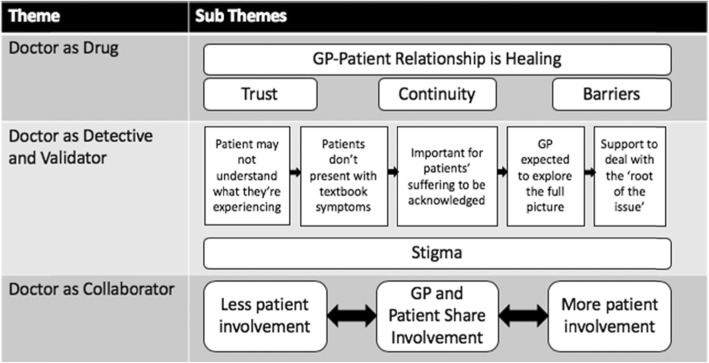
Results: (1) Doctor as Drug: Patients' relationship with their GP was considered therapeutic with continuity particularly valued. (2) Doctor as Detective and Validator: Patients were often puzzled by their symptoms, not recognising their emotional concerns. GPs needed to play the role of detective by exploring not just symptoms, but the person and their life circumstances. GPs were crucial in helping patients understand and validate their emotional concerns. (3) Doctor as Collaborator: Patients prefer a collaborative partnership, but often need to relinquish involvement because they are too unwell, or take a more active role because they feel GPs are ill-equipped or under too much pressure to help. Patients valued: GPs booking their follow up appointments; acknowledgement of stressful life circumstances; not relying solely on medication.
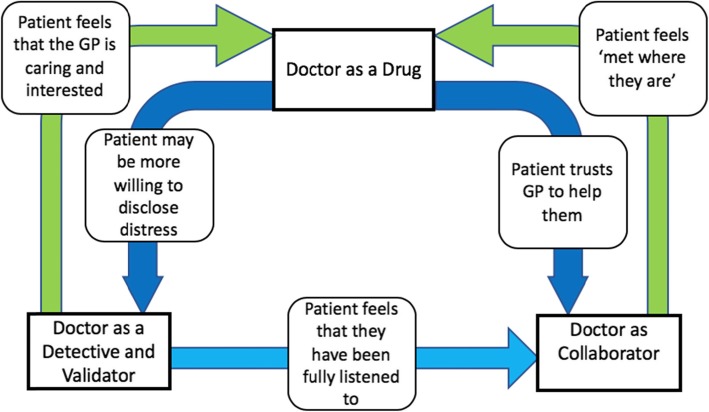
Conclusions: Seeking help for emotional concerns is challenging due to stigma and unfamiliar symptoms. GPs can support disclosure and understanding of emotional concerns by fully exploring and validating patients' concerns, taking into account patients' life contexts. This process of exploration and validation forms the foundation of a curative, trusting GP-patient relationship. A trusting relationship, with an emphasis on empathy and understanding, can make patients more able to share involvement in their care with GPs. This process is cyclical, as patients feel that their GP is caring, interested, and treating them as a person, further strengthening their relationship. NICE guidance should acknowledge the importance of empathy and validation when building an effective GP-patient partnership, and the role this has in supporting patients' involvement in their care.
Keywords: Mental health; Primary care; Professional-patient relationship; Qualitative research.
Conflict of interest statement
There are no competing interests to report.
Figures
References
-
- Goldberg DP, Huxley P. Common mental disorders: A bio-social model. Common mental disorders: A bio-social model. New York: Tavistock/Routledge; 1992. p. 194.
-
- Mind . GP mental health training survey. 2018.
-
- NICE. Depression in adults: recognition and management: National Institute for Health and Care Excellence; 2009. Available from: https://www.nice.org.uk/guidance/cg90. [cited 2019 Sep 19] - PubMed
Publication types
MeSH terms
LinkOut - more resources
Full Text Sources
Medical
