


Understanding the association between self-reported poor oral health and exposure to adverse childhood experiences: a retrospective study
- PMID: 32059720
- PMCID: PMC7020341
- DOI: 10.1186/s12903-020-1028-6
Understanding the association between self-reported poor oral health and exposure to adverse childhood experiences: a retrospective study
Abstract
Background: Adverse childhood experiences, including physical, sexual or emotional abuse, can have detrimental impacts on child and adult health. However, little research has explored the impact that such early life experiences have on oral health. This study examines whether experiencing adverse childhood experiences before the age of 18 years is associated with self-reported poor dental health in later life.
Methods: Using stratified random probability sampling, a household survey (N = 5307; age range 18-69 years) was conducted in the South of England (Hertfordshire, Luton and Northamptonshire). Data were collected at participants' homes using face-to-face interviews. Measures included exposure to nine adverse childhood experiences, and two dental outcomes: tooth loss (> 8 teeth lost due to dental caries or damage) and missing or filled teeth (direct or indirect restorations; > 12 missing or filled teeth).
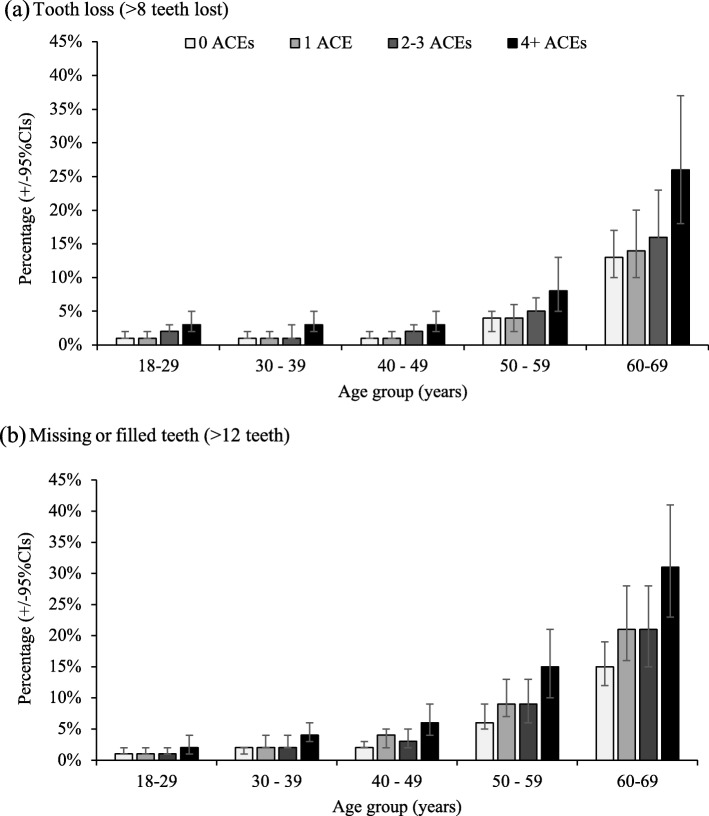
Results: Strong associations were found between exposure to childhood adversity and poor dental health. The prevalence of tooth loss was significantly higher (8.3%) in those with 4+ adverse childhood experiences compared to those who had experienced none (5.0%; p < 0.05). A similar relationship was found for levels of missing or filled teeth (13.4%, 4+ adverse childhood experiences; 8.1%, none; p < 0.001). Exposure to 4+ adverse childhood experiences was associated with a higher level of tooth loss and restorations at any age, compared to individuals who had not experienced adversity. Demographically adjusted means for tooth loss increased with adverse childhood experience count in all age groups, rising from 1.0% (18-29 years) and 13.0% (60-69 years) in those with none, to 3.0% and 26.0%, respectively in those reporting 4+.
Conclusions: Exposure to childhood adversity could be an important predictive factor for poor dental health. As oral health is an important part of a child's overall health status, approaches that seek to improve dental health across the life-course should start with safe and nurturing childhoods free from abuse and neglect. Given the growing role that dental professionals have in identifying violence and abuse, it seems appropriate to raise awareness in the field of dentistry of the potential for individuals to have suffered adverse childhood experiences, and the mechanisms linking childhood adversity to poor dental health.
Keywords: Adverse childhood experiences; Child maltreatment, child abuse, tooth loss; Dental health; Oral health; Public health.
Conflict of interest statement
The authors declare that they have no competing interests.
Figures
References
Publication types
MeSH terms
LinkOut - more resources
Full Text Sources
Medical
Research Materials
