


Hidden parasite diversity in a European freshwater system
- PMID: 32060320
- PMCID: PMC7021786
- DOI: 10.1038/s41598-020-59548-5
Hidden parasite diversity in a European freshwater system
Abstract
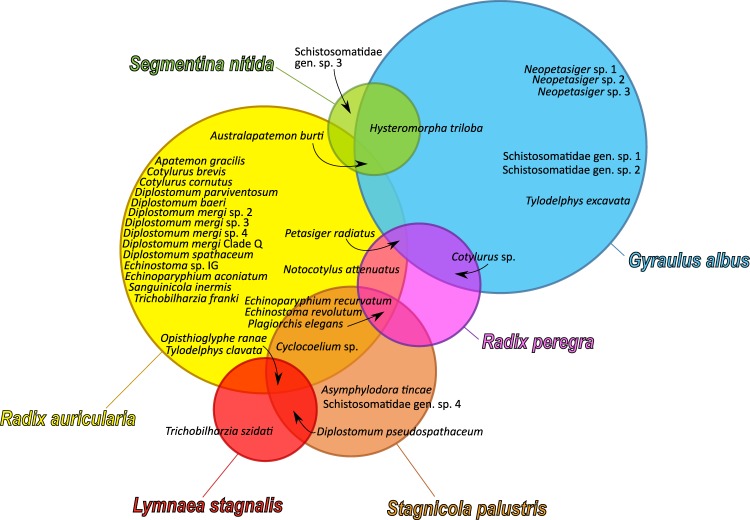
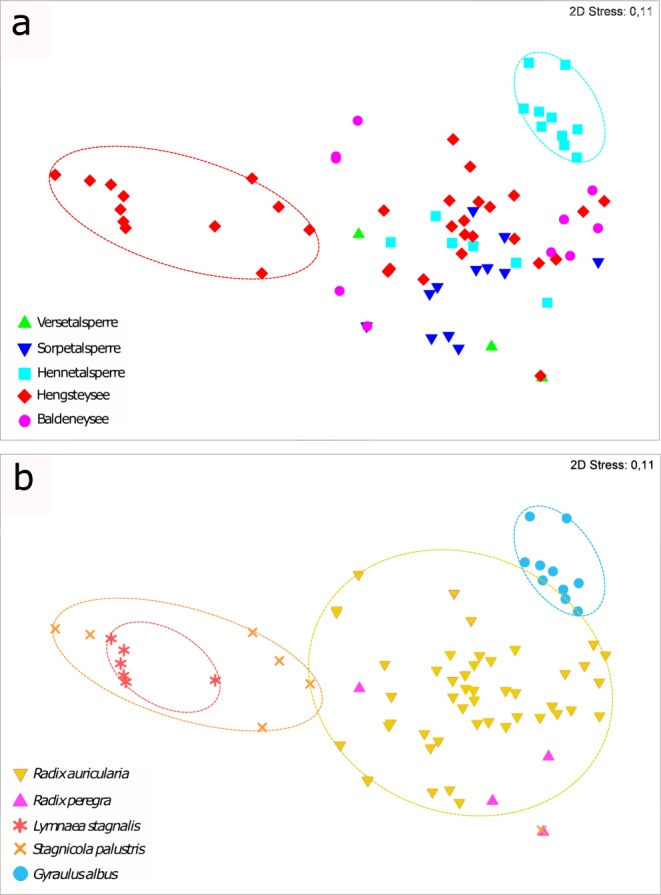
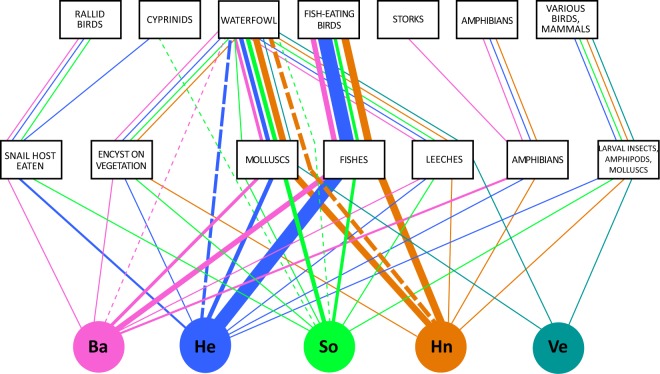
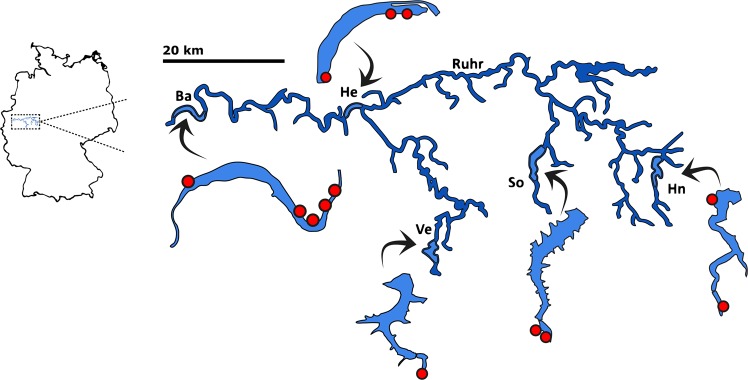
Parasites comprise a huge part of the biodiversity on earth. However, on a local scale, not much is known about their diversity and community structure. Here, we assess the diversity of larval trematode communities in an interconnected freshwater system of the River Ruhr in Germany and analyse how the parasites are spatially and temporally distributed in the ecosystem. A total of 5347 snail hosts belonging to six species revealed a highly diverse parasite fauna with 36 trematode species. More abundant snail species harboured more species-rich trematode faunas and communities, with the two dominant snail species, Radix auricularia and Gyraulus albus, accounting for almost 90% of the trematode diversity and harbouring spatially and temporally stable parasite communities. The results highlight the important role of stable keystone host populations for trematode transmission, structure and diversity. This local trematode diversity reveals information on definitive host occurrence and trophic interactions within ecosystems.
Conflict of interest statement
The authors declare no competing interests.
Figures
References
-
- Lafferty, K. D. et al. Food webs and parasites in a salt marsh ecosystem. In: Collinge, S. & Ray, C. (Eds.), Disease ecology: Community Structure and Pathogen Dynamics (Oxford University Press, Oxford, 2006).
-
- Thomas F, Poulin R, de Meeus T, Guegan J-F, Renaud F. Parasites and ecosystem engineering: what roles could they play? Oikos. 1999;84:167–171. doi: 10.2307/3546879. - DOI
Publication types
MeSH terms
LinkOut - more resources
Full Text Sources
Research Materials
