


TP53 Mutations and Outcomes in Breast Cancer: Reading beyond the Headlines
- PMID: 32061310
- PMCID: PMC7931175
- DOI: 10.1016/j.trecan.2020.01.007
TP53 Mutations and Outcomes in Breast Cancer: Reading beyond the Headlines
Abstract
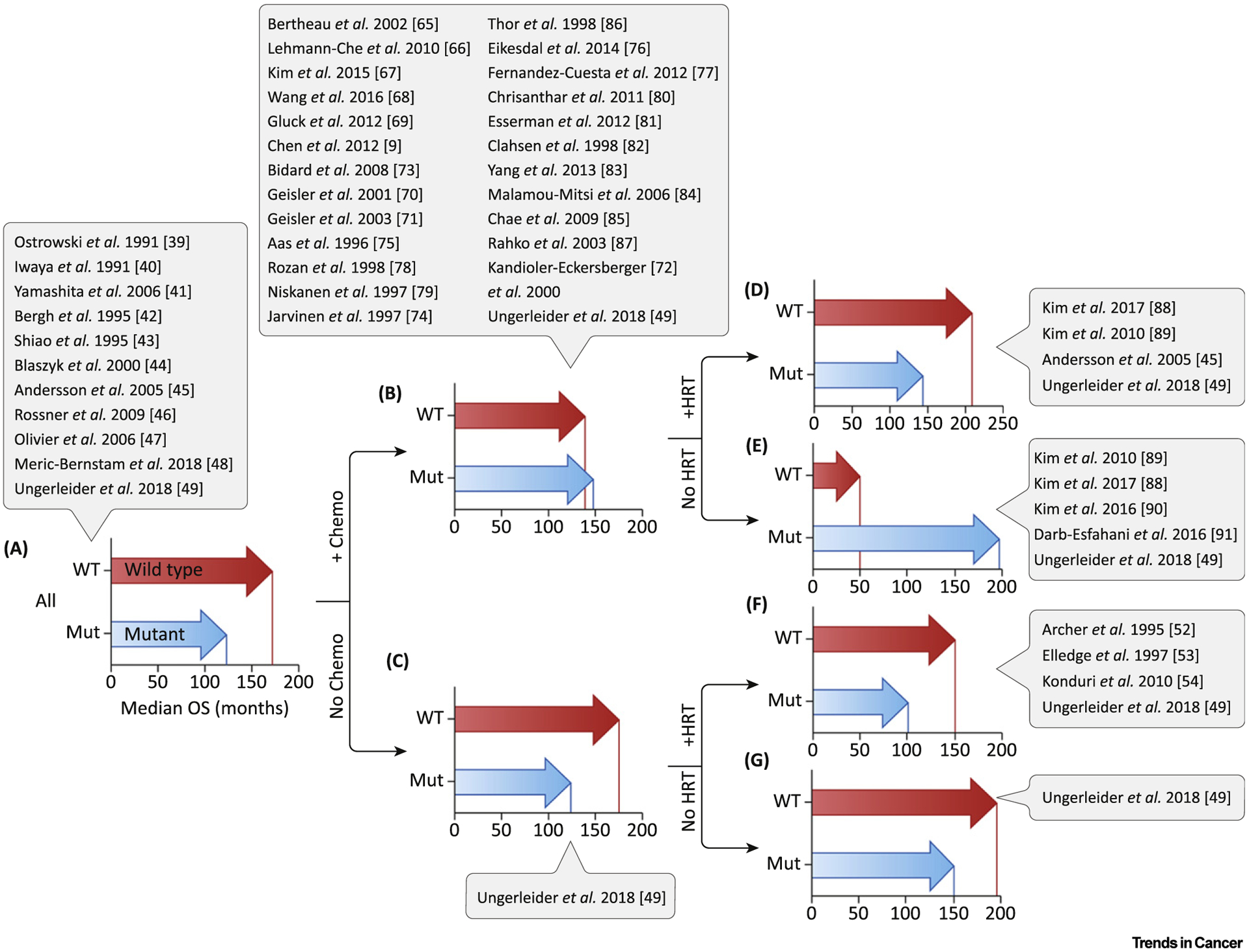
TP53 is the most frequently mutated gene in breast cancer, but its role in survival is confounded by different studies concluding that TP53 mutations are associated with negative, neutral, or positive outcomes. Closer examination showed that many studies were limited by factors such as imprecise methods to detect TP53 mutations and small cohorts that combined patients treated with drugs having very different mechanisms of action. When only studies of patients receiving the same treatment(s) were compared, they tended to agree. These analyses reveal a role for TP53 in response to different treatments as complex as its different biological activities. We discuss studies that have assessed the role of TP53 mutations in breast cancer treatment and limitations in interpreting reported results.
Keywords: TP53; breast cancer; chemotherapy; hormone therapy; survival; tamoxifen; tumor suppressors.
Copyright © 2020 Elsevier Inc. All rights reserved.
Figures
References
-
- Tonnessen-Murray C et al. (2016) The p53 protein: from cell regulation to cancer. In The p53 Protein: From Cell Regulation to Cancer (Lozano G and Levine AJ, eds), pp. 173–186, Cold Spring Harbor Laboratory Press
-
- Soussi T (2011) TP53 mutations in human cancer: database reassessment and prospects for the next decade. Adv. Cancer Res 110, 107–139 - PubMed
-
- Soussi T and Beroud C (2001) Assessing TP53 status in human tumours to evaluate clinical outcome. Nat. Rev. Cancer 1, 233–240 - PubMed
Publication types
MeSH terms
Substances
Grants and funding
LinkOut - more resources
Full Text Sources
Medical
Research Materials
Miscellaneous
