


Remitted depression and cognition in HIV: The role of cortisol and inflammation
- PMID: 32062371
- PMCID: PMC7254879
- DOI: 10.1016/j.psyneuen.2020.104609
Remitted depression and cognition in HIV: The role of cortisol and inflammation
Abstract
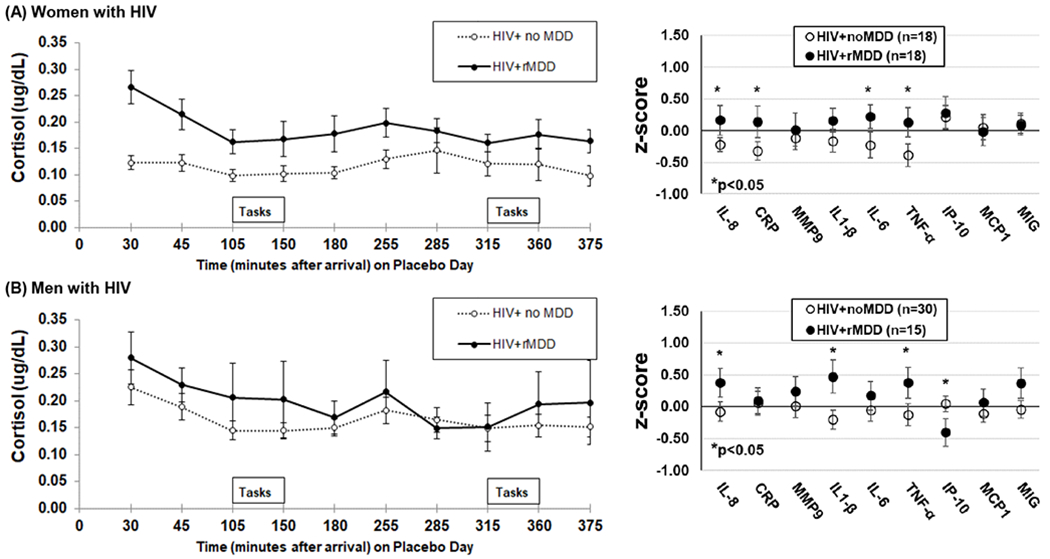
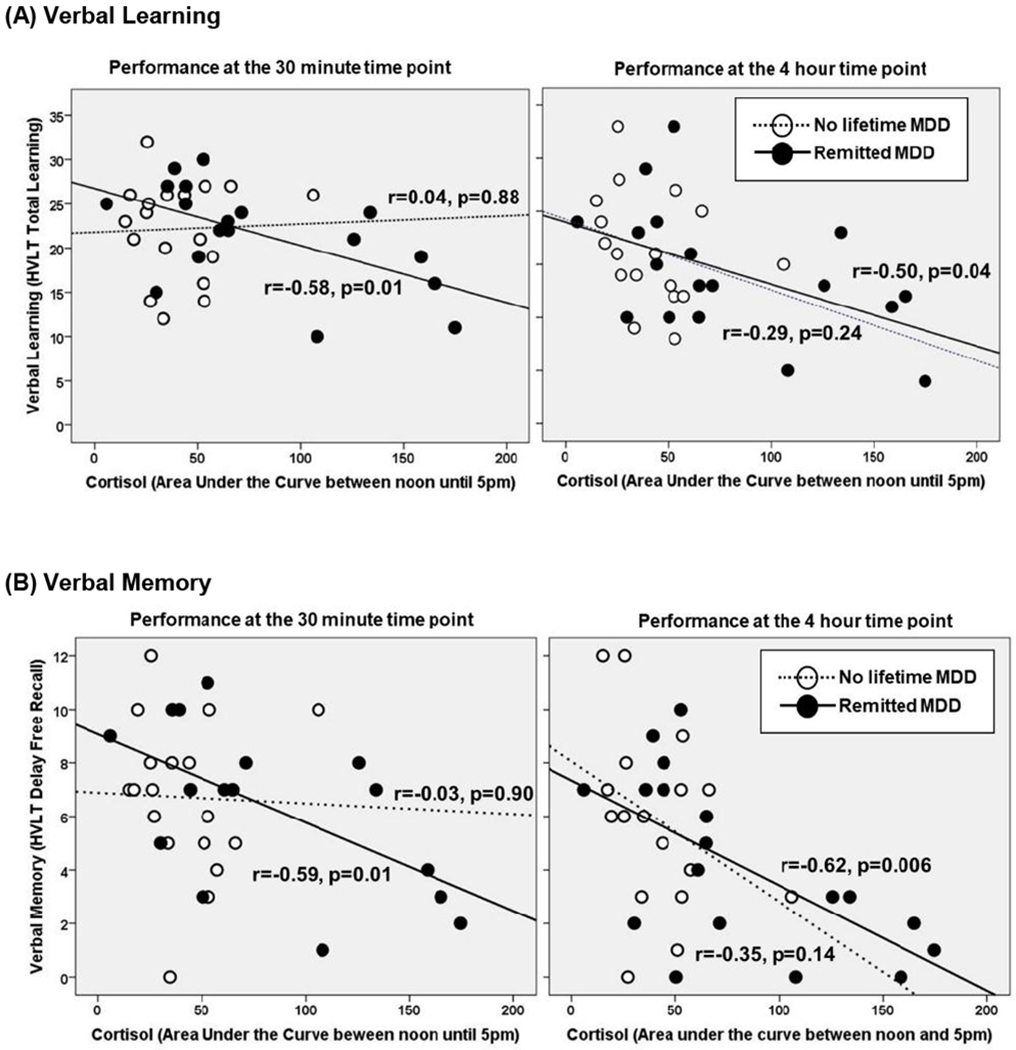
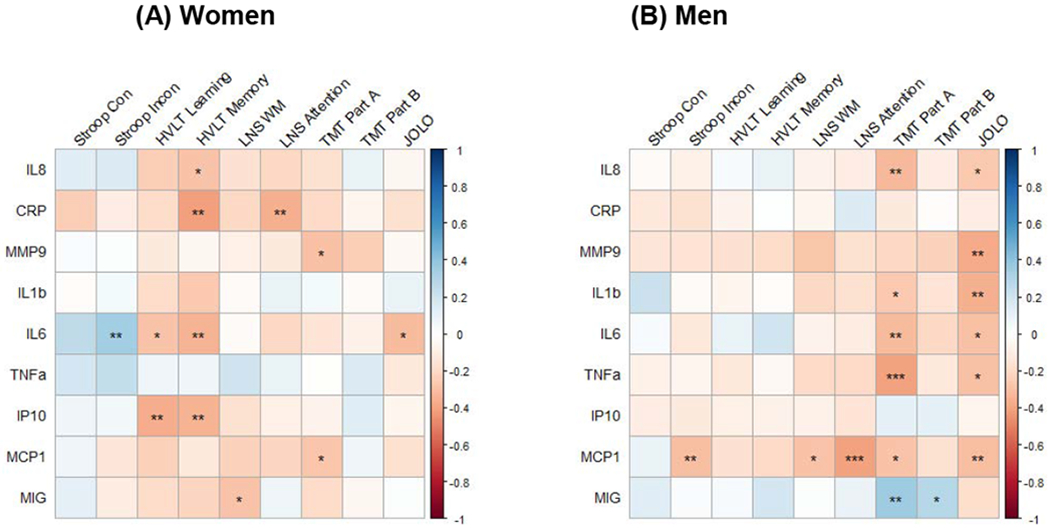
In major depressive disorder (MDD) and remitted MDD (rMDD) alterations in cortisol and inflammation are associated with cognitive difficulties, but these relationships have not been investigated in HIV. We used secondary data from a placebo-controlled, cross-over study of cognitive performance following a probe of the hypothalamic-pituitary-adrenal (HPA) axis (low dose hydrocortisone; LDH 10 mg) in 65 people with HIV (PWH; 36 women). Using placebo data, we examined sex-specific associations between two biomarkers - basal afternoon salivary cortisol and salivary inflammatory cytokines - cognition, and rMDD. Salivary cortisol and inflammatory biomarkers were sampled across the 5 -h study. The panel of inflammatory markers included interleukin (IL)-6, IL-8, IL-1β, tumor necrosis factor-(TNF)-α, CRP, interferon gamma-induced protein (IP-10), monocyte chemotactic protein (MCP)-1, monokine induced by interferon (MIG), matrix metalloproteinase MMP-9, and MMP-1. Learning, memory, attention/concentration, and executive function were assessed 30 min and 4 h after the placebo intervention; visuospatial ability was also assessed 30 min after the placebo intervention. For women but not men with HIV, basal cortisol concentrations were higher in rMDD versus noMDD groups, and related to poorer learning and memory. For men and women with HIV, basal inflammatory cytokines were higher in rMDD versus noMDD groups, but were negatively related to cognition independent of rMDD status. Cortisol and cytokines relate to cognition in PWH, but the associations depended on sex, rMDD status, and their interaction.
Keywords: Cognition; Cortisol; Depression; HIV; Inflammation.
Copyright © 2020 Elsevier Ltd. All rights reserved.
Conflict of interest statement
Declaration of Competing Interest None.
Figures
References
-
- Aljassem K, Raboud JM, Hart TA, Benoit A, Su D, Margolese SL, Rourke SB, Rueda S, Burchell A, Cairney J, Shuper P, Loutfy MR, Team OCSR, 2016. Gender Differences in Severity and Correlates of Depression Symptoms in People Living with HIV in Ontario, Canada. Journal of the International Association of Providers of AIDS Care 15, 23–35. - PubMed
-
- Bekhbat M, Mehta CC, Kelly SD, Vester A, Ofotokun I, Felger J, Wingood G, Anastos K, Gustafson DR, Kassaye S, Milam J, Aouizerat B, Weber K, Golub ET, Moore MF, Diclemente R, Fischl M, Kempf MC, Maki P, Neigh GN, 2018. HIV and symptoms of depression are independently associated with impaired glucocorticoid signaling. Psychoneuroendocrinology 96, 118–125. - PMC - PubMed
-
- Capuron L, Raison CL, Musselman DL, Lawson DH, Nemeroff CB, Miller AH, 2003. Association of exaggerated HPA axis response to the initial injection of interferon-alpha with development of depression during interferon-alpha therapy. Am J Psychiatry 160, 1342–1345. - PubMed
-
- Chittiprol S, Kumar AM, Shetty KT, Kumar HR, Satishchandra P, Rao RS, Ravi V, Desai A, Subbakrishna DK, Philip M, Satish KS, Kumar M, 2009. HIV-1 clade C infection and progressive disruption in the relationship between cortisol, DHEAS and CD4 cell numbers: a two-year follow-up study. Clin Chim Acta 409, 4–10. - PMC - PubMed
Publication types
MeSH terms
Substances
Grants and funding
LinkOut - more resources
Full Text Sources
Medical
Research Materials
Miscellaneous
