


Proposal for rational antibacterial use in the diagnosis and treatment of dogs with chronic diarrhoea
- PMID: 32065388
- PMCID: PMC7079140
- DOI: 10.1111/jsap.13122
Proposal for rational antibacterial use in the diagnosis and treatment of dogs with chronic diarrhoea
Abstract
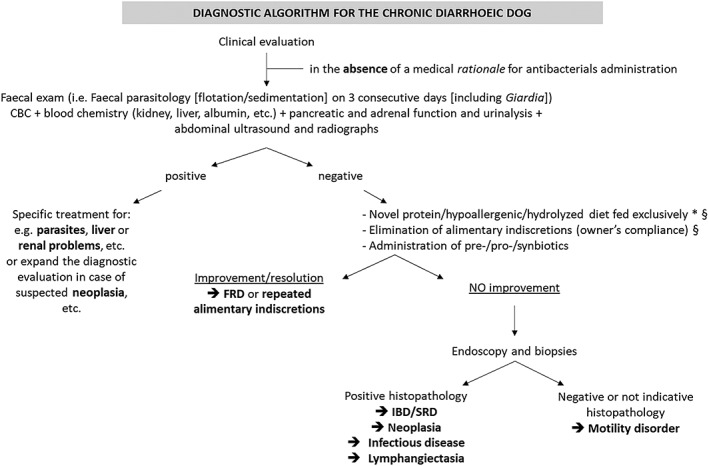
Chronic diarrhoea is a frequent complaint in canine practice and the diagnostic path is often characterised by numerous diagnostic tests and stepwise empirical treatments, often applied before gastrointestinal endoscopy/mucosal biopsies. These include dietary interventions (novel protein, hydrolysed protein diet), parasiticides and still, in many cases, antibacterials. Indiscriminate use of antibacterial drugs risks detrimental consequences for both the individual patient (antimicrobial resistance, long-term disruption of intestinal bacterial populations, potential worsening of gastrointestinal signs) and the general public. For that reason, in this Perspective essay we advocate use of antibacterials only after histopathologic evaluation of gastrointestinal biopsies or, for those cases in which endoscopy is not possible, after other therapeutic trials, such as diet/pre-probiotics or anti-inflammatory drugs have proven unsuccessful. They should be reserved, after appropriate dietary trials, for those canine chronic diarrhoeic patients with signs of true primary infection (i.e. signs of systemic inflammatory response syndrome or evidence of adherent-invasive bacteria) that justify antibacterial use.
© 2020 The Authors. Journal of Small Animal Practice published by John Wiley & Sons Ltd on behalf of British Small Animal.
Conflict of interest statement
None of the authors of this article has a financial or personal relationship with other people or organisations that could inappropriately influence or bias the content of the paper.
Figures
References
-
- Allenspach, K. , Wieland, B. , Gröne, A. , et al (2007) Chronic enteropathies in dogs: evaluation of risk factors for negative outcome. Journal of Veterinary Internal Medicine 21, 700‐708 - PubMed
-
- Allenspach, K. , Culverwell, C. & Chan, D. (2016) Long‐term outcome in dogs with chronic enteropathies: 203 cases. Veterinary Record 178, 368 - PubMed
-
- Antimicrobial resistance in Europe (n.d.). http://www.efsa.europa.eu/en/interactive_pages/AMR_Report_2016. Accessed November 27, 2018
-
- Cammarota, G. , Masucci, L. , Ianiro, G. , et al (2015) Randomised clinical trial: faecal microbiota transplantation by colonoscopy vs. vancomycin for the treatment of recurrent Clostridium difficile infection. Alimentary Pharmacology & Therapeutics 41, 835‐843 - PubMed
MeSH terms
Substances
LinkOut - more resources
Full Text Sources
