. 2020 Mar 2;130(3):1506-1512.
doi: 10.1172/JCI128152.

Dominant mutations of the Notch ligand Jagged1 cause peripheral neuropathy

Affiliations

Dominant mutations of the Notch ligand Jagged1 cause peripheral neuropathy

Jeremy M Sullivan et al. J Clin Invest. .

Abstract

Notch signaling is a highly conserved intercellular pathway with tightly regulated and pleiotropic roles in normal tissue development and homeostasis. Dysregulated Notch signaling has also been implicated in human disease, including multiple forms of cancer, and represents an emerging therapeutic target. Successful development of such therapeutics requires a detailed understanding of potential on-target toxicities. Here, we identify autosomal dominant mutations of the canonical Notch ligand Jagged1 (or JAG1) as a cause of peripheral nerve disease in 2 unrelated families with the hereditary axonal neuropathy Charcot-Marie-Tooth disease type 2 (CMT2). Affected individuals in both families exhibited severe vocal fold paresis, a rare feature of peripheral nerve disease that can be life-threatening. Our studies of mutant protein posttranslational modification and localization indicated that the mutations (p.Ser577Arg, p.Ser650Pro) impair protein glycosylation and reduce JAG1 cell surface expression. Mice harboring heterozygous CMT2-associated mutations exhibited mild peripheral neuropathy, and homozygous expression resulted in embryonic lethality by midgestation. Together, our findings highlight a critical role for JAG1 in maintaining peripheral nerve integrity, particularly in the recurrent laryngeal nerve, and provide a basis for the evaluation of peripheral neuropathy as part of the clinical development of Notch pathway-modulating therapeutics.

Keywords: Genetic diseases; Genetics; Neurodegeneration; Neuromuscular disease; Neuroscience.


Conflict of interest statement

Conflict of interest: WWM is currently an employee of Third Rock Ventures. JOJ is currently an employee of Quest Diagnostics. BJT has received grant support from Merck and Microsoft Research. BJT holds European Union (EP2751284A1, Method For Diagnosing A Neurodegenerative Disease) and US (20180187262) patents on clinical testing and therapeutic intervention for the hexanucleotide repeat expansion of the C9orf72 gene. CJS has received grant support from and holds patents (WO2016/164896 “Modulation of SMN expression,” WO2017/21884 “Combinations for the Modulation of SMN expression”) with Ionis Pharmaceuticals; has served as a paid advisor, consultant, and/or speaker for Biogen, PTC Therapeutics, Roche/Genentech, AveXis, and Cytokinetics; and is an associate editor for the JCI. This arrangement has been approved by Johns Hopkins University in accordance with its conflict of interest policies.

Figures

Figure 1
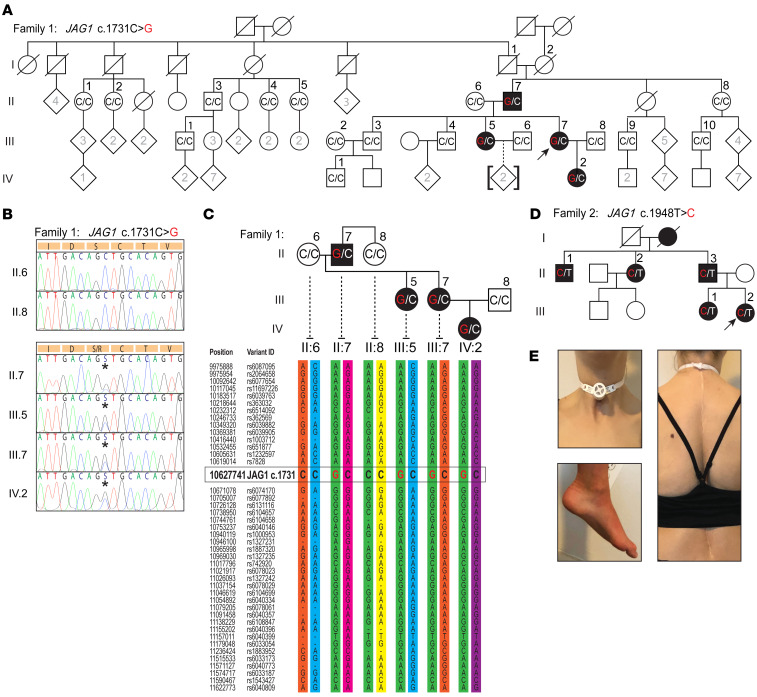
Figure 1. JAG1 mutations segregate with CMT2 and vocal fold paresis in 2 unrelated families.
(A) Pedigree of family 1 demonstrating affected subjects in 3 generations (arrow indicates proband). The genotypes of individuals whose DNA was Sanger sequenced are shown. The parents of II.7 are deceased, but did not show any signs of peripheral neuropathy or vocal fold paresis. (B) Sanger sequencing of the JAG1 gene from unaffected (II.6 and II.8) and affected (II.7, III.5, III.7, IV.2) individuals from family 1, showing the heterozygous c.1731C>G variant (asterisks). (C) Haplotype analysis of family 1, with the CMT2-associated haplotype shown in green. (D) Pedigree of family 2 demonstrating affected subjects across 4 generations. Family members whose DNA was examined have been numbered. (E) Photographs of individual IV.2 (family 1) illustrating her tracheostomy, scoliosis repaired with surgeries, and mild pes cavus (clockwise from top left).
Figure 2
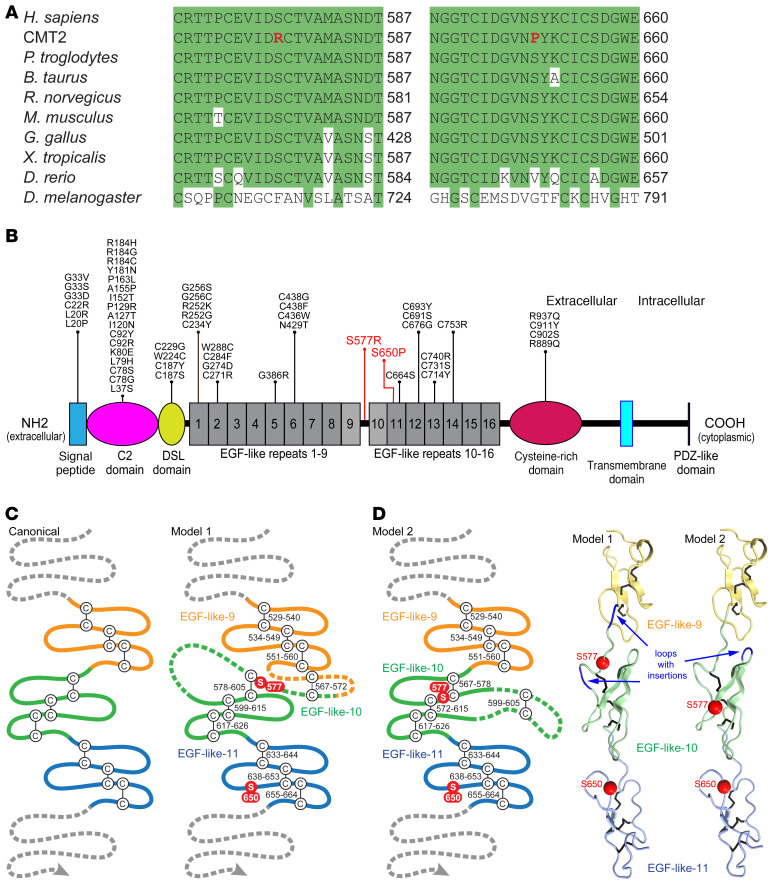
Figure 2. Neuropathy-associated mutations affect conserved amino acids in the extracellular domain of JAG1.
(A) Clustal Omega alignments of the JAG1 protein from divergent species. The p.Ser577Arg and p.Ser650Pro mutations both disrupt serine residues located in highly conserved regions of JAG1. (B) The domain structure of JAG1, with the CMT2-associated mutations indicated in red. Though Alagille syndrome is primarily caused by JAG1 gene deletion or truncating mutations, a number of missense mutations (shown in black) have been described (see Supplemental Methods for references). Of the 42 amino acids mutated in Alagille syndrome, 20 are cysteine residues and none are serine residues; few occur in proximity to Ser577 and Ser650. (C) A schematic of 3 canonical EGF-like repeats is shown, along with 2 proposed models for JAG1 EGF-like repeats 9–11. In model 1, residues 562–585 are split between EGF-like repeats 9 and 10, including a potential disulfide bridge between residues 567 and 572 preceding the start of repeat 10. Model 1 requires 2 insertions, 1 before and 1 within repeat 10. In model 2, residues 562 to 585 are included as a single insertion in the second loop of EGF-like repeat 10. (D) 3D modeling shows that Ser577 and Ser650 may reside on the same surface of the JAG1 extracellular domain (model 2).
Figure 3
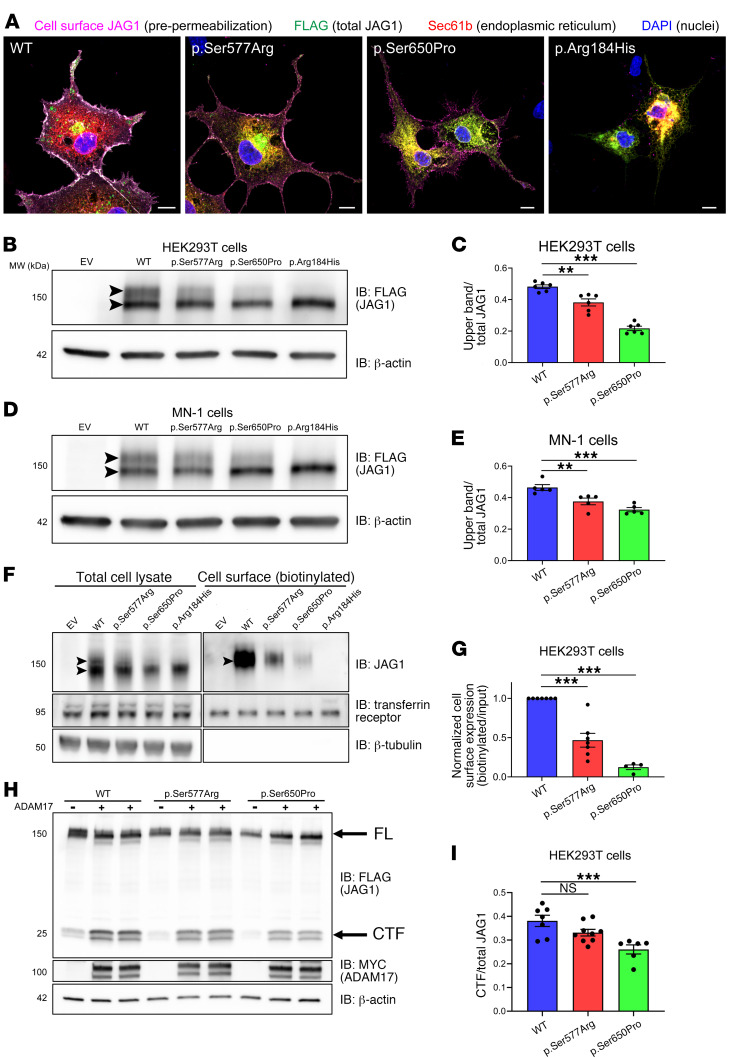
Figure 3. Neuropathy-associated mutations alter JAG1 cell surface expression and glycosylation.
(A) Representative images of WT and mutant JAG1-FLAG immunolocalization in transfected COS-7 cells. Scale bars: 10 μm. (BE) Representative Western blots of whole cell lysates from HEK293T (B) and MN-1 (D) cells transfected with WT or mutant JAG1-FLAG. Arrowheads indicate the complex (upper band) and simple (lower band) glycosylated forms of JAG1. (C and E) Densitometry-based quantification of the proportion of total JAG1 represented by the higher molecular weight band (C, HEK293T, n = 6 per condition; E, MN-1, n = 5 per condition). **P < 0.01; ***P < 0.001, Dunnett’s test. EV, empty vector. (FG) Representative Western blot (F) and quantification (G) of JAG1 cell surface biotinylation assays. n = 7 for WT and p.Ser577Arg; n = 4 for p.Ser650Pro. ***P < 0.001, 1-sample t test. (HI) Western blot analysis (H) and quantification (I) of the ADAM17-cleaved C-terminal fragment (CTF) of JAG1, a reflection of the amount of full-length (FL) JAG1 trafficked to the cell surface (11). n = 7 for WT; n = 9 for p.Ser577Arg; n = 6 for p.Ser650Pro. ***P < 0.001 by Dunnett’s test.
Figure 4
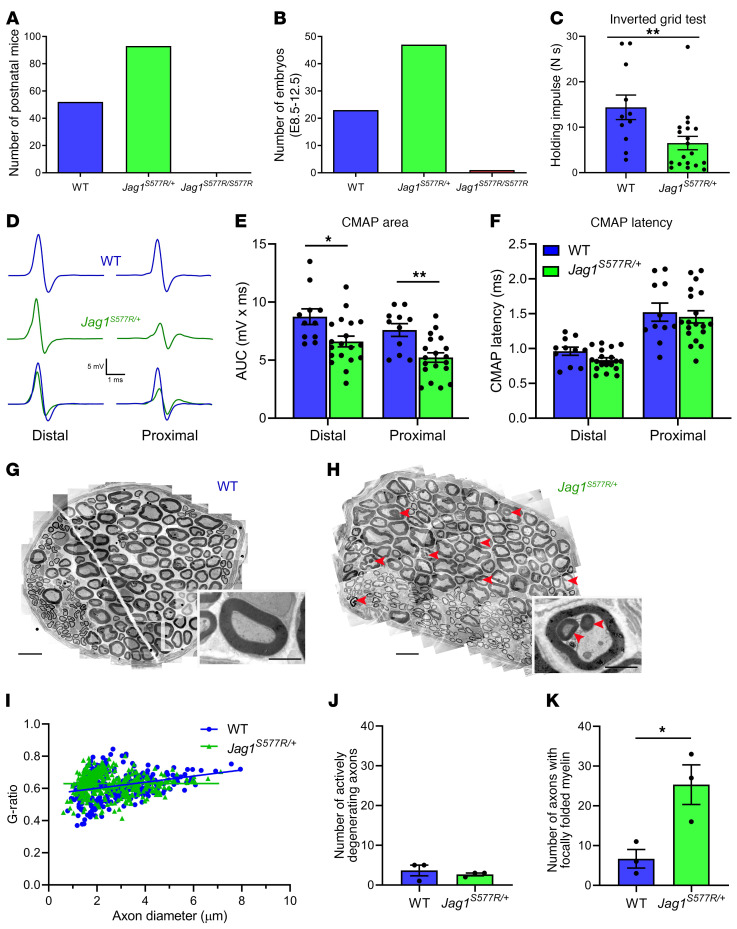
Figure 4. Homozygous expression of the JAG1S577R mutation causes embryonic lethality in mice, while heterozygous expression results in mild peripheral neuropathy.
(A and B) Genotyping of postnatal (A) and embryonic (B; E8.5–E12.5) mice generated from heterozygous intercrosses demonstrates embryonic lethality in Jag1S577R/S577R mice. (CF) Jag1S577R/+ mice display impaired performance in the inverted grid test (C) as well as reductions in CMAP area (D and E), but not latency (F). Representative CMAP traces are shown in D. n = 11 for WT; n = 19 for Jag1S577R/+. *P < 0.05; **P < 0.01, 2-tailed Student’s t test. (G and H) TEM reconstructions of the recurrent laryngeal nerve of WT (G) and Jag1S577R/+ (H) mice. Insets show higher magnification images of individual myelinated axons. Scale bars: 10 μm; 2 μm (insets). Arrowheads indicate regions of focally folded myelin (15). (IK) Myelinated axons in the recurrent laryngeal nerve of Jag1S577R/+ mice exhibit normal g-ratios (I) and numbers of actively degenerating axons (J), but an increased incidence of focally folded myelin (K) For I, n = 350 axons from 3 WT mice; n = 410 axons from 3 Jag1S577R/+ mice. For J and K, n = 3 for WT and Jag1S577R/+. *P < 0.05, 2-tailed Student’s t test.

References

    1. Braune EB, Lendahl U. Notch -- a Goldilocks signaling pathway in disease and cancer therapy. Discov Med. 2016;21(115):189–196. - PubMed
    1. Lafkas D, et al. Therapeutic antibodies reveal Notch control of transdifferentiation in the adult lung. Nature. 2015;528(7580):127–131. doi: 10.1038/nature15715. - DOI - PubMed
    1. Weis J, Brandner S, Lammens M, Sommer C, Vallat JM. Processing of nerve biopsies: a practical guide for neuropathologists. Clin Neuropathol. 2012;31(1):7–23. doi: 10.5414/NP300468. - DOI - PMC - PubMed
    1. Grochowski CM, Loomes KM, Spinner NB. Jagged1 (JAG1): Structure, expression, and disease associations. Gene. 2016;576(1 Pt 3):381–384. - PMC - PubMed
    1. Gilbert MA, Spinner NB. Alagille syndrome: genetics and functional models. Curr Pathobiol Rep. 2017;5(3):233–241. doi: 10.1007/s40139-017-0144-8. - DOI - PMC - PubMed

Publication types