


Delaying memory decline: different options and emerging solutions
- PMID: 32066684
- PMCID: PMC7026464
- DOI: 10.1038/s41398-020-0697-x
Delaying memory decline: different options and emerging solutions
Abstract
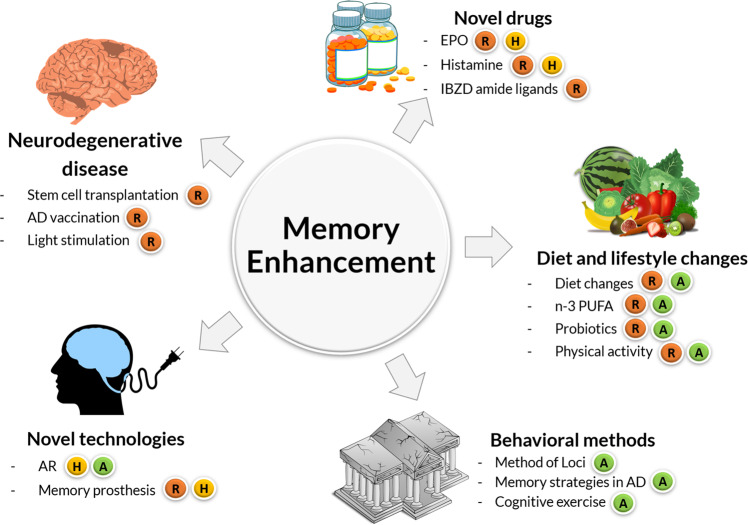
Memory decline can be a devastating disease and increases in aging Western populations. Memory enhancement technologies hold promise for this and other conditions. Approaches include stem cell transplantation, which improved memory in several animal studies as well as vaccination against Alzheimer´s disease (AD) by β-amyloid antibodies. For a positive clinical effect, the vaccine should probably be administered over a long period of time and before amyloid pathologies manifest in the brain. Different drugs, such as erythropoietin or antiplatelet therapy, improve memory in neuropsychiatric diseases or AD or at least in animal studies. Omega-3 polyunsaturated fatty acid-rich diets improve memory through the gut-brain axis by altering the gut flora through probiotics. Sports, dancing, and memory techniques (e.g., Method of Loci) utilize behavioral approaches for memory enhancement, and were effective in several studies. Augmented reality (AR) is an auspicious way for enhancing memory in real time. Future approaches may include memory prosthesis for head-injured patients and light therapy for restoring memory in AD. Memory enhancement in humans in health and disease holds big promises for the future. Memory training helps only in mild or no impairment. Clinical application requires further investigation.
Conflict of interest statement
The authors declare that they have no conflict of interest.
Figures
References
-
- Eichenbaum H. Memory systems. Wiley Interdiscip. Rev. Cogn. Sci. 2010;1:478–490. - PubMed
Publication types
MeSH terms
Substances
Grants and funding
LinkOut - more resources
Full Text Sources
Medical
Research Materials
