


Two-year outcome data suggest that less invasive surfactant administration (LISA) is safe. Results from the follow-up of the randomized controlled AMV (avoid mechanical ventilation) study
- PMID: 32067100
- PMCID: PMC7351829
- DOI: 10.1007/s00431-020-03572-0
Two-year outcome data suggest that less invasive surfactant administration (LISA) is safe. Results from the follow-up of the randomized controlled AMV (avoid mechanical ventilation) study
Abstract
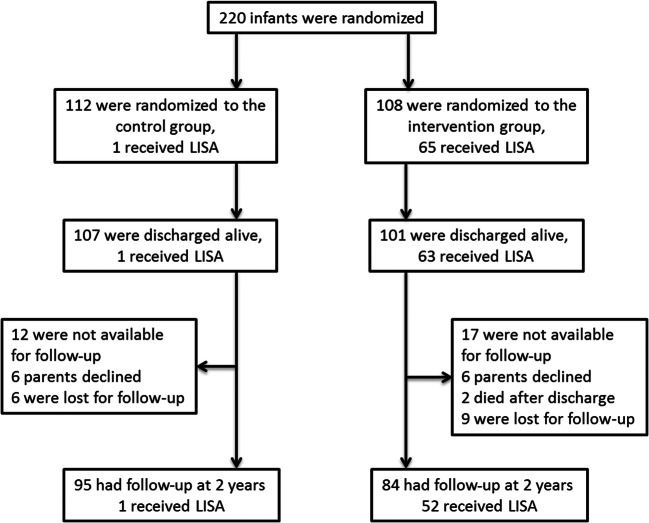
Less invasive surfactant administration (LISA) is a method to deliver surfactant to spontaneously breathing premature infants via a thin catheter. Here we report the two-year outcome from the AMV (avoid mechanical ventilation) study, the first randomized controlled trial on this mode of surfactant delivery. No statistically significant differences in weight, length or neurodevelopmental outcome (Bayley II scores) were found between the LISA intervention group (n = 95) and the control group (n = 84) that received standard treatment.Conclusion: No differences in outcome were observed at 2 years. LISA seems safe in that aspect. What is Known: • LISA is a method that is in increasing use for surfactant delivery to spontaneously breathing infants. LISA reduces the need for mechanical ventilation. What is New: • Outcome data at 2 years from the first randomized study with LISA raise no safety concerns in comparison to a group of infants that received standard treatment.
Keywords: LISA – CPAP; Less invasive surfactant; Outcome; Premature infants.
Conflict of interest statement
Egbert Herting, Angela Kribs, Christoph Härtel and Wolfgang Göpel have received study support, honoraria for presentations and travel support from Chiesi Farmaceutici, a surfactant producer. Egbert Herting and Christoph Härtel served as advisors for Draeger Medical, a company producing incubators, monitors and ventilators.
Figures
References
Publication types
MeSH terms
Substances
Supplementary concepts
Grants and funding
LinkOut - more resources
Full Text Sources
Medical
