


Surgical site infection following operative treatment of open fracture: Incidence and prognostic risk factors
- PMID: 32068337
- PMCID: PMC7949428
- DOI: 10.1111/iwj.13330
Surgical site infection following operative treatment of open fracture: Incidence and prognostic risk factors
Retraction in
-
RETRACTION: Surgical Site Infection Following Operative Treatment of Open Fracture: Incidence and Prognostic Risk Factors.Int Wound J. 2025 Apr;22(4):e70640. doi: 10.1111/iwj.70640. Int Wound J. 2025. PMID: 40264437 Free PMC article.
Abstract
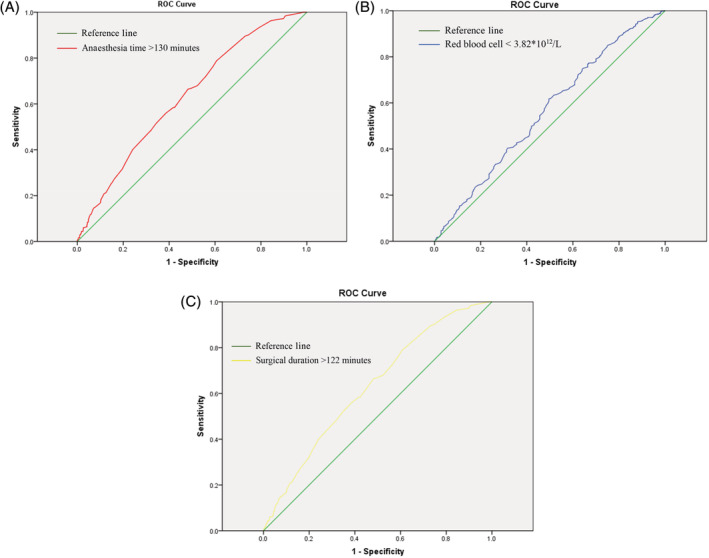
Considering the high incidence of postoperative complications of open fracture, management of this injury is an intractable challenge for orthopaedist, and surgical site infection (SSI) is the devastate one. Screening for high-risk patients and target them with appropriate interventions is important in clinical practice. The aim of this study was to identify modifiable factors that were associated with SSI following operative treatment of open fractures. This retrospective, multicentre study was conducted at three hospitals. A total of 2692 patients with complete data were recruited between June 2015 and July 2018. Demographic characteristics, operation relative variables, additional comorbidities, and biochemical indexes were extracted and analysed. Receiver operating characteristic analysis was performed to detect the optimum cut-off value for some variables. Univariate and multivariate logistic analysis models were performed, respectively, to identify the independent risk factors of SSI. The overall incidence of SSI was 18.6%, with 17.0% and 1.6% for superficial and deep infection, respectively. Results of univariate and multivariate analyses showed the following: fracture type, surgical duration > 122 minutes, anaesthesia time > 130 minutes, intraoperative body temperature < 36.4°C, blood glucose (GLU) > 100 mg/dL, blood platelet (PLT) < 288 × 109 , and white blood cells (WBC) > 9.4 × 10⁹ were independent risk factors of postoperative wound infection following operative treatment of open fractures. Six modifiable factors such as surgical duration > 122 minutes, anaesthesia time > 130 minutes, intraoperative body temperature < 36.4°C, GLU > 100 mg/dL, PLT < 288 × 109, and WBC > 9.4 × 10⁹ play an important role in the prevention of SSI, and these factors should be optimized perioperatively.
Keywords: haematoma; hyperglycaemia; hypothermia; infection; open fractures.
© 2020 Medicalhelplines.com Inc and John Wiley & Sons Ltd.
Conflict of interest statement
The authors declare no conflicts of interest.
Figures
References
-
- Dellinger EP, Miller SD, Wertz MJ, Grypma M, Droppert B, Anderson PA. Risk of infection after open fracture of the arm or leg. Arch Surg. 1988;123(11):1320‐1327. - PubMed
-
- Ojo OD, Oluwadiya KS, Ikem IC, Oginni LM, Ako‐Nai AK, Daniel FV. Superficial swab cultures in open fracture management: insights from a resource‐poor setting. J Wound Care. 2010;19(10):432‐438. - PubMed
-
- Lack WD, Karunakar MA, Angerame MR, et al. Type III open tibia fractures: immediate antibiotic prophylaxis minimizes infection. J Orthop Trauma. 2015;29(1):1‐6. - PubMed
Publication types
MeSH terms
Substances
LinkOut - more resources
Full Text Sources
