


Global transmission and evolutionary dynamics of the Chikungunya virus
- PMID: 32070451
- PMCID: PMC7118414
- DOI: 10.1017/S0950268820000497
Global transmission and evolutionary dynamics of the Chikungunya virus
Abstract
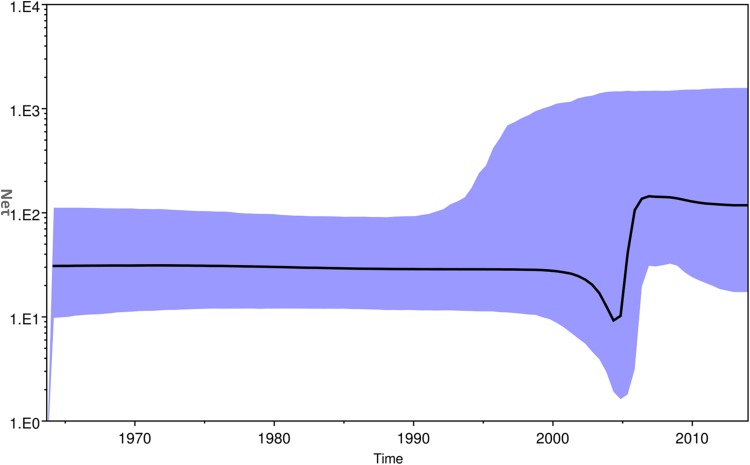
Chikungunya virus (CHIKV) is a re-emerging pathogen of global importance. We attempted to gain an insight into the organisation, distribution and mutational load of the virus strains reported from different parts of the world. We describe transmission dynamics and genetic characterisation of CHIKV across the globe during the last 65 years from 1952 to 2017. The evolutionary pattern of CHIKV was analysed using the E1 protein gene through phylogenetic, Bayesian and Network methods with a dataset of 265 sequences from various countries. The time to most recent common ancestor of the virus was estimated to be 491 years ago with an evolutionary rate of 2.78 × 10⁻⁴ substitutions/site/year. Genetic characterisation of CHIKV strains was carried out in terms of variable sites, selection pressure and epitope mapping. The neutral selection pressure on the E1 gene of the virus suggested a stochastic process of evolution. We identified six potential epitope peptides in the E1 protein showing substantial interaction with human MHC-I and MHC-II alleles. The present study augments global epidemiological and population dynamics of CHIKV warranting undertaking of appropriate control measures. The identification of epitopic peptides can be useful in the development of epitope-based vaccine strategies against this re-emerging viral pathogen.
Keywords: Bayesian analysis; Chikungunya virus; docking; entropy; networking; phylogenetics; selection pressure.
Conflict of interest statement
The authors declare that there are no financial or non-financial competing interests.
Figures



References
-
- Cherian SS et al. (2009) Evolutionary rates and timescale comparison of Chikungunya viruses inferred from the whole genome/E1 gene with special reference to the 2005–07 outbreak in the Indian subcontinent. Infection, Genetics and Evolution 9, 16–23. - PubMed
-
- Deeba F et al. (2016) Chikungunya virus: recent advances in epidemiology, host pathogen interaction and vaccine strategies. Pathogens and Disease 74, ftv119. - PubMed
-
- Evans D and Meires JL (2016) Chikungunya virus: a rising health risk in the United States and how nurse practitioners can help address and reduce the risk. The Journal for Nurse Practitioners 12, 289–298.
-
- Ng LC and Hapuarachchi HC (2010) Tracing the path of Chikungunya virus – evolution and adaptation. Infection, Genetics and Evolution 10, 876–885. - PubMed
Publication types
MeSH terms
Substances
LinkOut - more resources
Full Text Sources
Medical
Research Materials
