


Morphometric Evaluation of the Seminiferous Tubules and the Antioxidant Protective Effects of Gallic Acid and Quercetin in the Testis and Liver of Butyl Phthalate Treated Rats
- PMID: 32071493
- PMCID: PMC6995466
- DOI: 10.1007/s12291-018-0788-0
Morphometric Evaluation of the Seminiferous Tubules and the Antioxidant Protective Effects of Gallic Acid and Quercetin in the Testis and Liver of Butyl Phthalate Treated Rats
Abstract
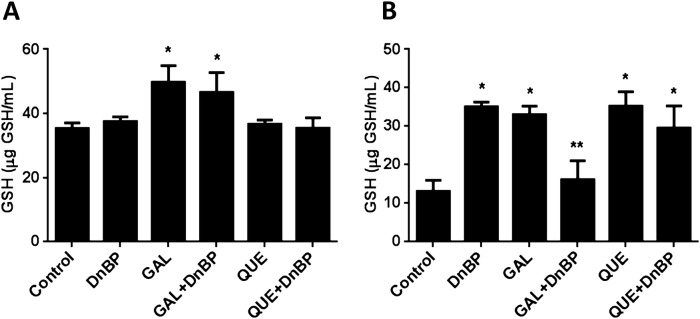
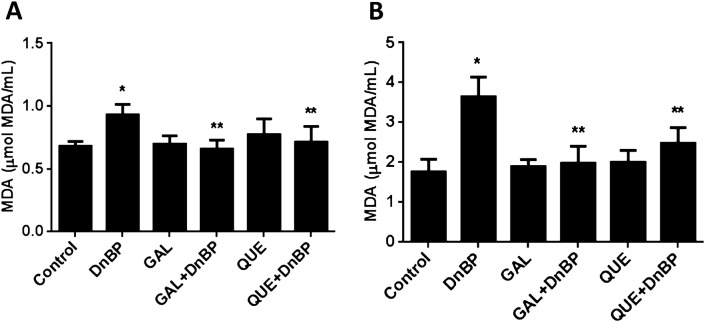
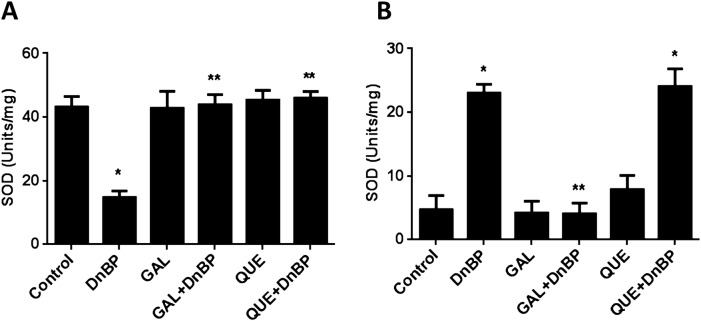
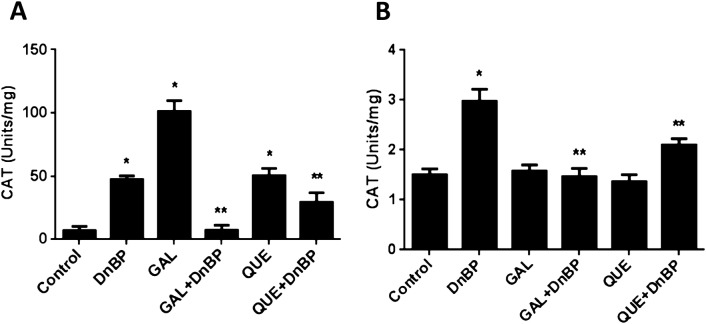
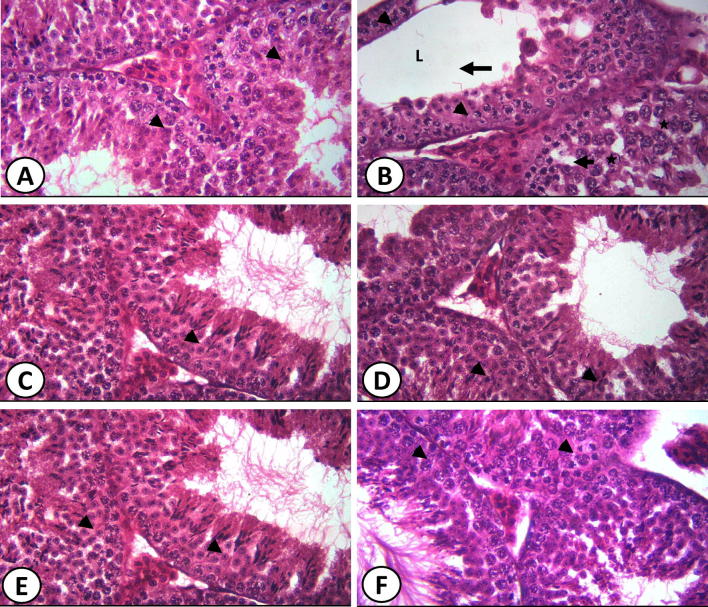
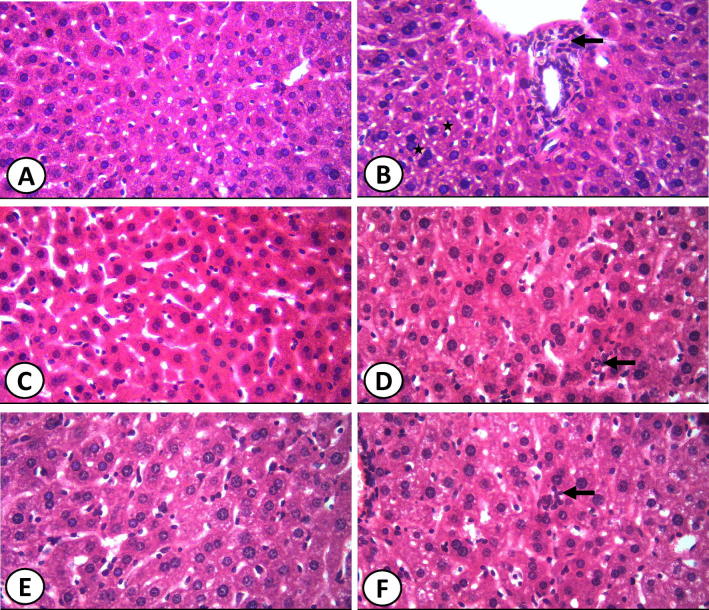
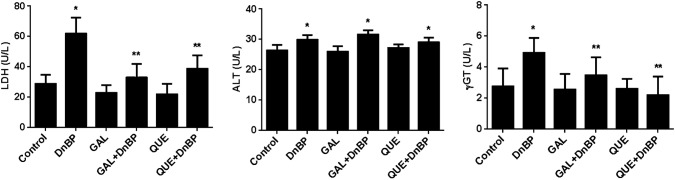
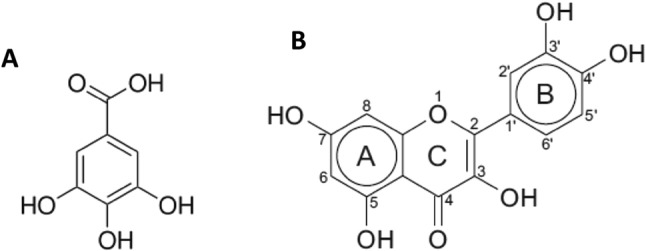
The antioxidant protective effects of gallic acid (GAL) and quercetin (QUE) against oxidative stress induced by di-butyl phthalate (DnBP) in the liver and testis of rats were evaluated in this study. Adult albino Wistar rats (180-225 g) were treated with QUE or GAL (50 mg/kg) alone or in combination with DnBP (1 mL/kg) for 15 days. After treatment, tissue samples were taken for determination of glutathione and malondialdehyde levels, and superoxide dismutase and catalase activities. Serial sections of the testis and liver were stained with haematoxylin and eosin for microscopy and seminiferous tubular morphometry. As expected, DnBP induced oxidative stress was evident by increased malondialdehyde level in both organs. Co-treatment with GAL or QUE reversed the malondialdehyde by 45.42, 37.44 and 37.57%, 23.32% and catalase by 52.21, 70.15 and 85%, 38.14% in the testis and liver respectively whereas superoxide dismutase activity and glutathione level were differently modulated parallel to histopathological improvement in both tissues. The seminiferous tubular diameter, epithelial height, epithelial germ cell count and tubular length were significantly decreased by 11.09, 51.91, 40.65 and 11.10% respectively versus control values after DnBP treatments and were attenuated on co-treatment with GAL or QUE. Co-treatment with GAL afforded better protective effects in both tissues but QUE treatment alone appeared more effective than GAL on the investigated morphometric data. It seems likely that GAL or QUE prevented the tissue damage but the antioxidant profiles of the liver and testis are different in response to the oxidative stress.
Keywords: Antioxidant; Di-n-butyl phthalate; Gallic acid; Morphometry; Oxidative stress; Quercetin.
© Association of Clinical Biochemists of India 2018.
Conflict of interest statement
Conflict of interestAll authors of this manuscript are aware of this submission and declare no conflict of interest.
Figures
References
-
- Farombi EO, Abarikwu SO, Adedara IA, Oyeyemi MO. Kolaviron and curcumin ameliorate di-n-butylphthalate-induced testicular toxicity in rats. Basic Clin Pharmacol Toxicol. 2007;100:43–48. - PubMed
-
- Abd-Ellah MF, Aly HAA, Mokhlis HAM, Abdel-Aziz AH. Quercetin attenuates di-(2 ethylhexyl) phthalate-induced testicular toxicity in adult rats. Hum Exp Toxicol. 2016;35:232–243. - PubMed
-
- Abarikwu SO, Pant AB, Farombi EO. Quercetin decreases steroidogenic enzyme activity, NF-κB expression and oxidative stress in cultured Leydig cells exposed to atrazine. Mol Cell Biochem. 2013;373:19–28. - PubMed
-
- Kuppan G, Balasubramanyam J, Monickaraj F, Srinivasan G, Mohan V, Balasubramanyam M. Transcriptional regulation of cytokines and oxidative stress by gallic acid in human THP-1 monocytes. Cytokine. 2010;49:229–234. - PubMed
LinkOut - more resources
Full Text Sources
Research Materials