


Dysbiosis of the gut and lung microbiome has a role in asthma
- PMID: 32072252
- PMCID: PMC7066092
- DOI: 10.1007/s00281-019-00775-y
Dysbiosis of the gut and lung microbiome has a role in asthma
Abstract
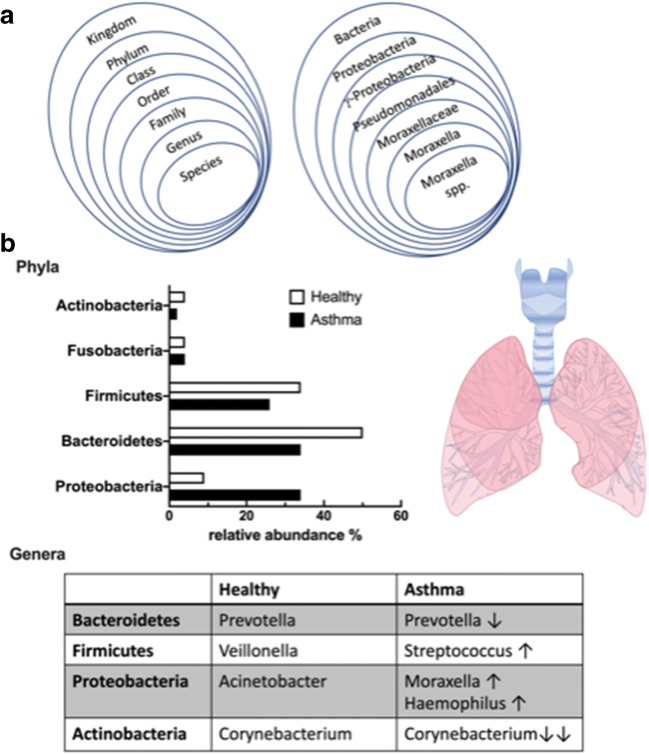
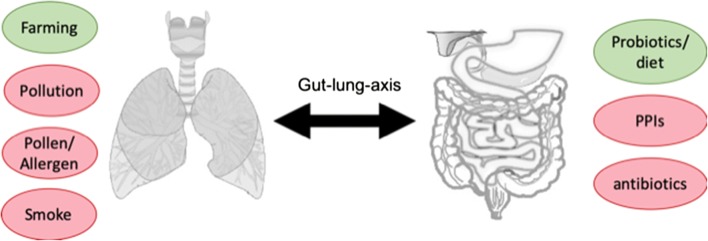
Worldwide 300 million children and adults are affected by asthma. The development of asthma is influenced by environmental and other exogenous factors synergizing with genetic predisposition, and shaping the lung microbiome especially during birth and in very early life. The healthy lung microbial composition is characterized by a prevalence of bacteria belonging to the phyla Bacteroidetes, Actinobacteria, and Firmicutes. However, viral respiratory infections are associated with an abundance of Proteobacteria with genera Haemophilus and Moraxella in young children and adult asthmatics. This dysbiosis supports the activation of inflammatory pathways and contributes to bronchoconstriction and bronchial hyperresponsiveness. Exogenous factors can affect the natural lung microbiota composition positively (farming environment) or negatively (allergens, air pollutants). It is evident that also gut microbiota dysbiosis has a high influence on asthma pathogenesis. Antibiotics, antiulcer medications, and other drugs severely impair gut as well as lung microbiota. Resulting dysbiosis and reduced microbial diversity dysregulate the bidirectional crosstalk across the gut-lung axis, resulting in hypersensitivity and hyperreactivity to respiratory and food allergens. Efforts are undertaken to reconstitute the microbiota and immune balance by probiotics and engineered bacteria, but results from human studies do not yet support their efficacy in asthma prevention or treatment. Overall, dysbiosis of gut and lung seem to be critical causes of the increased emergence of asthma.
Keywords: Allergy; Antibiotics; Asthma; Microbiome; Probiotics; Th2 inflammation.
Conflict of interest statement
The authors declare that they have no conflict of interest.
Figures
References
-
- Bokulich NA, Chung J, Battaglia T, Henderson N, Jay M, Li H, D Lieber A, Wu F, Perez-Perez GI, Chen Y, Schweizer W, Zheng X, Contreras M, Dominguez-Bello MG, Blaser MJ. Antibiotics, birth mode, and diet shape microbiome maturation during early life. Sci Transl Med. 2016;8:343ra82. doi: 10.1126/scitranslmed.aad7121. - DOI - PMC - PubMed
Publication types
MeSH terms
Grants and funding
LinkOut - more resources
Full Text Sources
Medical
