


Antibodies to coronaviruses are higher in older compared with younger adults and binding antibodies are more sensitive than neutralizing antibodies in identifying coronavirus-associated illnesses
- PMID: 32073157
- PMCID: PMC7166442
- DOI: 10.1002/jmv.25715
Antibodies to coronaviruses are higher in older compared with younger adults and binding antibodies are more sensitive than neutralizing antibodies in identifying coronavirus-associated illnesses
Abstract
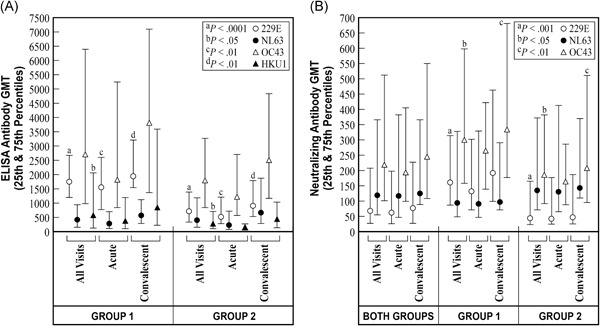
Human coronaviruses (HCoV) are common causes of respiratory illnesses (RI) despite preexisting humoral immunity. Sera were obtained near the onset of RI and 3 to 4 weeks later as part of a prospective study of 200 subjects evaluated for RI from 2009 to 2013. Antibodies against common HCoV strains were measured by enzyme-linked immunosorbent assay and neutralization assay comparing older adults with cardiopulmonary diseases (99 subjects) to younger, healthy adults (101 subjects). Virus shedding was detected in respiratory secretions by polymerase chain reaction. Of 43 HCoV-associated illnesses, 15 (35%) occurred in 14 older adults (aged ≥60 years) and 28 (65%) in 28 younger adults (aged 21-40 years). Binding and neutralizing antibodies were higher in older adults. Only 16 (35.7%) of RI with increases in binding antibodies also had increases in neutralizing antibodies to HCoV. Increases in binding antibodies with RI were more frequent than increased neutralizing antibodies and virus shedding, and more frequent in younger compared to older adults. Functional neutralizing antibodies were not stimulated as often as binding antibodies, explaining in part a susceptibility to reinfection with HCoV. Monitoring binding antibodies may be more sensitive for the serologic detection of HCoV infections.
Keywords: antibody; coronavirus; immunity; neutralization; respiratory illness.
Published 2020. This article is a U.S. Governmaent work and is in the public domain in the USA.
Conflict of interest statement
The authors declare that there are no conflict of interests.
Figures
References
Publication types
MeSH terms
Substances
Grants and funding
LinkOut - more resources
Full Text Sources
Medical
