A new therapeutic approach for the Dry Eye Syndrome in patients with laryngopharyngeal reflux: first data
- PMID: 32073559
- PMCID: PMC7947740
- DOI: 10.23750/abm.v91i1-S.9250
A new therapeutic approach for the Dry Eye Syndrome in patients with laryngopharyngeal reflux: first data
Abstract
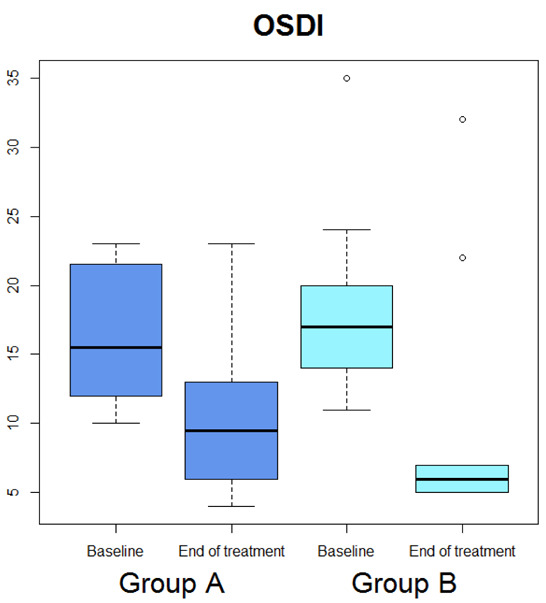
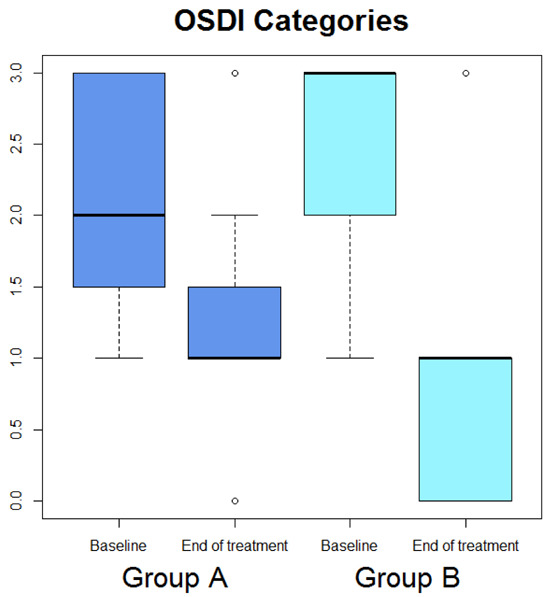
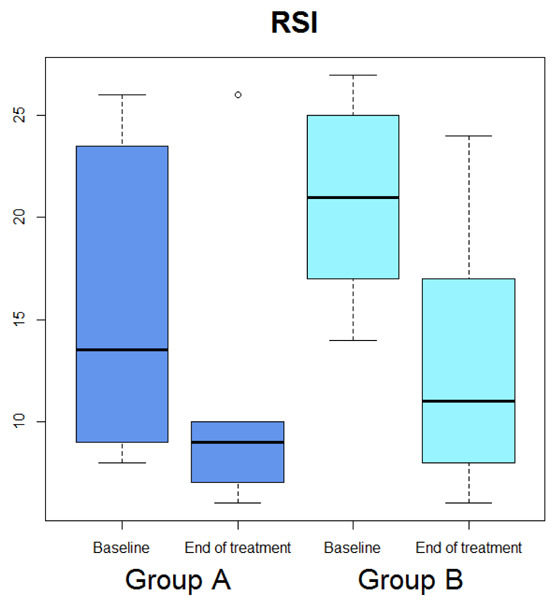
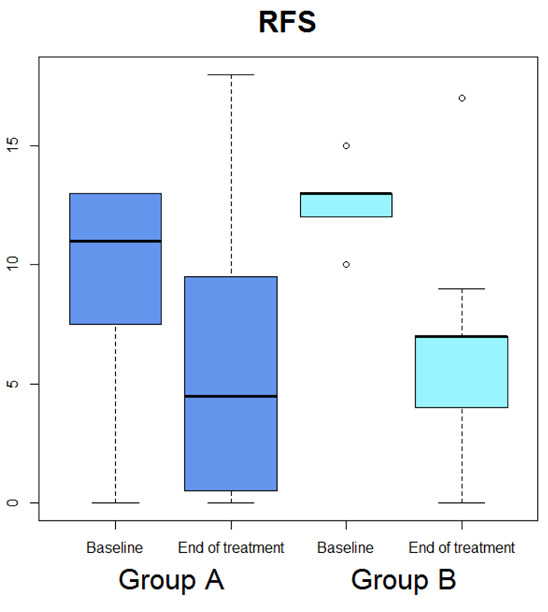
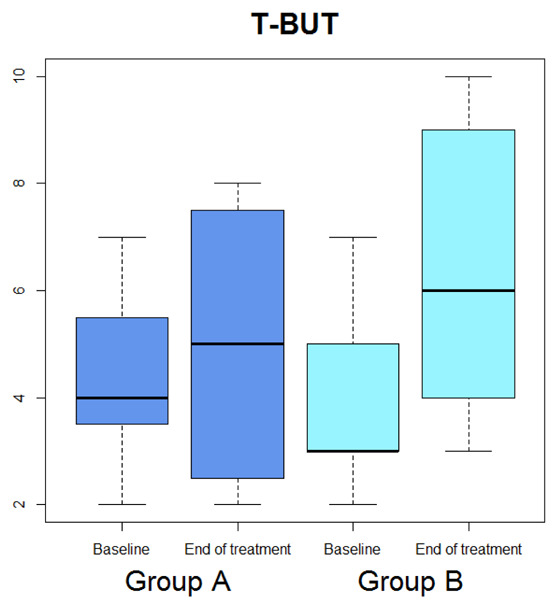
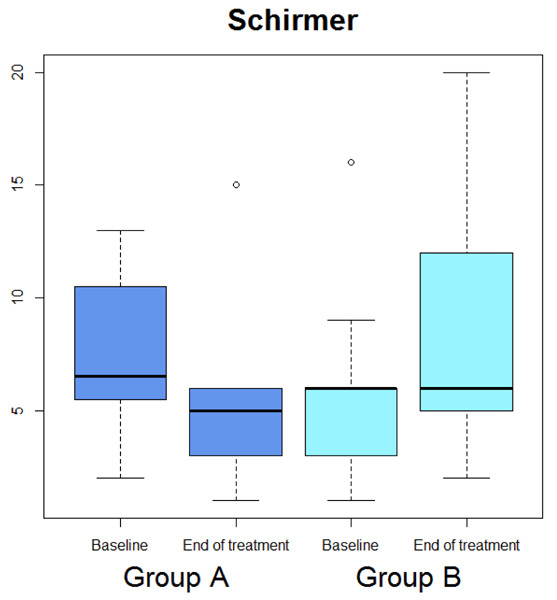
Laryngopharyngeal reflux (LPR) is a common disorder. Pepsin has been detected also at eye level, this was a starting point for newest theories about LPR impact on Dry Eye Syndrome. The current preliminary study compared two treatments in patients with Dry Eye Syndrome and LPR. Patients were treated with Gastroftal eye drops and Gastroftal tablets or hyaluronic acid eye drops for 3 months. The following parameters were evaluated: Ocular Surface Disease Index (OSDI), OSDI categories, Reflux Symptom Index (RSI), Reflux Finding Score (RFS), Fluorescein Tear Breakup Time (B-TUT), and Schirmer test before and after treatment. On the whole, 21 patients were enrolled: 10 were treated with hyaluronic acid Atlantis (Group A) and 11 with Gastroftal eye drops and tablets (Group B). After treatment, in Group A only OSDI significantly diminished (p=0.029); in Group B there were significant reductions concerning OSDI (p=0.0277), OSDI categories (p=0.0211), RSI (p=0.0172), Schirmer test (p=0.0172), T-BUT (p=0.0265), and RFS (p=0.0205). The current preliminary demonstrated that the combined ocular and systemic therapy with hyaluronic acid, Magnesium alginate, Simethicone, and Camelia sinensis may be considered a promising treatment in patients with Dry Eye Syndrome due to LPR.
Conflict of interest statement
all the authors, but DV employee of DMG, have no conflict of interest about this matter.
Figures
References
-
- Gelardi M, Ciprandi G. Focus on gastroesophageal reflux (GER) and laryngopharyngeal reflux (LPR): new pragmatic insights in clinical practice. J BiolRegulHomeost Agents. 2018;32(1 Suppl. 2):41–47. - PubMed
-
- Vakil N, van Zanten SV, Kahrilas P, et al. The Montreal definition and classification of gastroesophageal reflux disease: a global evidence-based consensus. Am J Gastroenterol. 2006;101:1900–20. - PubMed
-
- Vaezi MF, Hicks DM, Abelson TI, et al. Laryngeal signs and symptoms and gastroesophageal reflux disease (GERD): a critical assessment of cause and effect association. Clin Gastroenterol Hepatol. 2003;1:333–4. - PubMed
-
- Kahrilas PJ, Shaheen NJ, Vaezi MF. American Gastroenterological Association Institute Technical Review on the management of gastroesophageal reflux disease. Gastroenterol. 2008;135:1392–413. - PubMed
MeSH terms
Substances
LinkOut - more resources
Full Text Sources
Other Literature Sources