


Therapeutic effects of higenamine combined with [6]-gingerol on chronic heart failure induced by doxorubicin via ameliorating mitochondrial function
- PMID: 32073745
- PMCID: PMC7171398
- DOI: 10.1111/jcmm.15041
Therapeutic effects of higenamine combined with [6]-gingerol on chronic heart failure induced by doxorubicin via ameliorating mitochondrial function
Abstract
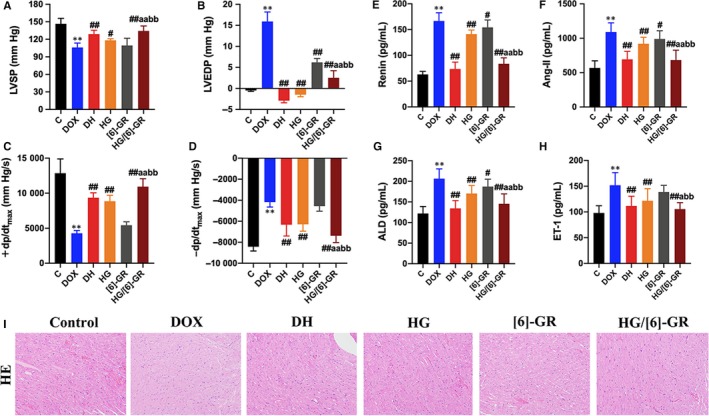
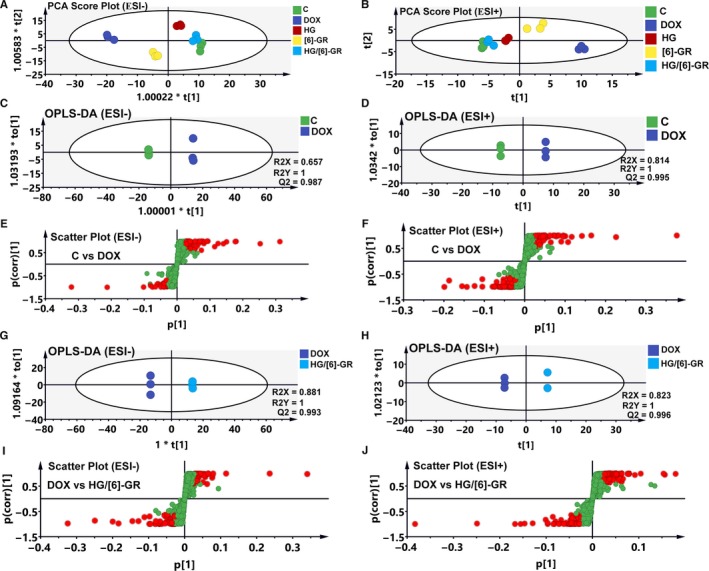
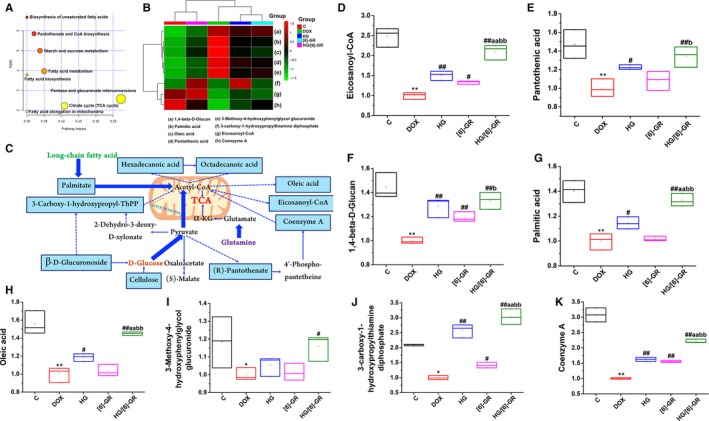
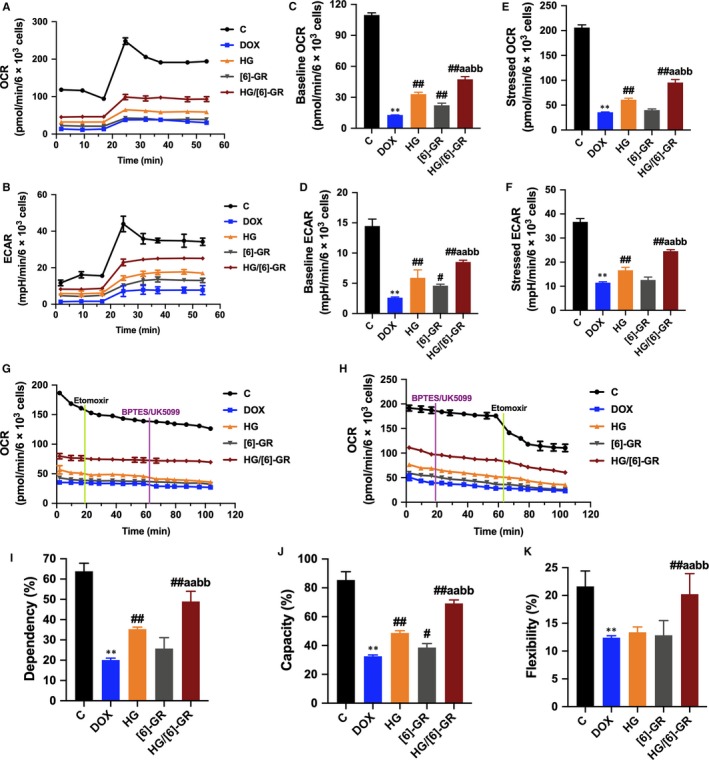
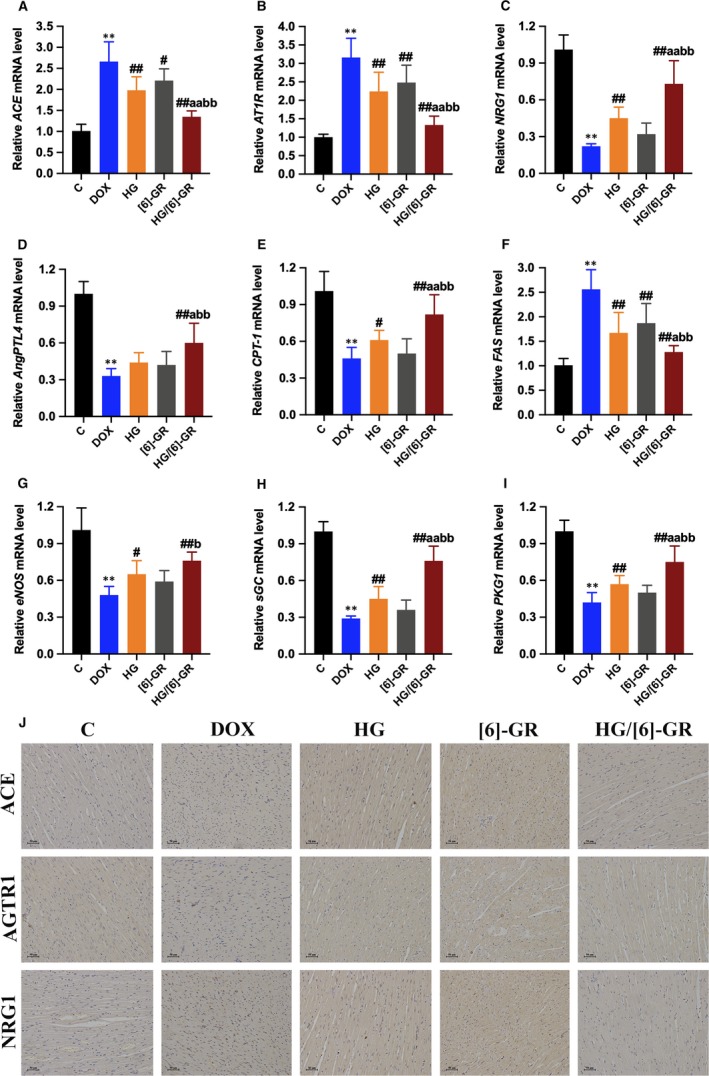
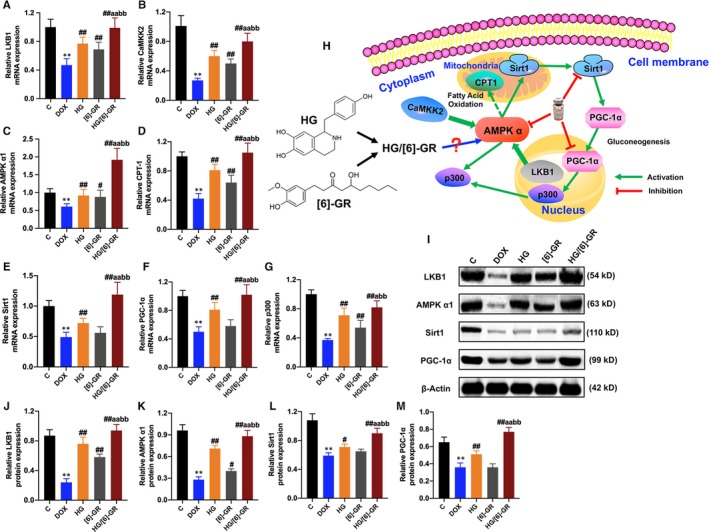
Higenamine (HG) is a natural benzylisoquinoline alkaloid isolated from Aconitum with positive inotropic and chronotropic effects. This study aimed to investigate the possible cardioprotective effects of HG combined with [6]-gingerol (HG/[6]-GR) against DOX-induced chronic heart failure (CHF) by comprehensive approaches. DOX-induced cardiotoxicity model in rats and H9c2 cells was established. Therapeutic effects of HG/[6]-GR on haemodynamics, serum indices and histopathology of cardiac tissue were analysed. Cell mitochondrial energy phenotype and cell mitochondrial fuel flex were measured by a Seahorse XFp analyser. Moreover, UHPLC-Q-TOF/MS was performed to explore the potential metabolites affecting the therapeutic effects and pathological process of CHF. To further investigate the potential mechanism of HG/[6]-GR, mRNA and protein expression levels of RAAS and LKB1/AMPK/Sirt1-related pathways were detected. The present data demonstrated that the therapeutic effects of HG/[6]-GR combination on CHF were presented in ameliorating heart function, down-regulation serum indices and alleviating histological damage of heart tissue. Besides, HG/[6]-GR has an effect on increasing cell viability of H9c2 cells, ameliorating DOX-induced mitochondrial dysfunction and elevating mitochondrial OCR and ECAR value. Metabolomics analyses showed that the therapeutic effect of HG/[6]-GR combination is mainly associated with the regulation of fatty acid metabolites and energy metabolism pathways. Furthermore, HG/[6]-GR has an effect on down-regulating RAAS pathway-related molecules and up-regulating LKB1/AMPKα/Sirt1-related pathway. The present work demonstrates that HG/[6]-GR prevented DOX-induced cardiotoxicity via the cardiotonic effect and promoting myocardial energy metabolism through the LKB1/AMPKα/Sirt1 signalling pathway, which promotes mitochondrial energy metabolism and protects against CHF.
Keywords: Aconiti Lateralis Radix Praeparata; [6]-gingerol; chronic heart failure; doxorubicin; energy metabolism; higenamine.
© 2020 The Authors. Journal of Cellular and Molecular Medicine published by Foundation for Cellular and Molecular Medicine and John Wiley & Sons Ltd.
Conflict of interest statement
The authors declare that there are no conflicts of interest.
Figures
References
-
- Taegtmeyer H. Cardiac metabolism as a target for the treatment of heart failure. Circulation. 2004;110:894‐896. - PubMed
-
- Zhou GH, Tang LY, Zhou XD, Wang T, Kou ZZ, Wang ZJ. A review on phytochemistry and pharmacological activities of the processed lateral root of Aconitum carmichaelii Debeaux . J Ethnopharmacol. 2015;160:173‐193. - PubMed
-
- El‐Bassossy HM, Elberry AA, Ghareib SA, Azhar A, Banjar ZM, Watson ML. Cardioprotection by 6‐gingerol in diabetic rats. Biochem Biophys Res Commun. 2016;477:908‐914. - PubMed
Publication types
MeSH terms
Substances
LinkOut - more resources
Full Text Sources
Medical
