


Prevalence and factors associated with intestinal parasitic infections among food handlers working at higher public University student's cafeterias and public food establishments in Ethiopia: a systematic review and meta-analysis
- PMID: 32075585
- PMCID: PMC7031974
- DOI: 10.1186/s12879-020-4884-4
Prevalence and factors associated with intestinal parasitic infections among food handlers working at higher public University student's cafeterias and public food establishments in Ethiopia: a systematic review and meta-analysis
Erratum in
-
Correction: Prevalence and factors associated with intestinal parasitic infections among food handlers working at higher public University student's cafeterias and public food establishments in Ethiopia: a systematic review and meta-analysis.BMC Infect Dis. 2023 Sep 15;23(1):604. doi: 10.1186/s12879-023-08515-2. BMC Infect Dis. 2023. PMID: 37715163 Free PMC article. No abstract available.
Abstract
Background: Intestinal infection is still an important public health problem in low-income countries. Food handlers may be infected by a wide range of enteropathogens and have been implicated in the transmission of many infections to the public. Therefore, the aim of this review was to produce the pooled prevalence and factors associated with intestinal parasitic infections among food handlers working at higher public University student's cafeterias and public food establishments in Ethiopia.
Methods: Articles published in PubMed/Medline, Hinari, Web of Science, Science Direct, and Google Scholar were used using a search strategy. Observational studies (cross-sectional) revealing the prevalence and factors associated with intestinal parasitic infections at higher public University student's cafeterias and public food establishments were incorporated. Meta-analysis was computed using STATA version 14 statistical software. Heterogeneity of the study was assessed using Cochrane Q test statistics and I2 test. The pooled prevalence of the intestinal parasitic infection and associated factors among food handlers was calculated by the random-effect model.
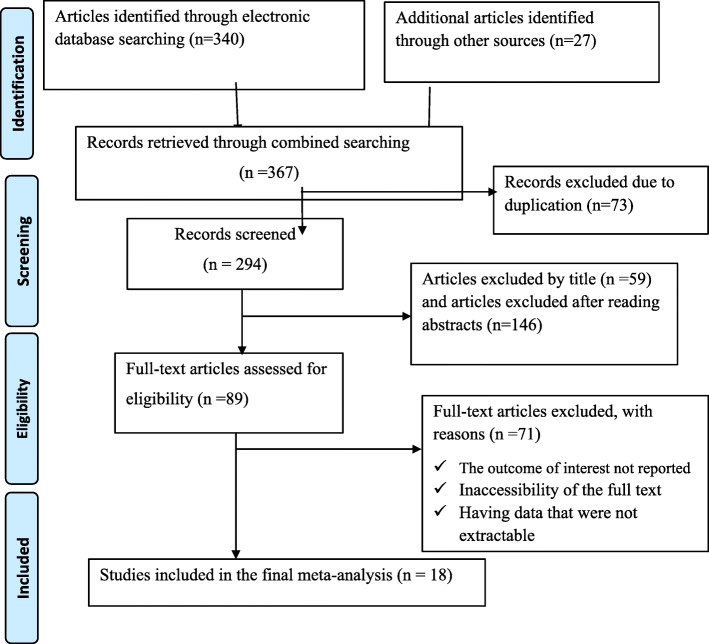
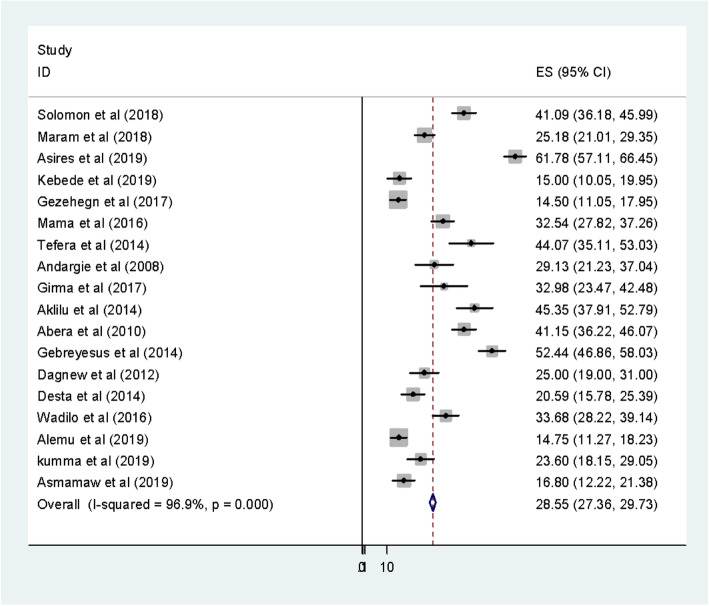
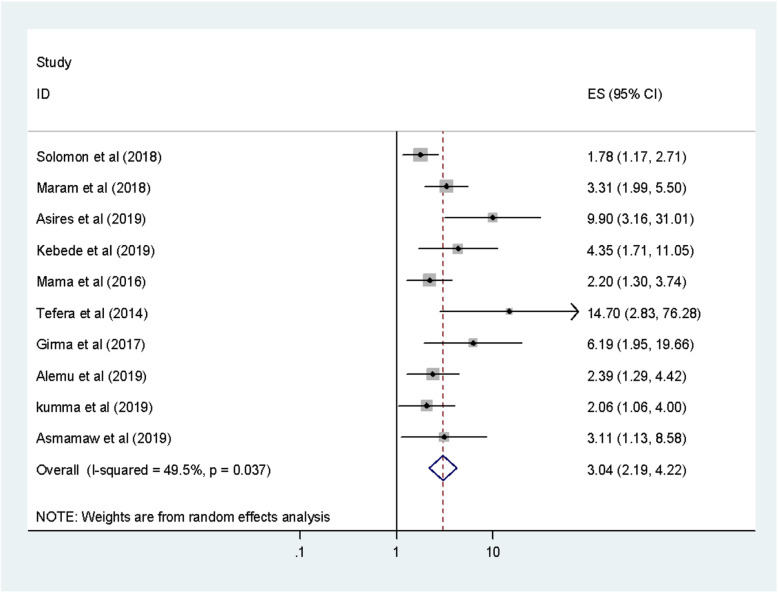
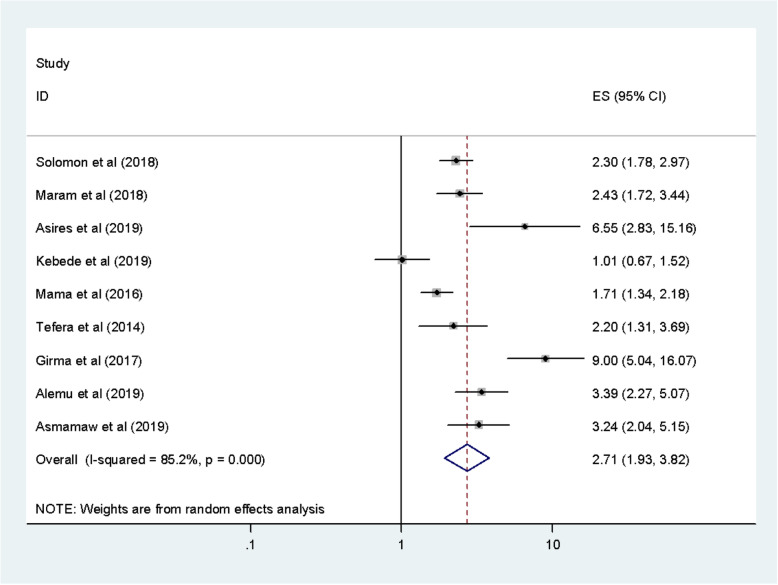
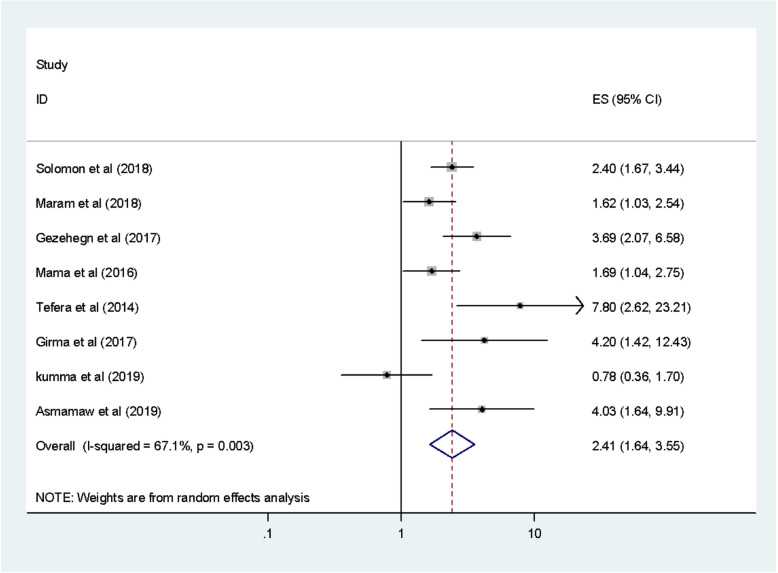
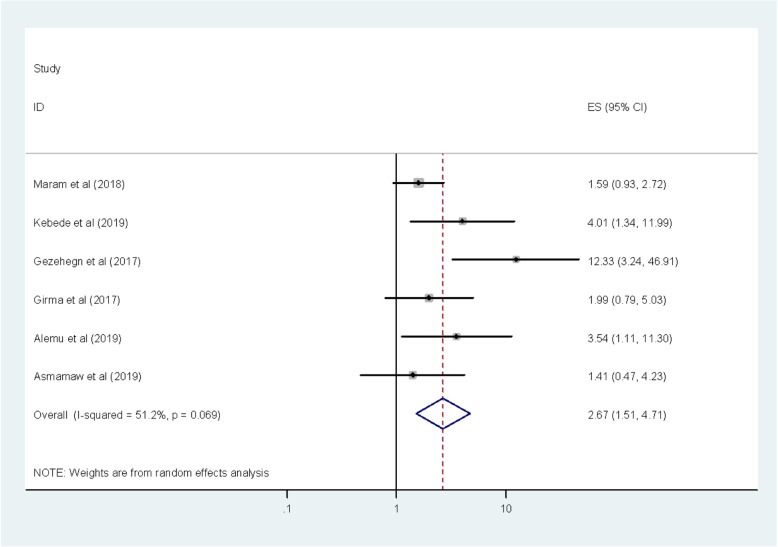
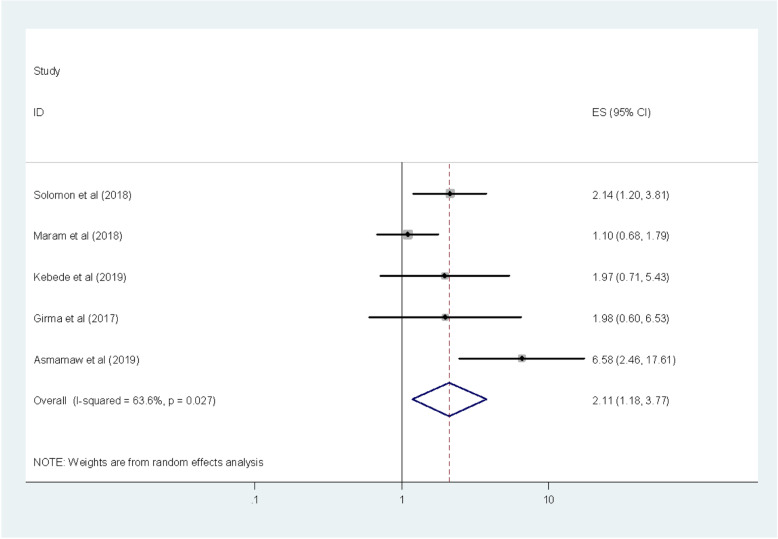
Results: Out of 138 reviewed studies, 18 studies were included to estimate the pooled prevalence of intestinal parasitic infections among food handlers in Ethiopia. All the eighteen articles were included in the analysis. This study revealed that the pooled prevalence of intestinal parasitic infections was 28.5% (95% CI: 27.4, 29.7). E. hystolitica /E. dispar complex 6.38 (95% Cl: 5.73, 7.04), A.lumbricodes 4.12 (95% Cl: 3.56, 4.67), and G. lamblia 3.12(95% Cl: 2.65, 3.60) were the most common intestinal parasitic infections in this study. Untrimmed fingernail 3.04 (95% CI: 2.19, 4.22), do not washing hands after defecation 2.71 (95% CI: 1.93, 3.82), do not washing hands after touching any body parts 2.41 (95% CI: 1.64, 3.56), do not made medical checkup 2.26 (95% CI: 1.57, 3.25), and do not receive food safety training 1.79 (95% CI: 1.30, 2.45) were factors significantly and positively associated with intestinal parasitic infections.
Conclusion: Parasitic infections among food handlers were significantly high. Untrimmed fingernail, do not washing hands after defecation, do not washing hands after touching any body parts, do not made regular medical checkup and do not receive food safety training were factors that increase the prevalence of intestinal parasitic infections.
Keywords: Associated factors; Ethiopia; Intestinal parasite; Meta-analysis; Prevalence; Systematic review.
Conflict of interest statement
The authors declare that they have no competing interests.
Figures
References
-
- Gebreyesus A, Adane K, Negash L, Asmelash T, Belay S, Alemu M, et al. Prevalence of Salmonella typhi and intestinal parasites among food handlers in Mekelle University student cafeteria, Mekelle, Ethiopia. Food Control. 2014;44:45–48. doi: 10.1016/j.foodcont.2014.03.040. - DOI
Publication types
MeSH terms
LinkOut - more resources
Full Text Sources
