


Association between Timing of Energy Intake and Insulin Sensitivity: A Cross-Sectional Study
- PMID: 32079066
- PMCID: PMC7071301
- DOI: 10.3390/nu12020503
Association between Timing of Energy Intake and Insulin Sensitivity: A Cross-Sectional Study
Abstract
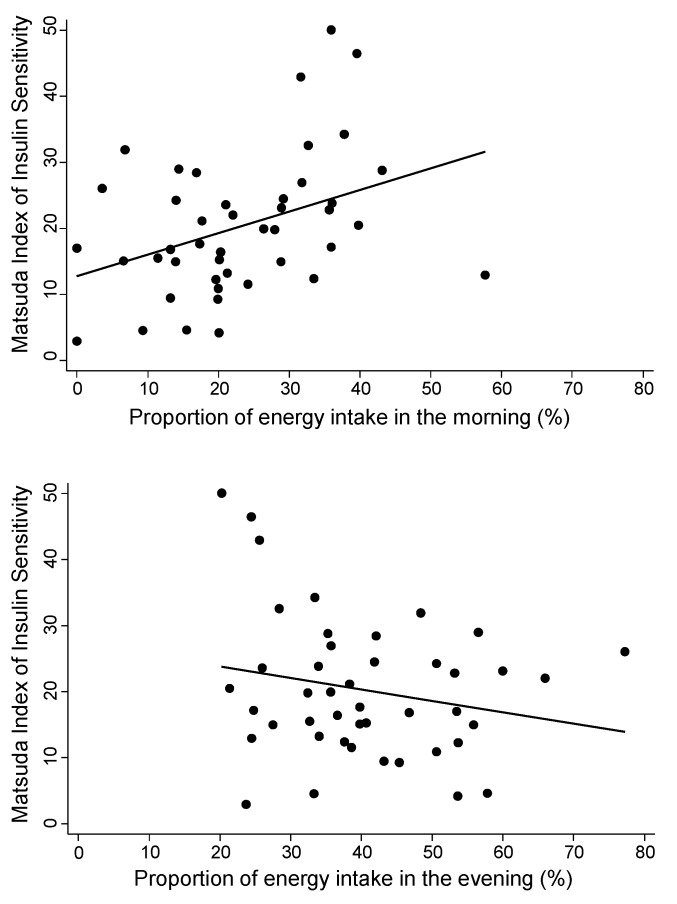
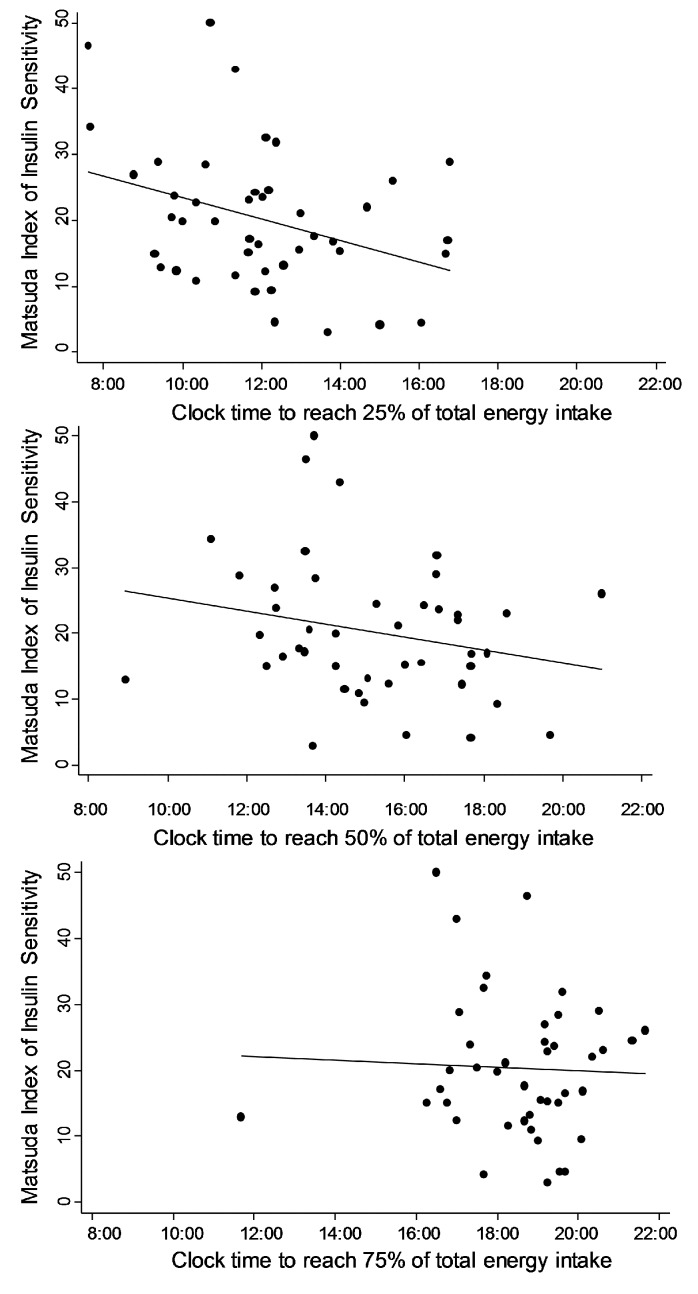
In addition to the caloric and macronutrient composition of meals, timing of energy consumption may be important for optimal glucose metabolism. Our goal was to examine whether the habitual timing of energy intake was associated with insulin sensitivity in healthy volunteers. Volunteers without diabetes aged 21-50 years completed a 3-day food diary and underwent an oral glucose tolerance test to estimate insulin sensitivity (n = 44). From the food diary, we calculated the proportions of the total energy and macronutrients consumed in the morning and evening, and the clock time at which 25%, 50% and 75% of total energy was consumed. A greater proportion of energy intake in the morning was significantly associated with higher insulin sensitivity estimated by Matsuda Index (B = 2.8 per 10%; 95%CI: 0.3, 5.2). The time at which 25% of energy was consumed was associated with insulin sensitivity estimated by Matsuda Index (B = -1.6 per hour; 95%CI: -3.0, -0.3) and QUICKI (B = -1.4 per hour, 95%CI: -2.8, -0.1). The timing of carbohydrate consumption demonstrated similar associations. Greater energy intake earlier in the day was associated with higher insulin sensitivity in individuals without diabetes.
Keywords: Type 2 Diabetes; circadian rhythm; diet habits; insulin resistance.
Conflict of interest statement
The authors have no conflict of interest to declare.
Figures
References
-
- Lorenzo C., Wagenknecht L.E., D’Agostino R.B., Jr., Rewers M.J., Karter A.J., Haffner S.M. Insulin resistance, beta-cell dysfunction, and conversion to type 2 diabetes in a multiethnic population: The Insulin Resistance Atherosclerosis Study. Diabetes Care. 2010;33:67–72. doi: 10.2337/dc09-1115. - DOI - PMC - PubMed
-
- Preis S.R., Massaro J.M., Robins S.J., Hoffmann U., Vasan R.S., Irlbeck T., Meigs J.B., Sutherland P., D’Agostino R.B., Sr., O’Donnell C.J., et al. Abdominal subcutaneous and visceral adipose tissue and insulin resistance in the Framingham heart study. Obesity. 2010;18:2191–2198. doi: 10.1038/oby.2010.59. - DOI - PMC - PubMed
MeSH terms
Substances
Grants and funding
LinkOut - more resources
Full Text Sources
