


Contribution of COMT and BDNF Genotype and Expression to the Risk of Transition From Acute to Chronic Low Back Pain
- PMID: 32079998
- PMCID: PMC7211115
- DOI: 10.1097/AJP.0000000000000819
Contribution of COMT and BDNF Genotype and Expression to the Risk of Transition From Acute to Chronic Low Back Pain
Abstract
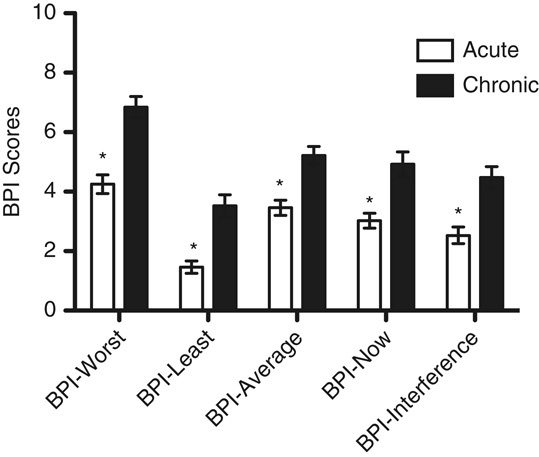
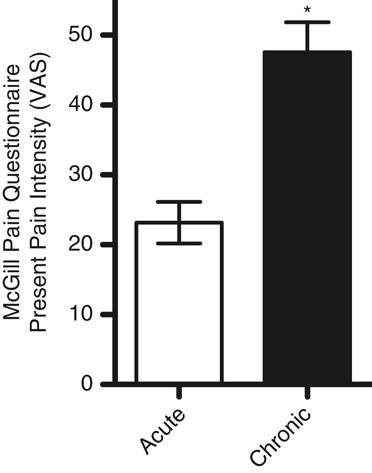
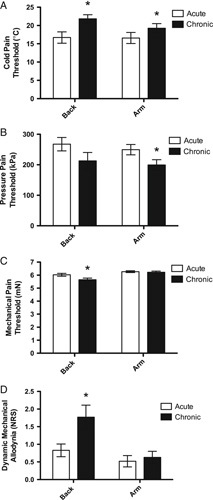
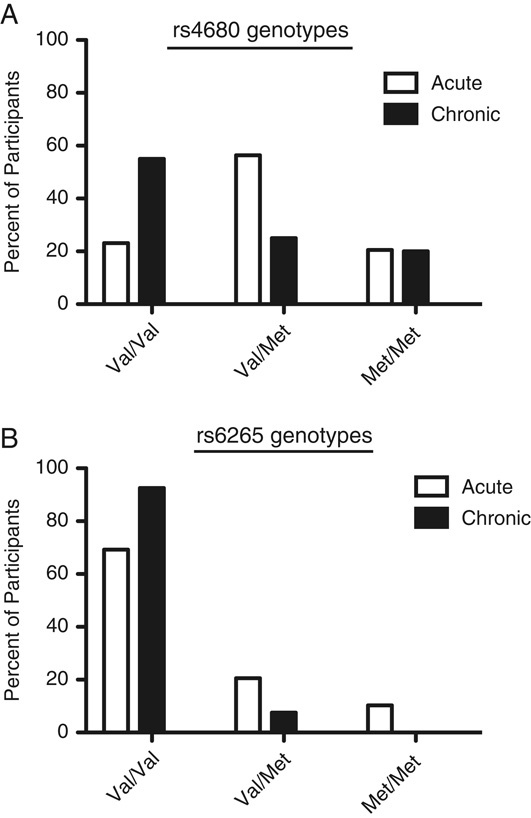
Objectives: A number of factors, including heritability and the environment, contribute to risk of transition from acute low back pain to chronic low back pain (CLBP). The aim of this study was to (1) compare somatosensory function and pain ratings at low back pain (LBP) onset between the acute low back pain and CLBP conditions and (2) evaluate associations between BDNF and COMT polymorphisms and expression levels at LBP onset to acute and chronic pain burden and risk for transition to the chronic pain state.
Methods: In this longitudinal study, 220 participants were enrolled following recent onset of LBP and data were collected until the LBP resolved or until the end of the study at 6 months. Forty-two participants' pain resolved before 6 weeks from onset and 42 participants continued to have pain at 6 months. Patient-reported pain burden, somatosensory function (quantitative sensory testing), and blood samples were collected at each study visit.
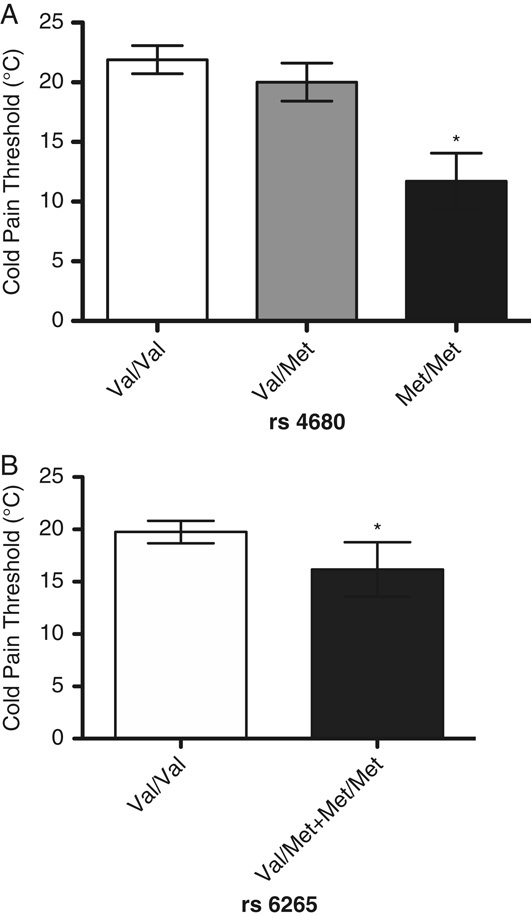
Results: CLBP is associated with greater pain burden and somatosensory hypersensitivity at the time of LBP onset. COMT rs4680 genotype (GG) was associated with acute cold pain sensitivity and with the risk for transition to CLBP while COMT expression was independently associated with risk for transition.
Discussion: CLBP was characterized by higher reported pain burden and augmented hypersensitivity at LBP onset. COMT expression and genotype were associated with acute pain burden and likelihood of transition to CLBP.
Conflict of interest statement
Supported by the National Institute of Nursing Research, Storrs, CT (Starkweather, PI; R01 NR013932). Drs Dorsey, Baltimore, MD (P30 NR011396; R01 NR013601; P30 NR014129) and Baumbauer, Storrs, CT (R03 NS096454) are currently receiving grants. The content of this publication is solely the responsibility of the authors and does not necessarily represent the official views of the National Institute of Nursing Research (NINR) or the National Institutes of Health (NIH). The authors declare no conflict of interest.
Figures
References
-
- Hoy D, March L, Brooks P, et al. The global burden of low back pain: estimates from the Global Burden of Disease 2010 study. Ann Rheum Dis. 2014;73:968–974. - PubMed
-
- Hoy DG, Smith E, Cross M, et al. The global burden of musculoskeletal conditions for 2010: an overview of methods. Ann Rheum Dis. 2014;73:982–989. - PubMed
-
- Axen I, Leboeuf-Yde C. Trajectories of low back pain. Best Pract Res Clin Rheumatol. 2013;27:601–612. - PubMed
-
- Ramond-Roquin A, Pecquenard F, Schers H, et al. Psychosocial, musculoskeletal and somatoform comorbidity in patients with chronic low back pain: original results from the Dutch Transition Project. Fam Pract. 2015;32:297–304. - PubMed
-
- Hansen BB, Hansen P, Carrino JA, et al. Imaging in mechanical back pain: anything new? Best Pract Res Clin Rheumatol. 2016;30:766–785. - PubMed
Publication types
MeSH terms
Substances
Grants and funding
LinkOut - more resources
Full Text Sources
Medical
Miscellaneous
